

Maddy summaryThis bill amends New York's Mental Hygiene Law to clarify criteria for court-ordered outpatient treatment and hospitalization for people with severe mental illness. It updates definitions to explicitly include "serious harm" from self-neglect (like untreated psychosis or inability to meet basic needs) as grounds for intervention, beyond just immediate violence risk. The law requires clinicians to first assess whether outpatient treatment could be effective before pursuing involuntary hospitalization. It aims to expand access to existing assisted outpatient programs (like "Kendra's Law") by removing barriers preventing eligible individuals from receiving community-based care.
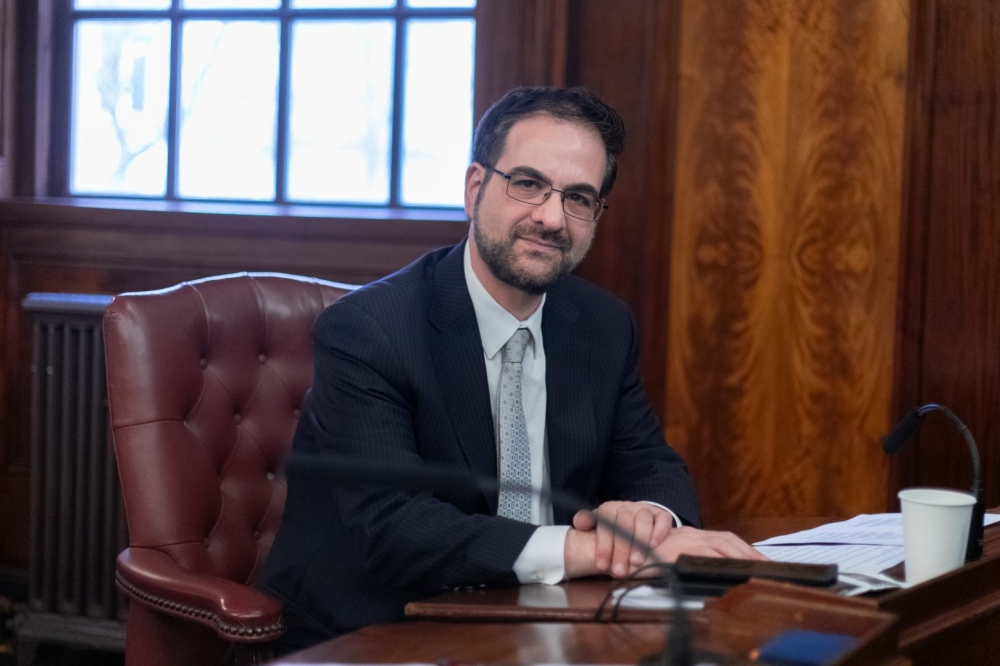
Asm. Kalman Yeger
Sponsored bills
Relates to protecting the communication rights of individuals with disabilities; provides that each person with a disability has the right to communicate in their preferred manner.
Increases Medicaid reimbursement rates for certain behavioral health services provided to individuals under the age of twenty-one; directs that funds in the healthcare stability fund can be used for the funding of children's behavioral health outpatient rate increases.
Requires coverage for colorectal cancer early detection beginning at age thirty-five; adds coverage for colorectal cancer early detection as a required coverage for individual policies; requires notification of colorectal early detection coverage to be provided to insured individuals beginning at age thirty-five.
Maddy summaryThis bill restores a 20-year service requirement for normal retirement benefits for New York City police officers, reversing a 2012 change that raised the requirement to 22 years. It directly affects NYPD police/fire members under the New York City Police Pension Fund, allowing them to qualify for normal retirement benefits after 20 years of service instead of 22. The key mechanism amends three sections of the Retirement and Social Security Law to specify that NYPD officers meet the service threshold at 20 years (for normal retirement), while other groups like correction/sanitation officers remain at 22 years. The bill makes this change effective immediately without altering age requirements or early retirement rules.
Maddy summaryBill A 8499 establishes new eligibility criteria for performance of duty disability retirement for certain New York City Transit Authority employees. It specifically applies to members of the New York City Employees' Retirement System who participated in World Trade Center rescue, recovery, or cleanup operations. If these members become physically or mentally incapacitated due to an injury from their World Trade Center duties, they would receive a disability retirement allowance equal to three-quarters of their final average salary. The bill also allows these members to use a specific medical review procedure for their pension applications.
Maddy summaryThis bill (A 6049) adds "October 7th Remembrance Day" to New York State's official calendar of commemorative days, to be observed annually on October 7. It directly affects the state's official observance schedule but does not create new policies, funding, or requirements for individuals or organizations. The bill amends existing law by inserting this date into a list of established commemorative days (like Holocaust Remembrance Day or Juneteenth), with no additional provisions or mechanisms. As a procedural naming bill, it has no direct impact on citizens or government operations beyond formal recognition.
Maddy summaryThis bill creates a new licensing requirement for organizations that manage payments for personal care services (fiscal intermediaries), effective April 1, 2027. It requires these entities to apply for a license, submit annual reports on costs and service details, and register personal assistants in a confidential state registry. The law directly affects fiscal intermediaries currently contracting with social services departments or health plans, mandating they meet specific standards for compliance, cultural competency, and financial reporting. It repeals outdated provisions while establishing new oversight mechanisms to ensure transparency in how funds for personal care services are managed.
Maddy summaryThis bill requires courts to consider bail for specific offenses targeting schools or students, including threats of mass harm, aggravated harassment, or terroristic threats against school districts, staff, or students. It amends criminal procedure law to mandate bail consideration when a defendant is charged with these offenses while already out on release or awaiting arraignment for a related crime. Prosecutors must show reasonable cause the defendant committed the offense, but courts may still release defendants on their own recognizance if the alleged harm (like minor property damage) is deemed negligible and unrelated to other criminal activity. The bill directly affects defendants charged with these school-targeted offenses during pretrial proceedings.
Requires public schools to start no earlier than eight thirty a.m. and that no public high school within the state shall start before an elementary school starts within the same school district.