

Maddy summaryThe "Total Access to Menstrual Products (TAMP) Act" requires all female-designated and gender-neutral bathrooms in New York to provide free menstrual products - including sanitary napkins, tampons, and panty liners - to users. It directly affects workplaces (factories, mines, offices), public facilities (county/city buildings, state universities), hospitals, hotels, and transportation (railroad cars), mandating these products be available at no cost. Key provisions amend labor, public health, and municipal laws to standardize this requirement across all covered facilities. The law focuses on ensuring accessibility without cost, avoiding policy speculation or advocacy.
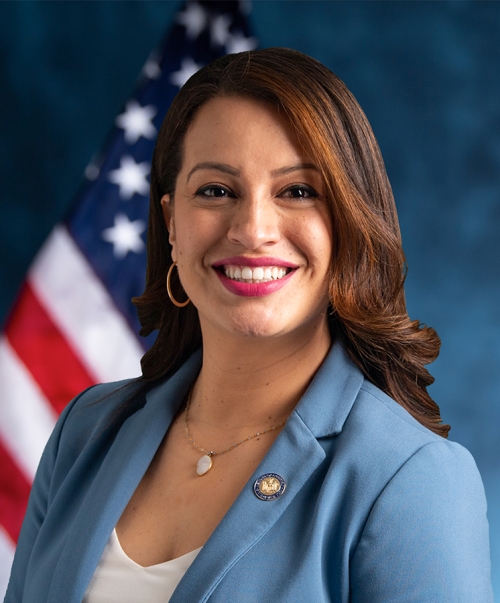
Asm. Catalina Cruz
Sponsored bills
Authorizes the transfer of pregnant and postpartum incarcerated individuals to residential treatment facilities; requires annual reporting on the number of such incarcerated individuals transferred.
Relates to the menstrual product safety and research act and its creation of a research program to determine the risks posed from potential toxins in menstrual products.
Establishes the baby bucks allowance to provide income to eligible participants for the last three months of pregnancy and the first 18 months of the child's life; excludes income received from the baby bucks allowance for purposes of supplemental nutrition assistance program eligibility.
Establishes a state SNAP minimum benefit program to provide a minimum amount of supplemental nutrition assistance program benefits that is higher than the amount of federal SNAP benefits.
Relates to establishing the tenancy deposit protection program; requires the commissioner of housing and community renewal to establish a program to hold security deposits in third-party accounts and create a dispute resolution process regarding the withholding of security deposits.
Relates to coverage for applied behavior analysis and for developmental, individual-differences, relationship-based treatment of autism spectrum disorder.
Prevents discrimination by insurers based on an individual's mental health or substance use disorder; incorporates into law federal enforcement rules set forth in the federal mental health parity and addiction equity act of 2008.
Requires high schools in grades nine through twelve to provide a course in financial literacy; requires students to complete such course as a condition of graduation.
Requires all public school districts, charter schools and non-public schools in the state that participate in the national school lunch program or school breakfast program as provided in the national child nutrition act to serve breakfast and lunch at no cost to the student.