

Maddy summaryThis bill allows New York pharmacists to administer FDA-approved progestin-only contraceptive injections for birth control, expanding access to contraception. Pharmacists must complete a patient risk assessment, provide educational materials, and notify a patient's primary care provider (with opt-out allowed) before administering the injection. They must also complete required training and may refuse service if safety concerns exist. The law directly affects patients seeking contraception - particularly those without regular doctors - and pharmacists who provide this service.
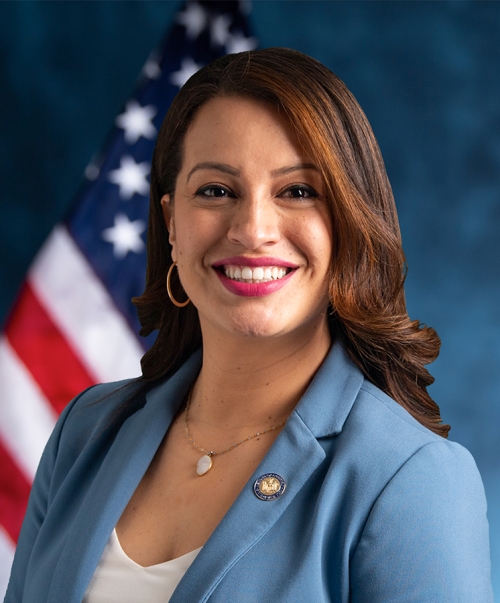
Asm. Catalina Cruz
Sponsored bills
Relates to returnable bottles; adds noncarbonated soft drinks, certain noncarbonated fruit or vegetable juices, coffee and tea beverages, carbonated fruit beverages and cider to the definition of "beverage"; provides that beginning April 1, 2027, the handling fee will be six cents for each beverage container accepted by a deposit initiator from a dealer or operator of a redemption center; directs the multi-agency bottle bill fraud investigation team to submit a report on findings of pervasive bottle redemption fraud in New York state.
Provides that an employee whose position is eliminated for certain reasons and who is subsequently transferred to a different agency be entitled to the same hourly salary; retain all accrued sick leave; retain, cash out or use all accrued vacation time; and be paid relocation expenses.
Maddy summaryBill A 7958, titled the "Paid-In Act," proposes to exempt used books from sales and use taxes. This means that individuals purchasing second-hand books would not pay sales tax on those items. The exemption applies to used books with a price of up to one hundred dollars per item. This bill directly affects consumers buying used books and the businesses that sell them.
Provides for a working families tax credit; directs quarterly prepayment of the credit; provides for a sliding reduction in the credit for incomes which exceed a certain threshold.
Maddy summaryThis bill (A 6913) requires all cosmetology licensees and applicants in New York to complete an online domestic violence and sexual assault awareness course. The course, developed by the Office for the Prevention of Domestic Violence with advocacy groups, covers abuse definitions, warning signs, how to support victims, local resources, cultural considerations, and legal protections. It must be culturally competent, linguistically accessible, and include practical strategies for salon environments. The law affects current and new cosmetology license holders, mandating completion before license issuance or renewal.
Maddy summaryThis bill amends state criminal procedure law to require appellate courts to review whether a criminal sentence is illegal or unduly harsh, even if the defendant previously waived their right to appeal. If a court finds a sentence to be illegal or unduly harsh, it must modify the sentence by reversing the sentencing portion while upholding the conviction. This directly affects criminal defendants seeking to challenge the severity of their sentences without being barred by prior waiver agreements. The bill takes effect 60 days after enactment.
Establishes the New York Health program, a comprehensive system of access to health insurance for New York state residents; provides for administrative structure of the plan; provides for powers and duties of the board of trustees, the scope of benefits, payment methodologies and care coordination; establishes the New York Health Trust Fund which would hold monies from a variety of sources to be used solely to finance the plan; enacts provisions relating to financing of New York Health, including a payroll assessment, similar to the Medicare tax; establishes a temporary commission on implementation of the plan; provides for collective negotiations by health care providers with New York Health.
Maddy summaryThis bill significantly expands eligibility for judicial diversion programs, allowing individuals charged with a broader range of offenses to participate if they have a "qualifying diagnosis." This diagnosis includes serious mental disorders, other mental health disorders causing severe functional impairment, or substance use disorders. While most Class A felonies and Class B sexual offenses are generally excluded, the bill establishes a new "diversion part" in each county. It also redefines "treatment" within these programs to include evidence-based interventions outside of carceral settings.
Allows for treatment costing less than $1,500 to be done without prior approval, and more clearly defines the list of "pre-authorized procedures" as a floor on treatment as opposed to its current status as a ceiling; allows non-network providers of testing to be compensated at the provider network rate negotiated by the carrier.