

Provides that no policy of group accident, group health or group accident and health shall impose copayments for physical or occupational therapy greater than the copay for similar services provided by a physician.
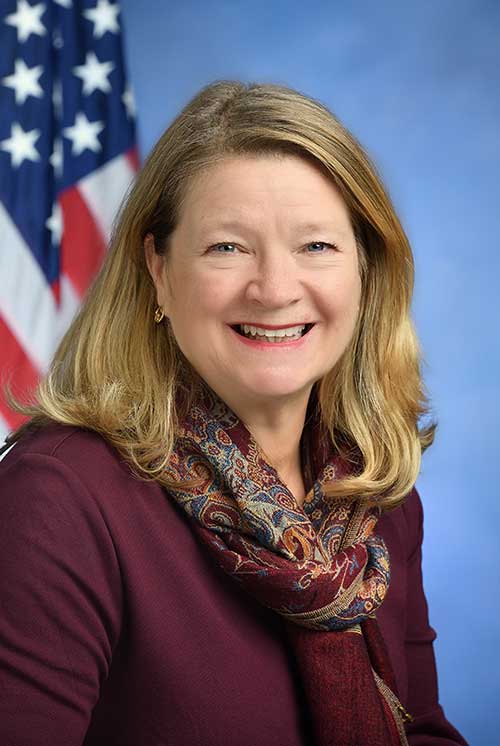
Asm. Karen McMahon
Sponsored bills
Allows for treatment costing less than $1,500 to be done without prior approval, and more clearly defines the list of "pre-authorized procedures" as a floor on treatment as opposed to its current status as a ceiling; allows non-network providers of testing to be compensated at the provider network rate negotiated by the carrier.
Extends paid family leave benefits to employees who perform construction, demolition, reconstruction, excavation, rehabilitation, repairs, renovations, alterations, or improvements for multiple employers pursuant to a collective bargaining agreement who shall be eligible for family leave benefits if they were employed for at least twenty-six of the last thirty-nine weeks by any covered employer which is signatory to a collective bargaining agreement.
Establishes the New York child data protection act to protect minors from having their personal data accessed; provides exceptions in certain circumstances.
Establishes the Stop Addictive Feeds Exploitation (SAFE) For Kids Act prohibiting the provision of addictive feeds to minors by addictive social media platforms; establishes remedies and penalties.
Establishes a maximum temperature in school buildings and indoor facilities; provides a definition of extreme heat condition days and the standard to measure room temperature.
Maddy summaryThis bill protects libraries in New York by banning specific restrictive clauses in contracts between publishers and libraries regarding electronic books and audiobooks. It ensures that libraries can freely lend digital materials to patrons, set their own loan periods, and use technology to secure these loans without interference from publishers. Additionally, the law prevents publishers from charging libraries higher prices than the general public and stops them from limiting how many times a library can loan a specific item. Contracts containing these prohibited restrictions are declared unenforceable, and publishers who violate the bill face potential fines and legal injunctions.
Maddy summaryThis bill authorizes the direct shipment of liquor, cider, mead, and braggot across state lines into New York, expanding on existing rules that already allow wine to be shipped directly to consumers. To participate, out-of-state distilleries must obtain a specific license from the state authority, pay an annual fee, and agree to ship no more than thirty-six cases per year to residents who are at least twenty-one years old. The legislation requires strict safety measures, including age verification at delivery, clear labeling on shipping containers, and the maintenance of detailed records for tax and audit purposes. Additionally, the bill establishes that these sales are subject to New York state and local taxes, ensuring that revenue is collected at the point of delivery.
Maddy summaryThis bill allows local governments to offer a full real property tax exemption for the primary homes of veterans with a 100 percent service-connected disability. To qualify, the veteran must have been honorably discharged, be rated as permanently and totally disabled by the Department of Veterans Affairs, and be considered individually unemployable. The exemption also extends to LGBT veterans who meet the same disability and discharge criteria. If passed, the law would apply to property tax assessments starting on or after January 2, 2024.
Maddy summaryThis bill expands the New York veterans tuition awards program to include all resident veterans, regardless of whether they served in active combat. Currently, eligibility is limited to those who served in specific conflicts like the Vietnam or Persian Gulf wars and received certain expeditionary medals. The change removes the requirement for combat service, allowing any New York resident who served in the U.S. armed forces under honorable conditions to qualify for tuition assistance. The program provides funding equivalent to up to eight full-time semesters of study at approved colleges or vocational schools, with the award amount based on the lower of state university tuition or the actual cost charged by the institution.