

Provides that no person shall be eligible for appointment as a police officer who was previously employed as a police officer and who: was dismissed for malfeasance or other serious misconduct calling into question such person's fitness to serve as a police officer; or resigned or retired from such officer's position while under investigation for such malfeasance or other serious misconduct; defines terms; makes related provisions.
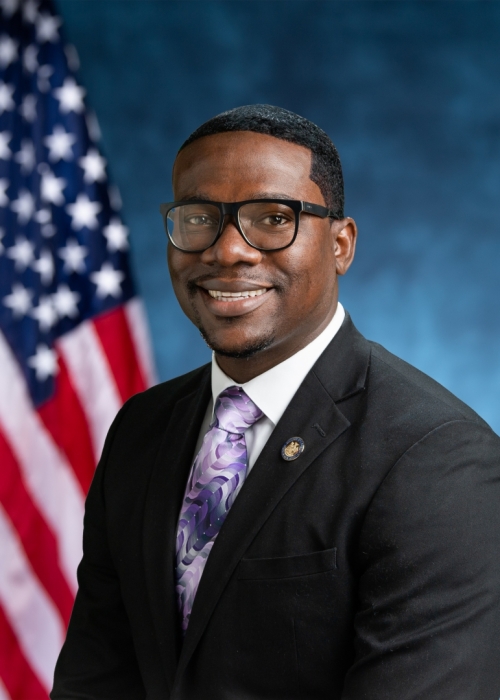
Asm. Demond Meeks
Sponsored bills
Directs the commissioner of health to contract with an independent entity to conduct a comprehensive assessment of the existing methodology used to determine payment for early intervention screenings, evaluations, services and service coordination; directs recommendations on reimbursement methodology as well as needs under the program.
Relates to establishing an early intervention loan repayment program; provides funding is to be awarded regionally with 50% percent awarded to providers with a principal residence within NYC and the remaining fifty percent awarded to providers outside of NYC; provides that awards shall be given to providers who work in underserved areas for 3 consecutive years; provides loans shall be paid over a 3 year period; provides that a working group shall be established within 90 days to develop plans for the streamlined loan repayment program application process.
Enacts the "New York state agency BIPOC asset management and financial institution strategy act" to ensure the promotion of equity, diversity, and inclusion within the state pension system and the New York city pension system's investments by mandating a minimum allocation of assets to BIPOC asset managers, BIPOC financial institutions, and BIPOC financial or professional service firms; addresses disparities in investment opportunities and fosters economic growth within BIPOC communities, aligning with best practices in investment management and bolstering the financial well-being of New York City and state and residents thereof (Part A); relates to fair investment practices by investment advisers within the state of New York (Part B).
Establishes the New York State social housing development authority as a public benefit corporation to increase the supply of permanently affordable housing in the state through the acquisition of land and renovation or rehabilitation of existing real property, and through the construction of new, permanently affordable housing.
Maddy summaryThis bill (A 999) updates New York's definition of developmental disability in the mental hygiene law to explicitly include fetal alcohol spectrum disorders (FASD), covering conditions like fetal alcohol syndrome (FAS), partial FAS, and alcohol-related neurodevelopmental disorder (ARND). It directly affects individuals with FASD who meet specific criteria: being over age 7, having a diagnosed FASD by a qualified provider, having the condition start before age 22, showing it will likely continue indefinitely, and experiencing significant impact on daily living activities. The key mechanism is adding these FASD conditions to the list of qualifying disabilities, aligning them with existing conditions like autism or cerebral palsy for eligibility purposes. This change ensures FASD is formally recognized under the state's developmental disability framework, affecting how individuals access related services and support.
Maddy summaryThis bill imposes an additional tax on New York residents' long-term investment profits, specifically targeting income from capital gains, dividends, and other low-taxed investments. It applies to higher earners: individuals with taxable income over $400,000 (or $500,000 for married couples filing jointly) face a 7.5% tax on capital gains above those thresholds, with a higher 15% rate kicking in above $800,000 (or $1 million for couples). The tax phases in gradually over the first $50,000 or $100,000 of income exceeding the thresholds. It functions as an add-on to existing income tax, not a replacement, and will be administered by New York’s tax department.
Enacts the "Empowering People in Rights Enforcement (EMPIRE) Worker Protection Act"; relates to the delegation of state enforcement authority to private actors; authorizes an affected employee, whistleblower, representative organization or an organizational deputy to initiate a public enforcement action on behalf of the commissioner for certain provisions of the labor law, or any regulation promulgated thereunder.
Provides protections for telecommunications tower technicians, including requiring certain trainings during work hours without a loss of pay; requires certain reporting by bidders for telecommunication contracts.
Prohibits the operation of NYC transit authority subways or trains without at least one conductor on board; requires a conductor on any subway or train operated by such authority whenever the subway or train has more than two cars attached to the engine.