

Provides that beginning in the 2026-2027 academic year, certain graduate students shall be required to pay 25% of all current and future mandatory university fees; provides that in the 2027-2028 academic year and thereafter, no mandatory university fees shall be charged, with the exclusion of the graduate student association student activity fee.
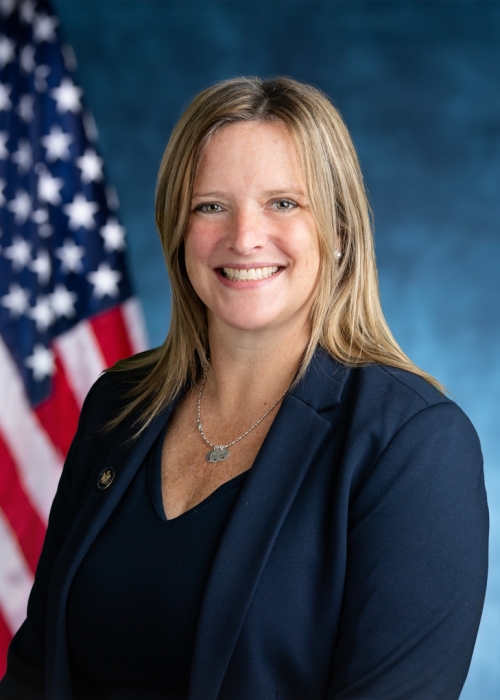
Asm. Sarah Clark
Sponsored bills
Requires a caller making a report of suspected child abuse or maltreatment to the central register to leave their name and contact information; prohibits the office of children and family services from releasing information identifying a person who made such a report.
Relates to prevailing wage requirements applicable to brownfield remediation work performed under private contract as it relates to certain remediation activities, for sites that are seeking or have received a determination that the site is eligible for the tangible property credit component of the brownfield redevelopment tax credit, and the work is paid for in whole or in part by public funds.
Maddy summaryThis bill clarifies that it is unlawful to retaliate against individuals who request reasonable accommodations under New York's anti-discrimination law (Executive Law § 296). It specifically adds "requesting a reasonable accommodation" to the list of protected activities, alongside opposing discrimination or filing complaints. The law prohibits actions like disclosing personnel files in retaliation for such requests, except when necessary for legal proceedings. This is a clarification of existing law, not a new right, and applies to all covered workplaces and services.
Maddy summaryThis bill amends New York Insurance Law to clarify and adjust rules for training subsidies paid to new life insurance agents. It directly affects life insurance companies (which must follow these rules) and new agents (who may receive subsidies during training). Key provisions include setting specific dollar limits for training subsidies based on an agent's prior earnings (e.g., eligibility if prior income from sales was under $40,000 annually), capping cumulative subsidies at defined levels (e.g., $54,000 in the first year), and allowing the insurance superintendent to periodically adjust these limits. The bill also clarifies that prize/award values for agents cannot exceed $500 per item or $2,000 annually, excluding these costs from other compensation limits.
Enacts the "freedom to read act"; requires the commissioner of education and school library systems to develop policies to ensure that school libraries and library staff are empowered to curate and develop collections that provide students with access to the widest array of developmentally appropriate materials available.
Requires the superintendent of state police to develop, maintain and disseminate to all members of the division of state police a critical incident leave policy requiring critical incident paid leave for any members directly involved in a critical incident; prohibits such superintendent from taking any punitive administrative action against any member of the division of state police granted critical incident leave solely on the basis of the provision of such leave.
Provides for the inclusion of a faculty or staff member on the board of trustees of community colleges elected by and from among the faculty and staff of the college.
Maddy summaryThis bill requires utility companies and contractors to provide detailed electronic records identifying pole attachments, including equipment owners, contractors, work dates, and safety compliance details. It creates an online public complaint system for reporting unsafe attachments, equipment hazards, or violations of safety standards like the National Electrical Safety Code. The commission must investigate complaints within two weeks and can issue fines up to $20,000 for first violations, $50,000 for second violations, or stop-work orders for third violations. The law directly affects utility providers, telecom companies, and contractors working on utility poles, aiming to improve public safety and accountability through standardized reporting and enforcement.
Directs counties, in coordination with their regional emergency medical services councils, to develop and maintain comprehensive county emergency medical system plans that provide for coordinated emergency medical systems within such counties.