

Maddy summaryThis bill allows certified medication aides in New York residential health care facilities to administer certain routine medications under specific conditions. It permits aides to give pre-packaged medications (like oral pills or liquids) but prohibits injections (except for insulin, diabetes care, naloxone, or epinephrine), sterile procedures, or central line maintenance. Aides must work under direct supervision of a registered nurse (RN), complete required training and competency checks, and document all medication administration. The law also sets strict qualifications for aides, including a high school diploma, English proficiency, and specific training, while prohibiting them from assessing patient needs or practicing as licensed nurses.
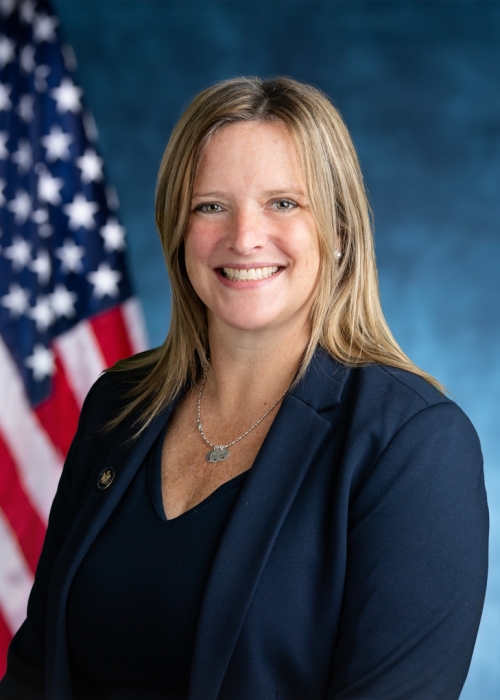
Asm. Sarah Clark
Sponsored bills
Provides that recounts of ballots conducted by the board of elections or a bipartisan committee appointed by the board can be either done manually or via the use of any automated tool authorized for such use by the board of elections, which is independent from the voting system it is being used to recount, of all ballots for a particular contest where the margin of victory is less than or equal to 0.5% but greater than 0.25%; allows for losing candidates to deny a recount before any recount is conducted.
Requires vision screening in public schools using examination devices and testing methods as may be authorized in the regulations of the commissioner of education, including but not limited to, the Snellen Eye Test Chart and automated vision screening devices.
Maddy summaryThis bill establishes a legal right to counsel for eligible immigrants in New York during immigration proceedings. It applies to income-eligible non-citizens or those with significant New York ties (like residents or cases tied to NY courts) facing removal or detention under federal immigration law. The New York State Office for New Americans will administer the program, providing initial consultations and ongoing legal representation starting when a case begins (e.g., upon receiving a "Notice to Appear") and continuing until the case concludes. Legal services must be offered regardless of the proceeding's location, including federal immigration courts outside New York.
Relates to establishing the housing access voucher program; provides that the commissioner of the division of housing and community renewal shall implement a program of rental assistance in the form of housing vouchers for eligible individuals and families who are homeless or who face an imminent loss of housing; provides that the commissioner shall designate housing access voucher local administrators in the state to administer the program.
Maddy summaryThis New York State bill allows for advance payments of the Earned Income Tax Credit (EITC) to qualifying low-income workers, replacing the current system where refunds are issued after annual tax filing. Eligible workers - including those aged 19 or older (down from 25) and without children - will receive four payments: three during the year (20% of the expected credit) and one adjusted payment after the tax year ends. The bill also increases the credit percentage for 2027 and later years (up to 40%), raises the income threshold for phaseout to $24,960 (from $11,610), and includes annual inflation adjustments. Payments will be delivered via direct deposit or electronic benefit transfer (EBT) card.
Establishes the New York brewery empowerment and economic revitalization credit in the amount of seven cents per gallon of beer produced in the state; sets eligibility criteria; makes related provisions.
Establishes the bank of Rochester, including provisions related to definitions; sponsors and corporate structure; powers and restrictions; governance; charter requirements; financial and operations frameworks; transparency and financial reporting; insurance; deposits; policy mandates; ethics and financial disclosure; inconsistency with other laws; and owners not to be considered bank holding companies.
Maddy summaryThis bill establishes new standards for mold remediation and prevention in public housing and rental properties. It requires housing authorities to conduct visual inspections for moisture damage and mold sources, develop safe cleanup protocols meeting health standards, and create prevention plans for new construction. Landlords must provide prospective renters with written disclosure about any past mold issues and remediation efforts in the property. The law applies directly to public housing agencies, landlords, and tenants in covered properties, focusing on health protection through clear procedures and transparency.
Maddy summaryThis bill adjusts the maximum dollar amounts for the child and dependent care tax credit for 2025 and 2026 tax years. It sets new caps based on the number of qualifying dependents: for example, $9,000 for five or more dependents in 2025, and $18,000 for five or more in 2026. Taxpayers claiming this credit will see higher potential refunds, as the bill raises the upper limits on the credit amount. The change directly affects families who claim the credit for childcare costs, without altering the credit percentage rate. The bill takes effect immediately upon enactment.