

Requires the department of education to develop school health and mental health professionals to student ratios in public schools for students who do not receive services pursuant to the individuals with disabilities education act.
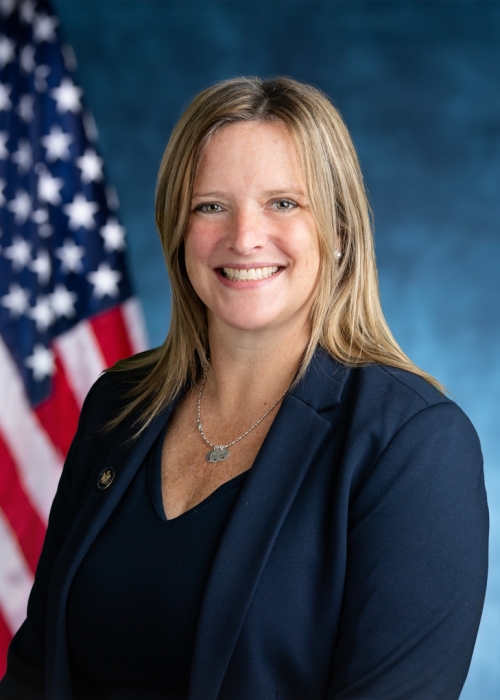
Asm. Sarah Clark
Sponsored bills
Requires the commissioner of health to promulgate regulations requiring that the addition of, decertification of, or changes in the method of delivery of perinatal services by a general hospital be subject to an application under article 28 of the public health law that requires review and approval by the council.
Relates to the purchase of zero-emission buses and the procurement of electric-powered buses, vehicles or other related equipment and infrastructure; requires public utilities to have infrastructure, capacity, facilities, and transmission and distribution systems needed to supply power for the charging of zero-emission buses and provides a tariff for charging of electric buses.
Enacts the manufacturer disclosure and transparency act requiring prescription drug manufacturers to notify the attorney general of arrangements between pharmaceutical manufacturers resulting in the delay of the introduction of generic medications.
Provides for the initiation of treatment for COVID-19, influenza, and pharyngitis resulting from a Group A streptococcal infection by a licensed pharmacist in certain circumstances.
Maddy summaryThis bill creates a new civil lawsuit pathway for individuals whose constitutional or federal rights were violated by government actors (such as police, courts, or public officials). It allows victims to sue for damages and court-ordered remedies, removes common defenses like "I thought it was legal," and requires courts to award attorney fees to winning plaintiffs - even if the case settles without a formal judgment. Public entities (like cities or state agencies) must cover their employees' legal costs if sued under this law, and lawsuits must be filed within three years of the violation. It directly affects people harmed by government overreach, ensuring they have a clear legal route to seek redress for rights violations.
Maddy summaryThis bill establishes a "Gate Money Program" providing eligible individuals released from New York State correctional facilities with monthly cash payments. Specifically, those who served at least six months in state prison and haven't received prior payments get $425 per month for up to six months (capped at $2,550 total), adjusted annually for inflation. Payments are made immediately upon release (cash/check) and then monthly by community supervision agencies, with funds not counting toward public assistance eligibility. The program is funded by a $25 million appropriation into a dedicated "gate money fund" and excludes individuals released to other states or federal custody.
Establishes the Early Learning Child Care Act to impose a payroll tax on certain employers for the purposes of addressing child care affordability, accessibility, and quality for families with children under five years of age; establishes the early learning child care fund; establishes the early learning child care program to provide subsidies to covered children to attend early learning child care programs; establishes the New York state child care board.
Maddy summaryThis bill allows New York school districts to create policies enabling home-schooled students to try out for and join district interscholastic sports teams. It requires these students to meet the same academic, health, and behavioral standards as enrolled public school students, including annual academic verification and age/eligibility rules. Home-schooled students would only be eligible to participate with their district of residence and must arrange their own transportation. The policy is optional for school districts and does not mandate participation.
Maddy summaryThis bill (A 6192) establishes a 5-year moratorium on the land application, sale, and distribution of biosolids and products containing them for agricultural or landscaping use (like fertilizer or soil amendment). It directly affects wastewater treatment facilities, farmers, and businesses using biosolids-derived products, banning their use on crops, parks, golf courses, and similar non-crop lands. The moratorium excludes landfill disposal of biosolids and certain composts made from food waste, manure, or crop residues (not biosolids). Violations carry fines up to $2,500 per offense plus daily penalties.