

Establishes the climate corporate data accountability act requiring certain business entities within the state to annually disclose scope 1, scope 2 and scope 3 emissions; establishes the climate accountability and emissions disclosure fund.
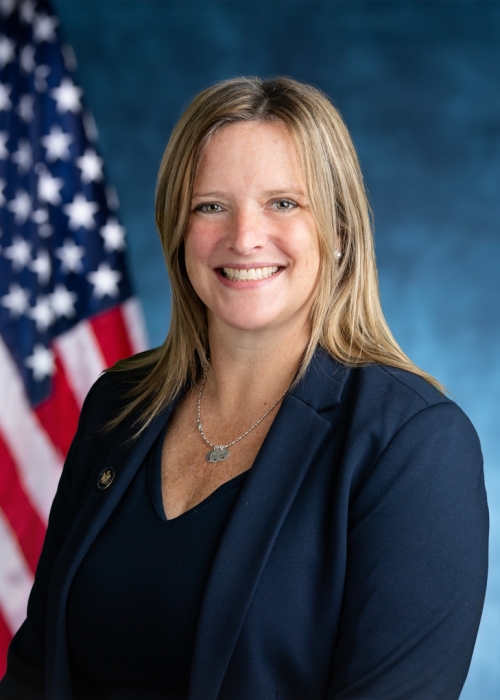
Asm. Sarah Clark
Sponsored bills
Maddy summaryThis bill allows the school districts in Buffalo, Rochester, Syracuse, and Yonkers to provide transportation for students living half a mile or more from school if safety concerns require it, as determined by the state education commissioner. It restricts transportation to routes between students' homes or approved childcare locations, limits coverage to 15 miles per student, and requires equal access for all students in similar circumstances. School districts must report program results, including cost-benefit analysis and impacts on attendance and academic performance, to state officials by 2028. The bill directly affects these four urban school districts and their students, creating a new state-approved transportation program for safety-related needs.
Allows for justices to reside in any town, village or city contained in whole or in part within the same assembly district, county or adjoining county as the court such justice serves or in an assembly district contiguous to such municipality where the court is located, provided such assembly district is contained entirely within a single county; sets forth residence requirements where an assembly district encompasses two or more counties; authorizes towns and villages to require that any person who serves as a town or village justice be admitted to practice law in the state.
Maddy summaryThis bill establishes New York's "Medical Aid in Dying Act," allowing terminally ill adults (18+) with decision-making capacity to request and self-administer medication to end their life. To qualify, a patient must have a terminal illness confirmed by two physicians (the attending physician and a consulting physician) and make an informed decision after being fully informed of alternatives, risks, and outcomes. The process requires an oral request, a written request signed by the patient and witnessed by two non-conflicted adults (not relatives or beneficiaries), and includes the right to rescind the request at any time. The bill also mandates documentation, safe disposal of unused medication, and state reporting.
Establishes the New York native plants program to conserve, promote, and enhance the native ecology of New York state by encouraging the use of native plants and ecological-friendly methods and materials on state and local land.
Maddy summaryThis bill allows licensed health and professional service providers (such as doctors, dentists, veterinarians, engineers, social workers, and therapists) to form limited liability companies (LLCs) for their practice. It requires all LLC members to hold valid state licenses for their specific profession and prohibits altering the scope of any member's licensed practice. The bill specifies that LLCs can offer multidisciplinary services only if each member practices within their individually licensed scope, and it explicitly bars law firms from mixing with other professional services. This changes existing rules by expanding LLC formation options for these professionals while maintaining strict licensing and scope-of-practice boundaries.
Enacts the climate and community investment act; prioritizes the allocation of public investments in disadvantaged communities; addresses climate change challenges through the expansion and growth of clean and renewable energy sources; adopts best value requirements for the solicitation, evaluation and award of renewable energy projects; establishes a community just transition program; establishes a climate pollution fee and a household and small business energy rebate; creates the climate and community investment authority.
Clarifies the eligibility for the New York opportunity promise scholarship to prevent people from applying if they previously received a postsecondary degree within a certain timeframe.
Authorizes the New York Liquidation Bureau to establish a program to evaluate and reimburse eligible local educational agencies for monetary liabilities arising from civil claims or settlement agreements related to certain acts that occurred during a period covered by a liability insurance policy issued by an insolvent insurer.
Relates to the qualification of voters; provides that a citizen who is seventeen years of age at the time of a primary election and who will be eighteen years of age at the time of the general election for which such primary election is held, shall be eligible to vote in such primary election.