

Maddy summaryThis bill is a resolution that formally commends the IBS Patient Support Group for its work on World IBS Day, which is observed on April 19, 2026. It directly affects the IBS Patient Support Group and the residents of New York State by encouraging them to support awareness efforts for irritable bowel syndrome. The key provision is a simple acknowledgment of the organization's efforts to educate the public and improve the lives of the millions of Americans who suffer from the condition. The resolution concludes by instructing that a copy of the document be sent to the IBS Patient Support Group.
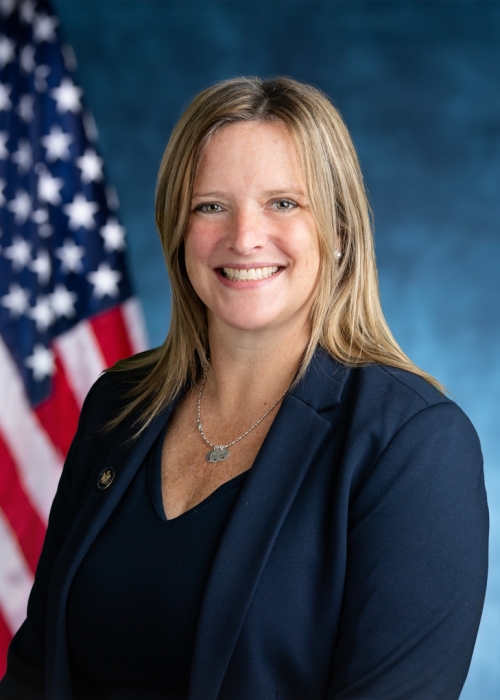
Asm. Sarah Clark
Sponsored bills
Maddy summaryThis bill asks Governor Kathy Hochul to officially recognize April 19-25, 2026, as Medical Laboratory Professionals Week in New York. The resolution honors the roughly 13,733 laboratory specialists in the state who perform critical tests to diagnose diseases and monitor treatments. By designating this specific week, the legislature aims to raise public awareness about the essential contributions of these healthcare workers. The measure does not change laws or funding but serves as a formal acknowledgment of the profession's value to public health.
Excludes one-time federal assistance in the calculation of operating revenue for purposes of minimum direct resident care spending by residential health care facilities.
Maddy summaryThis bill requires the municipal police training council to create and regularly update a model policy for law enforcement officers on how to use force when encountering companion animals. The policy must cover understanding animal behavior, tactical best practices, and safe handling techniques specifically for dogs, cats, and other domesticated pets kept in households, while explicitly excluding farm animals. By establishing these guidelines, the legislation aims to standardize officer training and ensure consistent, safe interactions with pets during police encounters.
Maddy summaryThis bill sets new rules for New York's Medicaid inspector general when auditing healthcare providers' billing for medical assistance payments. It defines key terms like "overpayment" and "clerical error," requires auditors to follow specific standards, and limits how they can spread audit findings to all claims (extrapolation) for minor, isolated errors. Providers must receive detailed audit reports explaining findings and have the right to submit supporting documentation before final decisions. The bill also mandates annual reporting on audit activities to state officials, including how many audits used extrapolation and their financial impact.
Establishes a pilot program to provide grants to local education providers to implement high-impact tutoring programs prioritizing low-income or underserved students to address student learning loss or unfinished learning resulting from the COVID-19 pandemic.
Maddy summaryThis bill creates a state-funded program to provide health insurance coverage to New Yorkers who lose eligibility for federal subsidies due to their immigration status. It establishes a new state premium assistance program that offers financial help equivalent to federal tax credits for lawfully present individuals who are currently ineligible for federal aid. Additionally, the legislation expands eligibility for existing state coverage to include more noncitizens and increases income limits for pregnant individuals and their newborns, with some provisions funded directly by state money regardless of federal approval.
Maddy summaryThis bill updates reporting requirements for lobbyists working with small nonprofits that lobby government. It raises the financial threshold for mandatory reporting from $5,000 to $10,000 annually for 501(c)(3) nonprofits (starting in 2026), while keeping it at $5,000 for other lobbyists. Nonprofits exceeding these thresholds must file bi-monthly reports detailing lobbying spending and pay a $200 registration fee, with reduced fees for those under the limit. The bill also requires clients (nonprofits) to submit semi-annual reports if they spend over $5,000 (or $10,000 for 501(c)(3)s) on lobbying. These changes aim to clarify and adjust transparency rules for smaller lobbying entities.
Maddy summaryThis bill requires New York public schools to provide plant-based food options upon request by a student or their parent/guardian. Schools must offer these meat-free alternatives (defined as USDA-recognized meat substitutes) at no extra cost compared to standard meals, and include this option in all food service descriptions. The policy applies to every meal or snack the student participates in, while allowing students to choose non-plant-based options if they prefer. It does not mandate schools to offer plant-based meals to all students, only to those who specifically request them.
Relates to prohibiting the exclusion of coverage for losses or damages caused by exposure to lead-based paint; provides that no insurer licensed or permitted by the superintendent to provide liability coverage to rental property owners shall exclude coverage for losses or damages caused by exposure to lead-based paint.