

Maddy summaryThis bill updates rules for when construction projects must pay local prevailing wages. It applies to projects using at least 20% public funds (or $3 million/$5 million in public funds) for construction costs. Exemptions include single-family homes, small nonprofits, and certain affordable housing developments meeting specific affordability requirements. This affects contractors and developers working on qualifying projects funded in part by public money.
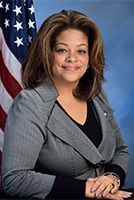
Asm. Pamela Hunter
Sponsored bills
Maddy summaryBill A 5585 requires state and county governments to create centralized digital databases for governmental real property records using blockchain technology. It mandates storing records on a "federated blockchain" with tokenization and digitalization to ensure data security, immutability, and accessibility. The system must be "redundant, permissioned, and secure," providing access to state agencies, local municipalities, and taxpayers. This applies specifically to government-owned property records, not private real estate transactions.
Authorizes certain school districts and their municipalities to sign a memorandum of understanding authorizing a one-time annual increase to the amount of school district expenditures funded by city funds to be excluded from the maintenance of effort calculation.
Repeals the rebates for stock transfer tax paid; dedicates funds of the stock transfer tax fund and stock transfer incentive fund to various funds; establishes the safe water and infrastructure action program.
Maddy summaryThis bill creates a new license allowing supermarkets meeting specific size and sales criteria to sell wine in sealed containers (like bottles or cans) for off-premises consumption. To qualify, a store must primarily sell food (over 65% of revenue) and be at least 4,000 square feet, with a $10,000 franchise fee required. Licenses cannot be granted within 200 feet of schools/churches or 500 feet of liquor stores. Local governments can set time/place rules but cannot block licenses that meet these state standards.
Relates to the use of antipsychotic medications in nursing homes; imposes limits as to time and documentation; requires informed consent under certain circumstances.
Maddy summaryThis bill permits health insurers and certain corporations (like health maintenance organizations) to offer annual wellness, preventative care, and health initiative incentive programs to policyholders, with a maximum value of $600 per person per year. It expands existing insurance law by allowing non-cash rewards (such as discounts or sweepstakes) for health goals like disease management, while maintaining a spending cap. The bill also clarifies that premium adjustments reflecting approved commission ranges do not violate anti-inducement rules. It directly affects health insurers, their policyholders, and corporate health providers in New York.
Directs the division of veterans' services to establish a searchable database of veteran-owned businesses; requires the use of a special mark to indicate service-disabled veteran-owned businesses.
Requires not-for-profit corporations have a board of directors which reflects the ethnic demographics of the communities that they serve to be able to receive state funds.
Allows for unlicensed personnel to administer certain seizure rescue medication in schools, on school grounds and at school events; provides that such medicine may be left with a school health official to be used as needed.