

Creates the commission on battery fire safety practices to evaluate the need for resources for police, volunteer fire departments and emergency medical services concerning health and safety best practices when responding to lithium-ion battery incidents.
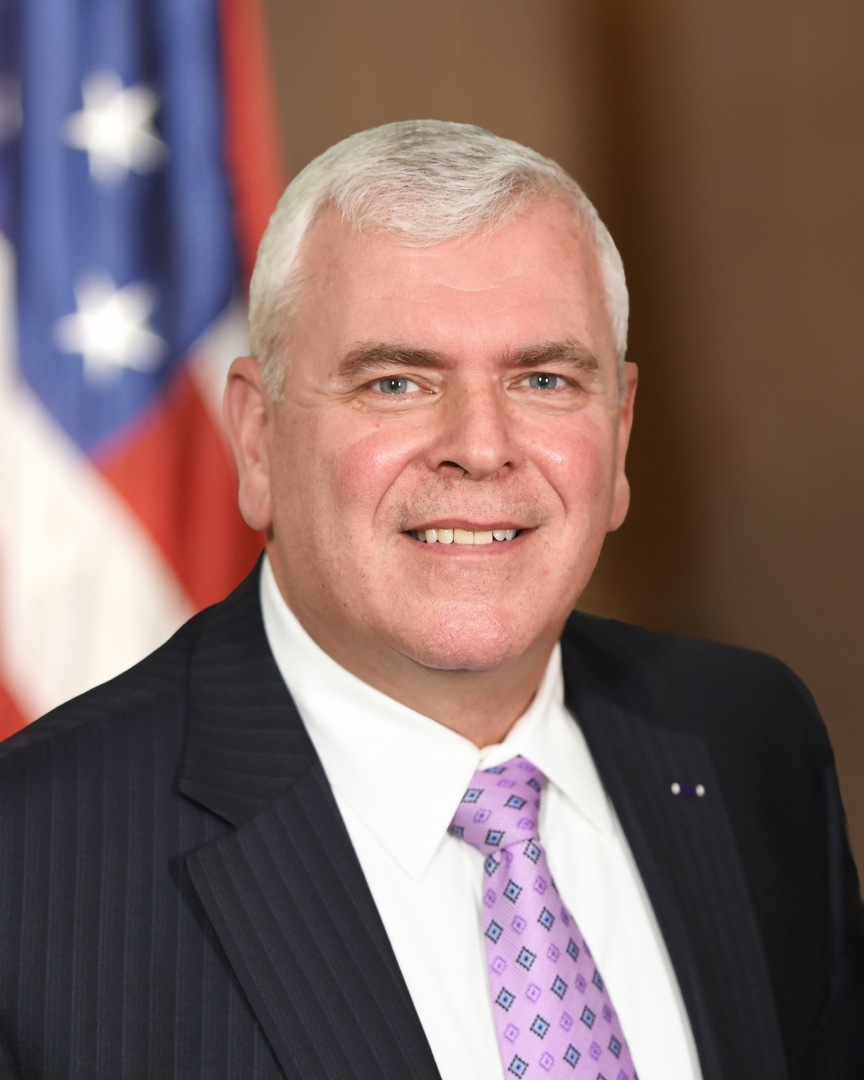
Asm. Joe Angelino
Sponsored bills
Maddy summaryThis bill amends New York's criminal procedure law to allow bail for defendants charged with "aggravated cruelty to animals" as defined under agriculture law §353-a. It specifically adds this offense to existing lists of crimes where bail eligibility is authorized, alongside other offenses like third-degree weapon possession. The change directly affects individuals facing criminal charges for severe animal cruelty, ensuring they may qualify for bail under the same standards as other eligible offenses. The bill makes no changes to the crime itself or its penalties, only to bail eligibility procedures. It became effective immediately upon enactment.
Establishes a supplemental household and dependent care credit payment for taxpayers who are eligible for certain household and dependent care services necessary for gainful employment.
Establishes the "Purple Star School Program" to assist military-connected students and to recognize the value of military service and civic responsibility.
Provides judges with more discretion to impose bail on principals charged with a felony, principals charged with a misdemeanor when awaiting trial for another crime, principals who are a threat to the safety and security of the community, principals charged with a felony serving a sentence of probation or while released to post release supervision; requires principals who have been charged with an offense related to three separate alleged instances of criminal activity are committed to the custody of the sheriff.
Relates to protecting the communication rights of individuals with disabilities; provides that each person with a disability has the right to communicate in their preferred manner.
Maddy summaryThis bill creates three types of specialty license plates for New York residents: one for current members of the U.S. Army 10th Mountain Division, one for supporters of the division, and one for veterans. Applicants must verify their status (membership, support, or veteran status) and pay a $20 annual fee, with the revenue funding plate production and marketing. The state motor vehicle department requires a $6,000 bond for plate production unless 200+ orders are received upfront, with excess funds supporting a scholarship program. The bill directly affects eligible military members, supporters, and veterans who register vehicles in New York.
Maddy summaryThis bill creates a state task force to study the feasibility of growing crops for cellulosic ethanol production, a renewable fuel that substantially reduces greenhouse gas emissions compared to conventional ethanol. The task force, to be formed by the Agriculture Commissioner with members from environmental and conservation agencies, must identify optimal crops and locations within the state and submit findings and recommendations within one year. The bill expires two years after enactment, making it a temporary study initiative focused on advancing renewable energy research without implementing new regulations.
Relates to establishing guidelines for DAs with regard to electronic conversion of certain records, books or papers in the care, custody or control of DAs that are more than 10 years old.
Maddy summaryThis bill (A 5165) changes sentencing requirements for certain serious crimes in New York. It mandates that defendants convicted of specific types of first-degree murder (as defined in sections 125.27(i)-(iii) of the penal law), aggravated murder, or certain terrorism/chemical weapon offenses must receive either the death penalty or life imprisonment without parole. For other first-degree murder convictions, the court must choose between death, life without parole, or a standard class A-I felony sentence. The bill also specifies that individuals convicted of murder in the second degree under defined circumstances must receive life without parole. These changes apply directly to defendants convicted of the listed offenses in New York State.