

Provides for certain victim statements to be taken at their workplace instead of the police department where such workplace was the scene of the crime and is a hospital, emergency medical facility, nursing home or residential health care facility.
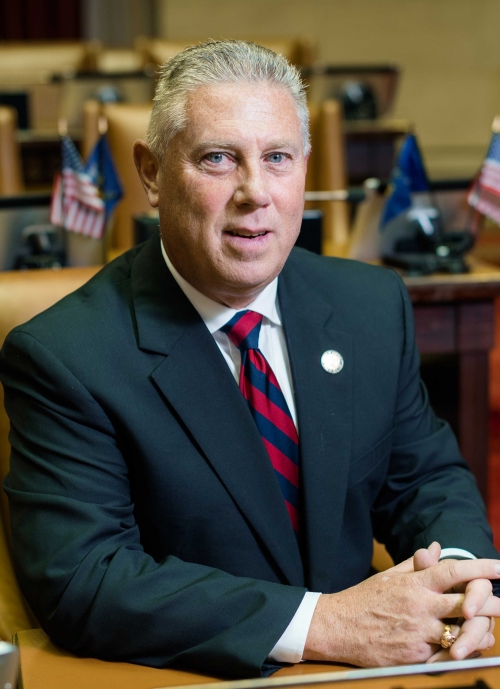
Asm. John McDonald
Sponsored bills
Maddy summaryThis bill creates a new panel within the state executive department to oversee and expand pharmaceutical insurance coverage. The panel is led by the directors of the Office for the Aging and the Department of Health, with members drawn from other state agencies who serve without pay. Its main duties include setting annual cost-sharing rules for eligible participants, entering into necessary contracts, and running an outreach program to inform residents about available prescription drug benefits. Additionally, the panel must produce an annual report detailing enrollment statistics, financial projections, and the effectiveness of its operations. To guide its work, the panel will consult with an advisory committee representing consumers, pharmacists, and drug manufacturers.
Allows victim impact statements in New York state be video recorded; requires that the members of the parole board and all presiding commissioners for such hearing review all relevant victim impact statements prior to the conduct of a parole hearing and to sign a written attestation confirming that they have done so.
Maddy summaryThis bill requires courts to immediately report extreme risk protection orders to a statewide computerized registry, law enforcement agencies, licensing officers, and other relevant state divisions. The law mandates that these reports, including temporary and final orders as well as any amendments or revocations, be submitted electronically within one business day of issuance. Courts must also provide specific demographic data alongside the orders to help track and enforce these restrictions. Additionally, the bill directs state officials to create a comprehensive plan for maintaining this registry, which will include past orders once the law takes effect.
Maddy summaryThis bill requires state, county, and local transportation projects to prioritize safe access for all road users, including drivers, pedestrians, cyclists, and public transit riders. It mandates that agencies using complete street design principles consider these needs during the planning, design, and construction of new or rebuilt roads, while also applying these standards to maintenance projects lasting at least ten years. Additionally, the legislation updates the criteria for determining when a road project is unnecessary, adding community support as a key factor alongside traffic volume and land use. The law will not apply to projects approved before it becomes effective and will take effect approximately 260 days after passage.
Establishes the "recovery ready workplace act" which provides for the certification of an employer to become a recovery ready workplace; defines terms; establishes the recovery-ready workplace program; provides criteria for employers to obtain certification as a recovery ready workplace; provides for employee involvement.
Enacts "Melanie's law"; relates to orders of protection; allows courts to issue orders of protection for immediate family members or household members of the named victims, regardless of age.
Establishes the rare disease advisory council to identify best practices, raise awareness regarding rare diseases, evaluate barriers to access to care, and to make recommendations to the legislature and the governor.
Maddy summaryThis bill creates the Syd O. Sotillo Sickle Cell Treatment Act to establish designated centers for sickle cell care excellence and outpatient treatment across the state. It designates five hospitals or hospices as centers of excellence that will provide specialized care, conduct research, and receive $200,000 annually, while also designating ten other hospitals as outpatient treatment centers that will receive $100,000 each. Additionally, the legislation modifies opioid prescribing rules to explicitly exempt patients with active sickle cell disease from restrictions that limit long-term pain medication use. These changes aim to improve access to specialized care and ensure that sickle cell patients can access necessary pain management without facing standard opioid limitations.
Maddy summaryThis bill allows local governments in New York to exclude the costs of emergency medical services from the cap on their real property tax increases. By making this change, municipalities would have more flexibility to raise taxes specifically to fund emergency medical care without hitting the overall spending limit. The law is set to take effect for the 2025 fiscal year and will remain in force until June 15, 2030.