

Provides that no corporation, partnership, limited liability company, firm, online platform, or any other business entity doing business in this state shall knowingly sell, offer for sale, or deliver medetomidine to individuals without proof of its intended use for institutional, veterinary, or scientific purposes.
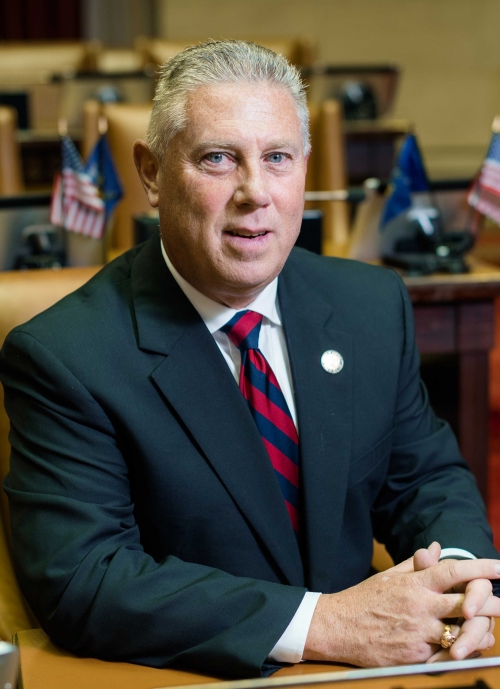
Asm. John McDonald
Sponsored bills
Maddy summaryThis bill expands tax exemptions for new farm buildings to include structures used for on-farm retail sales of agricultural products like produce, honey, or maple syrup. Previously excluded, these retail buildings (e.g., farm stands or on-site sales areas) now qualify for the same tax exemption as other farm structures used for production or storage. The change directly benefits farmers who sell directly to consumers from their properties, reducing their property tax burden for qualifying retail facilities. The exemption applies to buildings used exclusively for selling farm-grown commodities, not for general retail operations.
Maddy summaryThis bill creates two new criminal offenses for harming companion animals (like pets) and farm animals (like livestock). Endangering welfare in the second degree (a misdemeanor) occurs when someone recklessly causes suffering, while the first degree (a felony) applies when someone intentionally or negligently causes injury or death. Key exemptions include normal farming practices (like slaughter or standard care), veterinary procedures, and approved research. The law aims to protect animals from unnecessary harm while explicitly excluding routine agricultural and veterinary activities.
Maddy summaryThis bill allows New York pharmacists to administer FDA-approved progestin-only contraceptive injections for birth control, expanding access to contraception. Pharmacists must complete a patient risk assessment, provide educational materials, and notify a patient's primary care provider (with opt-out allowed) before administering the injection. They must also complete required training and may refuse service if safety concerns exist. The law directly affects patients seeking contraception - particularly those without regular doctors - and pharmacists who provide this service.
Relates to returnable bottles; adds noncarbonated soft drinks, certain noncarbonated fruit or vegetable juices, coffee and tea beverages, carbonated fruit beverages and cider to the definition of "beverage"; provides that beginning April 1, 2027, the handling fee will be six cents for each beverage container accepted by a deposit initiator from a dealer or operator of a redemption center; directs the multi-agency bottle bill fraud investigation team to submit a report on findings of pervasive bottle redemption fraud in New York state.
Authorizes the superintendent of financial services to hire an actuary to assist with reviewing any rate or form filing submitted to the superintendent.
Maddy summaryThis bill makes it a felony to intentionally stage a construction site accident to file a fraudulent insurance claim. It directly affects individuals or groups who enter construction sites to fake injuries or damage with the specific intent of submitting a false insurance claim. The law criminalizes both personally staging such accidents and directing others to do so, treating it as a class E felony punishable by prison time. The key provision creates a new criminal offense specifically targeting insurance fraud at construction sites.
Updates the fee collected by county clerks and clerks for the city of New York for deposit into the cultural education account from $15 to $30; increases the amount retained by the county or city from $0.75 to $1.00.
Maddy summaryThis bill significantly expands eligibility for judicial diversion programs, allowing individuals charged with a broader range of offenses to participate if they have a "qualifying diagnosis." This diagnosis includes serious mental disorders, other mental health disorders causing severe functional impairment, or substance use disorders. While most Class A felonies and Class B sexual offenses are generally excluded, the bill establishes a new "diversion part" in each county. It also redefines "treatment" within these programs to include evidence-based interventions outside of carceral settings.
Establishes a program for specific individuals to become complex care assistants and provide private duty nursing services to certain Medicaid enrollees.