

Requires maternal health care providers facilitate a screening for maternal depression, unless refused by the birth mother, within the first six weeks of birth and that such screening be covered by insurance.
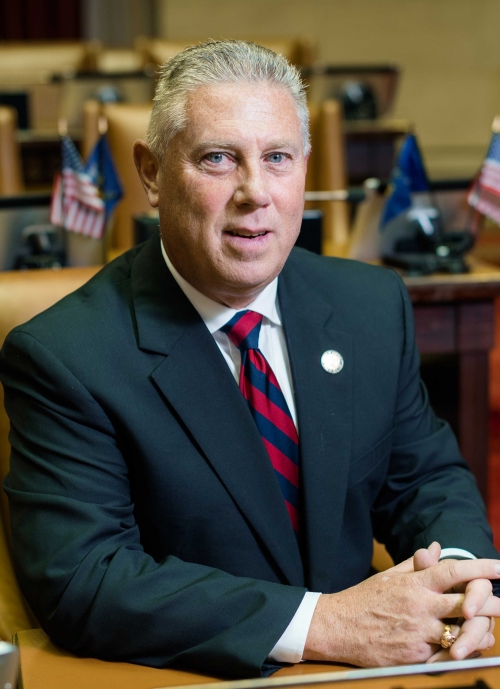
Asm. John McDonald
Sponsored bills
Maddy summaryThis bill updates New York State's funding mechanism for home health care services to better meet community needs. It allocates annual state funds (based on population or minimum $200,000 per region) to certified home health agencies, targeting underserved areas, high-need populations, and staffing challenges. Key provisions require agencies to demonstrate service to vulnerable groups, support recruitment/retention for nurses and staff, and use funds for technology to improve care delivery. The bill directly affects home health agencies by providing new funding streams to expand access and address rising demand driven by an aging population and complex medical needs.
Establishes the shovel-ready housing program under which certain municipalities, at their option, may pre-authorize parcels of property for the construction of housing; establishes a shovel-ready community tax rebate for taxpayers residing in municipalities that opt-in to the shovel-ready housing program; provides for annual apportionment to municipalities that have certified participation in the shovel-ready housing program.
Maddy summaryThis bill requires election commissioners and key staff at county election boards to complete mandatory training. New commissioners must finish a 30-hour initial course within six months of appointment, while all staff must complete a 3-hour annual refresher by June 1 each year. The state board of elections will develop the curriculum and provide training, including web-based options. Failure to complete training results in the state board notifying the county legislature, city council, and local party chair.
Establishes the professional practice of community midwifery; defines as the management in the home, birth center, or community setting, of normal pregnancies, child birth, and postpartum care, including newborn evaluation, resuscitation and referral for infants; sets requirements for license and practice.
Maddy summaryThis bill requires state employees in New York to provide written acknowledgment when changing job titles or responsibilities that affect their retirement membership eligibility or service credit accrual. Both the employee and employer must sign a statement confirming the change and its effective date, then submit it to the retirement board or comptroller within 30 days. It directly affects public employees whose roles transition between retirement-eligible and non-eligible positions, ensuring formal documentation of eligibility changes.
Maddy summaryThis bill establishes a state program providing grants of up to $75,000 per unit to owners of small rental buildings (five or fewer units) located outside New York City. The program targets vacant units or those with code violations, requiring owners to renovate and lease units at affordable rates - defined as 80% of area median income - for a minimum of ten years. Owners who violate the affordability agreement must repay all grants received. The program aims to address upstate New York's shortage of safe, affordable housing by incentivizing property improvements while ensuring long-term tenant affordability.
Maddy summaryBill A 236 updates the educational licensing requirements for new respiratory therapists and respiratory therapy technicians in New York State. New respiratory therapists will need an associate degree for initial licensure but must attain a baccalaureate degree in respiratory therapy or an equivalent within six years to maintain their registration. New respiratory therapy technicians will receive a three-year initial license, after which they must meet the new baccalaureate degree requirements for respiratory therapists to continue practicing. These updated educational standards do not apply to individuals already licensed as of the bill's effective date.
Maddy summaryThis bill amends New York's criminal procedure law to explicitly include arson felonies in the list of offenses where bail or pre-trial detention may be authorized. It adds "arson in the fourth degree" and "arson in the third degree" to existing provisions governing bail decisions for crimes involving harm to people or property. The law requires prosecutors to show reasonable cause that the defendant committed both the arson charge and any underlying crime, though courts may still release defendants if property harm is deemed negligible and unrelated to other criminal activity. This affects individuals charged with arson felonies who are already out on bail or awaiting arraignment for other serious offenses.
Maddy summaryThis bill requires the Office of Victim Services to create specific procedures for notifying crime victims about the address confidentiality program. The program allows victims to keep their home addresses private to enhance safety. The notification must be part of standardized procedures used by police, sheriffs, and state police when interacting with victims. It directly affects individuals who are victims of crime in New York State. The law mandates this change to ensure victims are informed about available safety resources.