

Maddy summaryThis bill allows licensed pharmacists in New York to order and administer specific diagnostic tests, directly affecting pharmacists and patients seeking convenient testing. It authorizes pharmacists to perform FDA-authorized tests for conditions like COVID-19, flu, RSV, strep throat, HbA1c, hepatitis C, and HIV. The law expands pharmacists' scope of practice to include these tests under federal "waiver" requirements, without requiring additional physician oversight. The provision expires on July 1, 2028, as noted in the bill's text.
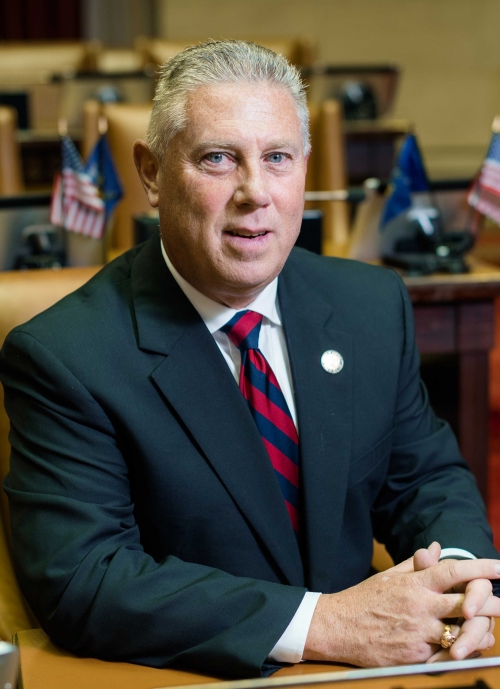
Asm. John McDonald
Sponsored bills
Expands agricultural tourism to include, but not be limited to, the production and processing of grapes, grains or other crops used to create alcoholic and non-alcoholic beverages in an on-farm brewery, winery, cidery, meadery or distillery, the production and processing of fiber such as sheep or alpaca wool, and the production of processed food commodities, including but not limited to ice cream, jams, baked goods and similar items.
Establishes a blue envelope program for persons with mental health disorders, behavioral disorders and persons who are neurodivergent to be provided with blue envelopes to keep their identification, vehicle registration, and other related documents to improve their safety during law enforcement interactions; requires the municipal police training council to promulgate rules and regulations requiring training and instruction for all police officers with respect to the blue envelope program.
Maddy summaryThis bill adds "red cross vehicle" to New York's definition of authorized emergency vehicles under the Vehicle and Traffic Law. It specifically includes vehicles owned or leased by the American Red Cross (or its chapters), clearly marked with the Red Cross emblem. The bill clarifies that operators of these vehicles do not gain all emergency driving privileges granted to other authorized vehicles under Section 1104. The change directly affects Red Cross emergency response operations by legally recognizing their vehicles as authorized emergency vehicles for specific purposes.
Requires pharmacies to provide prescription drug readers or other means of access to individuals who disclose they have difficulty seeing or reading standard print labels on prescription drug containers; defines "prescription drug reader" to mean a device which is capable of audibly conveying information contained on the label of a prescription drug; makes exceptions.
Relates to providing net revenues from utility-owned large-scale renewable generation projects to low-income customers; authorizes utility companies to own such projects; provides that the commission shall require labor agreements and labor peace agreements.
Maddy summaryThis bill extends an existing exemption allowing mattress manufacturers to use specific chemicals (modacrylic fibers without antimony trioxide or aramid fibers) in certain mattress components, without subjecting them to environmental regulations. It directly affects mattress producers who currently use these materials as barrier layers or bottom fabric. The key change updates the exemption's expiration date from January 1, 2026, to January 1, 2027, in New York's environmental conservation law. The bill makes no other policy changes and applies only to the specified mattress manufacturing uses.
Establishes the historic preservation tax credit transfer program to provide flexibility and incentives for businesses which rehabilitate historic properties to further promote the development of affordable housing.
Maddy summaryThis bill establishes a 14-member task force within the Office for the Aging to study how the state can help older residents stay in their homes and communities ("age in place"). The task force will examine specific areas like transportation improvements, zoning changes for home care, nutrition programs, fraud protections, home medical services, tax incentives, and private insurance options. It requires the task force to issue a final report with recommendations to state leaders by January 1, 2028. The bill creates a procedural study group with no immediate policy changes, focusing solely on gathering information to inform future decisions.
Prohibits fraudulent absentee ballot drop-off boxes or receptacles by making it a felony for anyone other than the board of elections to erect, display or maintain an absentee ballot drop-off box or receptacle.