

Establishes a program enabling counties to opt-in to allow county jails to operate jail-based competency restoration services for incarcerated individuals deemed unfit for trial due to mental incapacity.
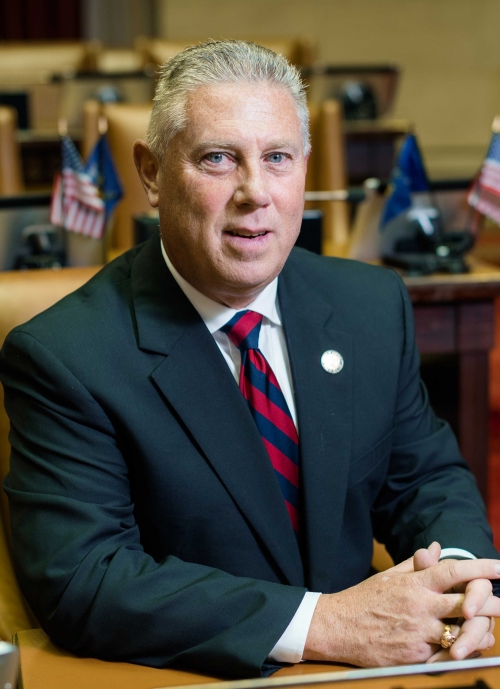
Asm. John McDonald
Sponsored bills
Relates to reimbursement of home care aides; requires the commissioner of health to ensure rate ranges for Medicaid managed care organizations comply with certain reimbursement rates.
Provides for the eligibility of certain households for a care workforce housing preference; provides for the method of application for such preference; makes related provisions.
Establishes a $25 annual supplemental motor vehicle registration fee for counties outside the Metropolitan Commuter Transportation District; dedicates the revenue to upstate public transportation systems.
Establishes a right of action for the deprivation of constitutional rights; provides for compensatory damages, punitive damages, injunctive and declaratory relief, and reasonable attorney's fees.
Maddy summaryThis bill updates how New York State calculates payment rates for federally qualified health centers (FQHCs), which provide primary care in underserved communities. It changes the rate calculation method: through 2025, rates use the Medicare Economic Index, and after 2025, they use a federal cost adjustment formula (FQHC Market Basket inflator) adjusted for service scope. The state health department must analyze actual FQHC costs every three years starting in 2025 to set updated rates, ensuring payments reflect real costs while guaranteeing no facility receives a rate lower than the 2025 level. This directly affects FQHCs by potentially increasing their state-funded payments based on verified operational expenses.
Establishes the "clean fuel standard of 2026"; provides such standard is intended to reduce greenhouse gas intensity from the on-road transportation sector, with further reductions to be implemented based upon advances in technology.
Establishes a special needs assisted living demonstration program to authorize up to three assisted living programs throughout the state to serve individuals with special needs, including, but not limited to, individuals with dementia or cognitive impairments.
Maddy summaryThis bill creates a sales tax exemption for commercial energy storage systems. It directly affects businesses installing or using equipment that stores electricity for later use in non-residential buildings (like offices, factories, or warehouses) to provide heating, cooling, hot water, or electricity. The key provision exempts the retail sale and installation costs of this equipment, as well as electricity sales from businesses that own and install such systems on a customer's non-residential property under specific written agreements. The exemption applies to both the equipment itself and the electricity generated by it, aligning with existing tax law definitions for similar energy storage systems.
Maddy summaryBill A 8082 establishes a new retirement service credit for members of public retirement systems who have served as volunteer firefighters or emergency service personnel. Eligible members can receive one year of service credit for every five years of volunteer service, up to a maximum of three years of credit for fifteen years of service. To qualify, members must have at least five years of other credited service and pay a fee equivalent to three percent of their compensation for the twelve months prior to application, for each year of credited volunteer service. This credit can be applied towards special twenty or twenty-five year retirement plans.