

Maddy summaryThis bill bans employers from requiring workers to sign agreements that force them to pay money if they leave employment before a set period (e.g., "reimbursement for training" clauses). It directly affects all workers, including employees, interns, volunteers, and contractors, by prohibiting these "employment promissory notes" as a condition of hiring. Key exceptions include repayment for actual training costs, property purchases, or collective bargaining agreements. Violations carry fines up to $5,000 per worker, and workers can recover attorney fees if sued over invalid clauses.
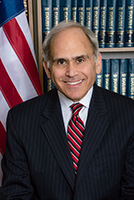
Asm. Jonathan Jacobson
Sponsored bills
Extends paid family leave benefits to employees who perform construction, demolition, reconstruction, excavation, rehabilitation, repairs, renovations, alterations, or improvements for multiple employers pursuant to a collective bargaining agreement who shall be eligible for family leave benefits if they were employed for at least twenty-six of the last thirty-nine weeks by any covered employer which is signatory to a collective bargaining agreement.
Requires that any proposed capital expenditure to be considered in any matter affecting a major change in rates must be described by the utility and shall include the purpose, cost, and benefits to the ratepayers and shall be posted on the PSC website.
Maddy summaryThis bill ensures that cost-sharing requirements (like copays) for specific high-deductible health plans paired with health savings accounts (HSAs) do not make enrollees ineligible for HSAs. It requires that out-of-pocket costs only apply after a person meets the plan's deductible, except for preventive care services (e.g., vaccinations, screenings), which remain fully covered regardless of deductible status. The law directly affects individuals enrolled in HSA-qualified health plans and their insurers, clarifying when cost-sharing rules apply. It amends New York's insurance law to align with federal HSA eligibility rules under Section 223 of the Internal Revenue Code.
Relates to prevailing wage for those involved in hauling of concrete and asphalt in the counties of Nassau, Putnam, Suffolk, and Westchester, and in the city of New York.
Requires hospitals to establish a violence prevention program which includes a workplace safety and security assessment and develop a safety and security plan that addresses identified workplace violence threats or hazards.
Relates to eligibility for classification as permanent total disability; includes inability to perform the full range of sedentary work or approval for federal social security disability benefits as a result of a compensable accident or occupational disease as constituting permanent total disability.
Maddy summaryThis bill establishes a Center for Dyslexia and Dysgraphia within the state Department of Education. The center will define these learning differences, create a public guidebook for schools, set evidence-based screening standards for all K-5 students (and at-risk new students), and develop teacher training requirements. It directly affects schools, educators, and students with dyslexia or dysgraphia by mandating universal screenings, standardized interventions, and updated professional resources. The center must issue a biennial report on implementation progress and update the guidebook every five years after public review.
Establishes a reproductive health services training and education grant program to train licensed providers and interns or residents who are employed by a hospital or otherwise enrolled in an accredited graduate medical education program in the performance of abortion and related reproductive health services; establishes the reproductive health training and education fund.
Maddy summaryBill A 5320 expands tuition assistance eligibility in New York to include students experiencing homelessness, aligning with federal McKinney-Vento Act standards. It requires the state to adopt a uniform verification method for homelessness status using the same federal guidelines applied to student financial aid. The bill also clarifies that homeless students (classified under federal foster care or McKinney-Vento criteria) cannot be considered "emancipated" for aid purposes, ensuring they retain eligibility without requiring parental control relinquishment. This directly affects homeless students seeking state tuition assistance under New York’s education law.