

Provides limitations on overlapping control between insurance companies and pharmacy benefits managers and pharmacies; requires divestment of the interest in one or more insurance companies and pharmacy benefits managers.
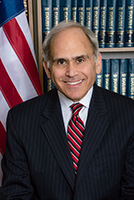
Asm. Jonathan Jacobson
Sponsored bills
Provides that it is unlawful for any person to directly or indirectly own, operate, or control the whole or any part of a health insurance company and a health care provider; requires divestment within three years.
Maddy summaryThis bill (A 4932) designates January 30th each year as "Fred Korematsu Day of Civil Liberties and the Constitution" in New York State. It adds this date to the state's list of official commemorative days, honoring Fred Korematsu - a Japanese American whose legal challenge to WWII internment policies became a landmark civil liberties case. The bill has no legal effect beyond recognizing this day for public observance. It is purely ceremonial, with no new requirements or direct impacts on residents or government operations.
Provides for a personal income tax deduction for student loan payments not in excess of five thousand dollars; excludes any payment not in excess of five thousand dollars made by an employer, employee, or on behalf of an employee that is directly deducted from the employee's wages through payroll and administered by a third-party platform that facilitates direct payments to educational institutions or related loan servicers on behalf of students such amount from an employee's New York state gross income; further excludes any contribution not to exceed five thousand dollars to a tuition program under section 529 of the Internal Revenue Code made through payroll deduction and facilitated by an employer or a third-party platform that facilitates direct payments to such programs on behalf of employees from the employee's New York state gross income.
Maddy summaryThis bill amends New York's real property tax law to require all Palisades Interstate Park state lands in Ulster County to be taxed for all purposes, expanding the existing requirement that already applied to lands in Rockland and Sullivan counties. It specifically affects landowners and local governments in Ulster County (including towns like Gardiner, Rochester, Shawangunk, and Wawarsing) and the listed towns in Orange County. The key change adds Ulster County to the list of areas where these park lands must be subject to property taxation, removing their previous exemption. This is a direct policy change to the tax treatment of these specific lands, not a procedural or commemorative measure.
Enacts the "Empowering People in Rights Enforcement (EMPIRE) Worker Protection Act"; relates to the delegation of state enforcement authority to private actors; authorizes an affected employee, whistleblower, representative organization or an organizational deputy to initiate a public enforcement action on behalf of the commissioner for certain provisions of the labor law, or any regulation promulgated thereunder.
Voids provisions in construction contracts requiring retainage as expressly provided for by section seven hundred fifty-six-c of the general business law in an amount exceeding five percent of the contract sum.
Provides protections for telecommunications tower technicians, including requiring certain trainings during work hours without a loss of pay; requires certain reporting by bidders for telecommunication contracts.
Codifies the disparate impact standard in the human rights law; provides that in cases of alleged housing discrimination, an unlawful discriminatory practice may be established by a practice's discriminatory effect.
Maddy summaryThis bill (A 2177) removes the cost of emergency medical services (EMS) from the property tax levy limit that local governments (like cities and towns) must follow. It directly affects municipalities that fund EMS services, allowing them to cover these costs without triggering the tax cap. The key change adds a specific exemption in law, so EMS expenditures no longer count toward the maximum tax levy allowed under current rules. This provides local governments with more budget flexibility for essential emergency response services.