

Maddy summaryThis bill establishes the "abortion access fund" to support individuals seeking abortion services. It allows New York taxpayers to voluntarily contribute to the fund via their state income tax returns starting in 2027 (without reducing their tax liability), with the tax form including a dedicated line for this purpose. Funds will be used to cover financial and logistical barriers for abortion access, supporting nonprofits providing services like medical care and transportation. The bill includes strong privacy protections, prohibiting the state from requiring nonprofits to share personally identifying information about patients or staff. The comptroller must annually report on fund usage, including disbursement details and financial plans.
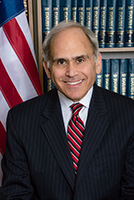
Asm. Jonathan Jacobson
Sponsored bills
Maddy summaryThis bill allows Orange County to withdraw from the Metropolitan Commuter Transportation District (MCTD), the regional agency managing commuter rail services. To withdraw, Orange County must submit a public transportation plan ensuring continued rail service to New York City, secure a rail service agreement, and gain approval from the transportation commissioner. The bill specifically deems Orange County as having planned withdrawal within one year of the bill's effective date, streamlining its exit. This is a procedural change affecting Orange County's transit operations and its relationship with the MCTD, without creating new services or funding.
Maddy summaryThis bill requires that all grants issued through New York's state and municipal facilities program must be sponsored by either the governor or a state senator or assembly member. It directly affects entities applying for these grants, such as local governments or public institutions seeking funding for facility projects. The key provision mandates that no grant can be issued without such sponsorship, adding a legislative oversight step to the process. The bill takes effect immediately but applies to grants issued on or after April 1, 2025.
Specifies methods of calculating deposits and reserves for the aggregate trust fund and reserves of the state insurance fund; provides that all computations made or directed by the workers' compensation board shall be on the basis of the survivorship annuitants table of mortality, the remarriage tables of the Dutch Royal Insurance Institution applicable to claims for accidents occurring on or before December 31, 2025, and beginning January 1, 2026 and on January 1 of each tenth year thereafter, the United States life table for the total population published by the department of health and human services and the remarriage table published by the department of health and human services and the remarriage table published by the United States railroad retirement board applicable to claims for accidents occurring on or after January first of the year following the adoption of any revision of such tables; makes related provisions.
Empowers the commissioner of labor to issue stop work orders against employers for misclassification of employees as independent contractors or for providing false, incomplete, or misleading information to an insurance company on the number of employees of such employer.
Relates to utility intervenor reimbursement to a participant for its reasonable costs of participation in any proceeding before the Public Service Commission (PSC).
Prohibits local, state and federal law enforcement officers from wearing any mask or personal disguise while interacting with the public in the performance of their duties; excludes certain protective masks.
Ensures the safe and efficient delivery of materials for the timely construction of major renewable energy facilities in furtherance of the goals mandated by the New York state climate leadership and community protection act; provides that vehicles carrying materials intended for the construction of any major renewable energy facility, including oversize and superload transport vehicles, shall be permitted to travel on the thruway and state highways, on any day of the week, including Saturday and Sunday.
Maddy summaryThis bill replaces New York's existing criminal forfeiture process with a new "Criminal Forfeiture Process Act." It applies specifically to property seized in connection with certain felony drug offenses, prostitution, driving under the influence, or property seized during hot pursuit of a felony suspect. Key changes include requiring courts to hold prompt hearings after seizure, mandating notice to all known property owners (including "innocent owners" who didn't know their property was used in crime), and making forfeiture proceedings part of the criminal trial rather than a separate civil case. The law also clarifies that contraband or stolen property must be disposed of or returned per state law, and prohibits civil forfeiture.
Relates to funds concerning state university health care facilities; prohibits the use of such funds for payment of certain debts related to a state university health care facility.