

Maddy summaryThis bill modifies the notice requirements for landlords operating in municipalities with good cause eviction laws. It allows landlords to omit a specific mandatory notice from initial leases, lease renewals, and eviction-related documents. The change directly affects rental properties located within designated good cause eviction areas. By removing this requirement, the legislation simplifies the documentation landlords must include when initiating or renewing tenancy agreements.
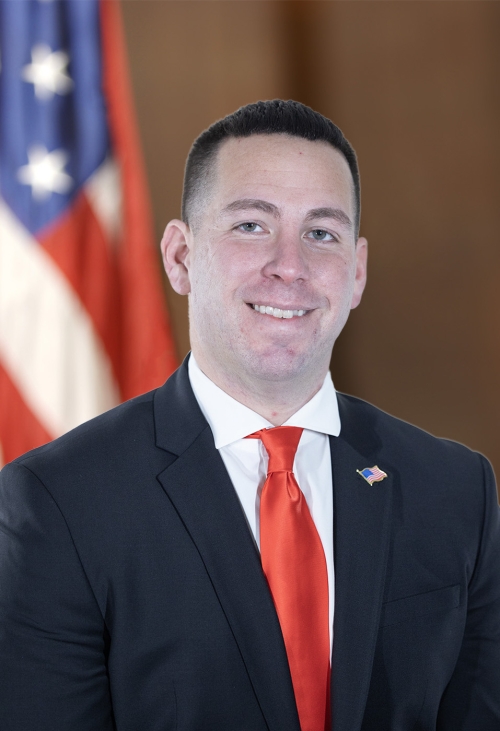
Rep. Brian Maher
Sponsored bills
Maddy summaryThis bill amends New York's military law to allow uniformed members of the New York National Guard who have received duty orders to ride for free on public transportation, including subways, buses, trains, ferries, and toll roads. The provision requires service members to be in uniform or present a valid duty order or certificate to qualify for the free passage. The changes apply to existing organized militia members and take effect 30 days after the bill becomes law.
Maddy summaryThis bill updates how New York State calculates payment rates for federally qualified health centers (FQHCs), which provide primary care in underserved communities. It changes the rate calculation method: through 2025, rates use the Medicare Economic Index, and after 2025, they use a federal cost adjustment formula (FQHC Market Basket inflator) adjusted for service scope. The state health department must analyze actual FQHC costs every three years starting in 2025 to set updated rates, ensuring payments reflect real costs while guaranteeing no facility receives a rate lower than the 2025 level. This directly affects FQHCs by potentially increasing their state-funded payments based on verified operational expenses.
Maddy summaryThis bill requires social media platforms to block minors under 14 from creating accounts and mandates parental consent for 14-15 year olds to use accounts. It defines "social media platform" to include apps with addictive features (like infinite scrolling or push notifications) and sets standards for age verification. Platforms must delete personal data from terminated accounts and avoid showing minors content deemed "harmful" under specific legal criteria (e.g., sexually explicit material lacking artistic value). The bill directly affects major social media companies operating in the state, minors under 16, and their parents/guardians.
Maddy summaryThis bill creates a one-time energy price refund credit for New York state taxpayers who lived in the state during 2024 and meet specific income limits. Eligible residents receive between $150 and $400 depending on their filing status and income level, with higher amounts available for married couples and lower incomes. The credit is calculated based on 2024 tax information and will be issued as a refund or tax credit for the 2026 tax year. The legislation also ensures that any portion of the credit included in federal income will not be subject to New York state or local income tax.
Maddy summaryThis bill creates a 9-member task force within New York's Office of Mental Health to study how elderly residents in community mental health housing can "age in place" while receiving proper care. The task force will examine specific barriers, including integrating mental and medical care, making housing ADA-compliant, training staff on elderly needs, and improving transportation for medical appointments. It must issue a report with recommendations to the governor and legislature within 12 months, after which the task force automatically expires. The bill directly affects elderly residents in state-funded mental health housing programs and aims to improve their care coordination and living conditions.
Adds members to the board of trustees of the state university of New York who represent the interests of community colleges as full voting members of the board of trustees; provides that the local legislative body or board of the county in which a community college is located may appoint a trustee in the event that the governor fails to appoint such trustee within 180 days of a vacancy on a board of trustees of a community college.
Maddy summaryThis bill allows unused funds in New York's climate investment account - collected from electricity customers through utility bills - to be returned directly to those customers. Specifically, any uncommitted funds collected via the "bill-as-you-go" system (where fees are added to monthly utility bills) must be credited back to ratepayer accounts by the end of each fiscal year. The bill modifies existing law to require this refund, ensuring customers who paid these climate-related fees receive the unused portion. It directly affects electricity customers who contributed to the climate investment account but did not have their funds fully allocated for climate projects. The change is a procedural adjustment to fund handling, not a new policy for climate initiatives.
Directs the department of health to contract with a qualified entity for a feasibility study and actuarial analysis of long-term services and supports financing and services options.
Requires hotels and motels to maintain a roster of guests, including their photo identifications, for five years and security footage for ninety days; restricts the use of hourly rates at hotels and motels; increases penalties therefor.