Increases the amount of years of military service credit a member may purchase from three years to four years; provides that the provisions of such act shall not be subject to the requirement that the state shall make an equal payment to the retirement system.
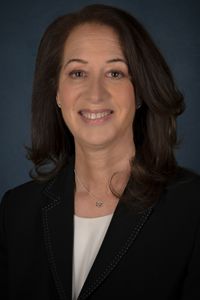
Asm. Paula Kay
Sponsored bills
Directs the commissioner of mental health to establish a public awareness campaign concerning the dangers of social media and cell phone use by school-age children, including but not limited to the addictive qualities of social media, the stunting impact of social media usage on the development of social skills, increased feelings of isolation, anxiety and depression among adolescent users and the attendant amplification of peer on peer bullying, and increased rates of adolescent suicide and suicide attempts, as well as about how to recognize suicide risk factors and seek suicide prevention assistance.
Provides that any volunteer agency who is granted state aid by the office of addiction services and supports or pursuant to a contract with a local governmental unit shall receive the full amount of such state aid within sixty days from approval; provides that volunteer agencies shall have two years to spend such aid.
Renames the block grant for child care to the early childhood fund; requires the office of children and family services administer such fund; expands who qualifies for guaranteed child care assistance.
Authorizes licensed occupational therapists who are members of the faculty of a college or university with an accredited occupational therapy program to create a university faculty practice corporation for occupational therapy students to receive clinical instruction.
Maddy summaryThis bill updates how New York State calculates payment rates for federally qualified health centers (FQHCs), which provide primary care in underserved communities. It changes the rate calculation method: through 2025, rates use the Medicare Economic Index, and after 2025, they use a federal cost adjustment formula (FQHC Market Basket inflator) adjusted for service scope. The state health department must analyze actual FQHC costs every three years starting in 2025 to set updated rates, ensuring payments reflect real costs while guaranteeing no facility receives a rate lower than the 2025 level. This directly affects FQHCs by potentially increasing their state-funded payments based on verified operational expenses.
Establishes the "clean fuel standard of 2026"; provides such standard is intended to reduce greenhouse gas intensity from the on-road transportation sector, with further reductions to be implemented based upon advances in technology.
Relates to returnable beverage containers; amends certain definitions relating thereto; repeals a certain provision of law relating thereto; provides that a dealer whose place of business is less than ten thousand square feet and whose primary business is the sale of food or beverages for consumption off-premises may obtain an exemption from the obligation to accept empty beverage containers for redemption under certain conditions; provides for different handling fees for beverage containers accepted by a deposit initiator from a dealer or operator of a redemption center; provides that a deposit initiator shall have the right to conduct audits of containers presented for redemption by redemption centers or dealers subject to certain provisions; provides requirements for groups of deposit initiators and brands to form a commingling group; relates to provisions governing redemption centers.

Requires public and not-for-profit libraries to implement risk evaluations and determinations, workplace trainings, and other measures for the prevention of workplace violence.
Requires each designated agency to employ a dementia care navigator to provide support for caregivers of individuals with dementia and to assist individuals with dementia in accessing appropriate services; requires the state office for the aging to establish the position of dementia care coordinator.