Issue · Housing

Housing

Every housing bill, vote, and legislator stance in New York, automatically classified by Maddy, our AI policy reader.

Total bills
1,117
2025 Regular Session
Top supporter
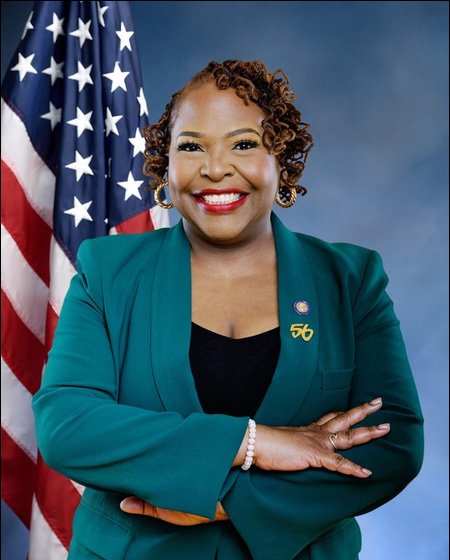
Stefani Zinerman
100% support rate
Top opponent
Matt Simpson
0% support rate
Ranked legislators
10
5 support · 5 oppose
Key legislators

Who's moving housing in New York

Legislators moving housing in New York
Legislator Party Stance Support rate Votes
Stefani Zinerman
Stefani Zinerman House · District 56
D
Strong +
100% 102
Grace Lee
Grace Lee House · District 65
D
Strong +
100% 103
Erik Dilan
Erik Dilan House · District 54
D
Strong +
100% 94
Jordan Wright
Jordan Wright House · District 70
D
Strong +
100% 87
Micah Lasher
Micah Lasher House · District 69
D
Strong +
100% 86
Matt Simpson
Matt Simpson House · District 114
R
Strong −
0% 109
Ari Brown
Ari Brown House · District 20
R
Strong −
3% 114
Sam Pirozzolo
Sam Pirozzolo House · District 63
R
Strong −
3% 115
Mark Walczyk
Mark Walczyk Senate · District 49
R
Strong −
5% 367
Joe Sempolinski
Joe Sempolinski House · District 148
R
Strong −
6% 119
Showing 1,031–1,040 of 1,117 bills

All housing bills

in committee · New York · Assembly Jan 7, 2026

A 1431: Establishes security deposit options for certain tenants

Establishes security deposit options for certain tenants, including but not limited to, an option to pay any deposit or advance to rent or use residential real property or a dwelling unit.
in committee · New York · Assembly Jan 7, 2026

A 6100: Establishes the "tenant opportunity to purchase act"

Establishes the "tenant opportunity to purchase act"; prevents the displacement of lower-income tenants in New York and preserves affordable housing by providing an opportunity for tenants to own or remain renters in the properties in which they reside.
in committee · New York · Senate Jan 7, 2026

S 5350: Relates to veterans' eligibility for public housing

Relates to veterans' eligibility for public housing; expands eligibility requirements to include veterans of the recent conflicts; requires granting of a preference for public housing to veterans or families of veterans who have a military service connected disability.
in committee · New York · Assembly Jan 7, 2026

A 1729: Creates an affordable housing relief fund program to preserve affordable multifamily residential properties located in New York state

This bill creates a new Affordable Housing Relief Fund Program administered by New York's Housing Trust Fund Corporation. It provides forgivable loans (0% interest, no payments for 10 years) of up to $50,000 per income-restricted unit to preserve distressed, 100% affordable multifamily rental properties. Eligible applicants include non-profits, charities, or for-profit owners with regulatory agreements, covering costs like deferred maintenance, emergency repairs, or debt restructuring. Properties must maintain affordability for tenants, and funds may be partially repaid if the property is sold within 10 years or affordability terms are violated. The program aims to prevent loss of affordable housing units amid rising operating costs.
in committee · New York · Assembly Aug 12, 2026

A 745: Eliminates rent for homeless shelters; repealer

Relates to eliminating rent for homeless shelters; provides that a homeless individual or family applying for or receiving temporary housing assistance shall not be required to pay to any local or state government or agency or any provider, room and board or contribute any earned or unearned income, available benefits or resources to eliminate their need for temporary housing assistance or as a condition to receive temporary housing assistance from such provider.
Sub-Topics Homelessness Renters
in committee · New York · Assembly May 15, 2026

A 3996: Establishes a jobs and housing pilot program to create jobs in the construction industry and address the housing crisis

Establishes the "jobs and housing act"; directs the private housing finance agency to develop and administer a jobs and housing pilot program to construct and preserve housing, including workforce housing, that is affordable to low and moderate income persons, and creates jobs for those who build and work in such housing.
in committee · New York · Senate Jan 7, 2026

S 6761: Provides for calculating the area median income for affordable housing programs in N.Y. city

Bill S 6761 changes how the area median income (AMI) is calculated for new affordable housing programs in New York City. For these programs, the AMI will be determined by using the lower figure between the AMI of the specific zip code where the program is located and the AMI of the broader region. This new calculation method will directly affect how eligibility and rent levels are set for future affordable housing projects within NYC.
in committee · New York · Senate Jan 7, 2026

S 2219: Establishes certain criteria for the rent guidelines board to use for purposes of determining annual rent adjustments

S 2219 requires New York City's Rent Guidelines Board to use specific criteria when calculating annual rent adjustments for rent-stabilized properties. The bill mandates the Board to consider all property sizes, categorize owners by unit count (including rent-stabilized units), gross rent, and income, and publicly disclose data sources like the Department of Finance's real property forms. It also restricts hardship rent increases to owners with 20 or fewer units citywide and prohibits these increases for limited liability companies and large real estate firms. This directly affects rent-stabilized housing landlords and tenants in New York City by changing how rent adjustments are calculated and who qualifies for certain increases.
Sub-Topics Renters Tenant Rights
in committee · New York · Senate Jun 10, 2025

S 8178: Increases the amount of funds that may be used per dwelling unit to modernize certain authorities used by the housing trust fund corporation

This bill raises the maximum funding per housing unit from $125,000 to $250,000 for projects funded through New York's Housing Trust Fund Corporation. It directly affects low-income housing developers and projects that rehabilitate or construct affordable housing using these funds. The key change is increasing the per-unit funding cap, allowing more resources for modernizing housing while maintaining existing requirements like a 5% private developer equity investment. The bill does not alter other program rules, such as loan terms (up to 40 years) or geographic allocation limits.
Showing 1,031 to 1,040 of 1,117 bills