Issue · Healthcare

Healthcare

Every healthcare bill, vote, and legislator stance in New York, automatically classified by Maddy, our AI policy reader.

Total bills
2,747
2025 Regular Session
Top supporter
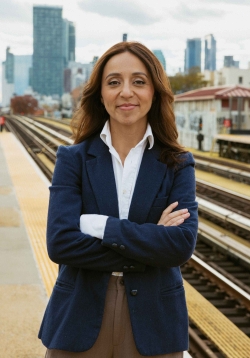
Jessica Ramos
100% support rate
Top opponent
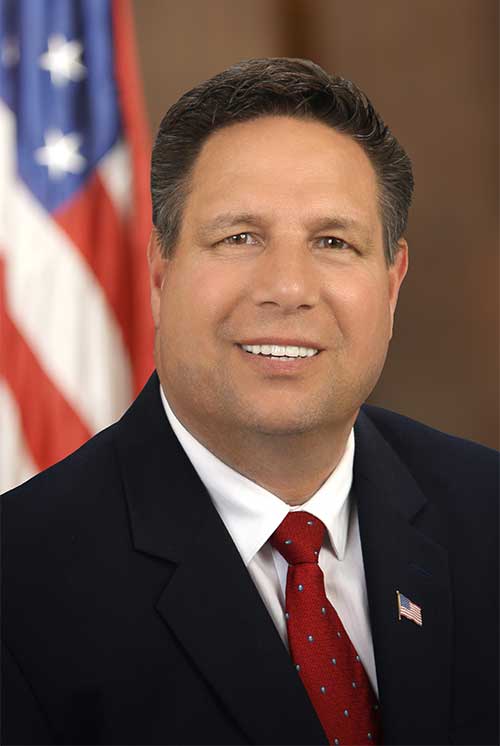
Dave DiPietro
7% support rate
Ranked legislators
10
5 support · 5 oppose
Key legislators

Who's moving healthcare in New York

Legislators moving healthcare in New York
Legislator Party Stance Support rate Decisive votes
Jessica Ramos
Jessica Ramos Senate · District 13
D
Strong +
100% 120
Jeremy Zellner
Jeremy Zellner Senate · District 61
D
Strong +
100% 65
Erik Bottcher
Erik Bottcher Senate · District 47
D
Strong +
100% 61
Keith Powers
Keith Powers House · District 74
D
Strong +
100% 18
Diana Moreno
Diana Moreno House · District 36
D
Strong +
100% 17
Dave DiPietro
Dave DiPietro House · District 147
R
Strong −
7% 30
Chris Friend
Chris Friend House · District 124
R
Strong −
8% 26
Mark Walczyk
Mark Walczyk Senate · District 49
R
Strong −
8% 147
Brian Manktelow
Brian Manktelow House · District 130
R
Strong −
10% 31
Chris Tague
Chris Tague House · District 102
R
Strong −
10% 31
Showing 771–780 of 2,747 bills

All healthcare bills

in committee · New York · Assembly Jan 7, 2026

A 3488: Requires notification to insureds that an out-of-network physician may be used in their procedure, test or surgery

Requires notification to insureds that an out-of-network physician may be used in their procedure, test or surgery and such physician's services shall not be covered by their insurance policy; provides such services must be covered if the insured person does not receive notification prior to such services or procedure.
in committee · New York · Senate Mar 5, 2026

S 4547: Relates to judicial diversion programs; repealer

S 4547 establishes a dedicated "diversion part" in every county court to handle judicial diversion cases for eligible defendants. It directly affects individuals charged with specific class B, C, D, or E felonies (excluding certain serious offenses like class A felonies) who have a qualifying mental health or substance use diagnosis. The bill requires a clinical evaluation by licensed professionals to determine if diversion is appropriate, including recommendations for evidence-based treatment (like counseling or medication) instead of incarceration. It repeals outdated provisions about alcohol/substance use evaluations and clarifies eligibility criteria for this program.
Sub-Topics Courts Drug Policy
in committee · New York · Senate Jan 7, 2026

S 7954: Relates to licensure requirements for fiscal intermediaries; repealer

Senate Bill S 7954 amends the requirements for organizations providing fiscal intermediary services in the Consumer Directed Personal Assistance Program. It expands the definition of "fiscal intermediary" to include more entities, such as certain service centers for independent living, granting them equal status to the statewide fiscal intermediary. These newly defined fiscal intermediaries can contract directly with managed care plans and must provide culturally and linguistically competent services. The bill also removes the specific procurement process for a single statewide fiscal intermediary, aiming to offer consumers more choice in these services.
Sub-Topics Medical Licensing
in committee · New York · Assembly May 20, 2026

A 5709: Establishes a work group to set reimbursement rates for doulas in the state Medicaid program and address other criteria related to their practice

Establishes a 14 member doula Medicaid reimbursement work group within the department of health to set reimbursement rates for doulas in the state Medicaid program and address other criteria related to their practice; requires the work group to conduct a study and evaluate the costs, benefits and issues that may be associated with Medicaid reimbursement for doulas and for providing doula care to Medicaid recipients; makes related provisions.
Sub-Topics Medicaid
in committee · New York · Assembly Jan 7, 2026

A 8686: Authorizes the department of health to designate a level one or level two trauma center in Far Rockaway, county of Queens

This bill authorizes New York's Department of Health to designate a level one or level two trauma center in Far Rockaway, Queens, if the facility meets health department standards. It specifically allows the center to operate without requiring a hospital component and exempts it from conflicting requirements of the American College of Surgeons. The designation would establish a new trauma care option in the Far Rockaway community. The bill takes immediate effect upon passage.
Sub-Topics Hospitals
in committee · New York · Senate Jan 7, 2026

S 6528: Relates to the prohibition of the sale of infant inclined sleepers and the restriction of the use of such inclined sleepers in certain settings

New York's S 6528 bans the sale of infant inclined sleepers (products designed for babies up to 5 months old or when rolling/pulling up begins) to manufacturers, retailers, distributors, and secondhand dealers. It also prohibits child care facilities from using these sleepers unless a medical professional determines it is medically necessary for a specific child. Violations could result in civil penalties of up to $500 per sale. The law applies statewide and takes effect 60 days after enactment.
in committee · New York · Assembly Sep 8, 2025

A 3525: Relates to state aid for emergency medical services

This bill would amend New York's General Municipal Law to classify emergency medical services (EMS) as "essential services" for the purpose of receiving state aid. Currently, state aid eligibility for essential services applies to certain providers, but EMS was not included in this category. The change would allow EMS organizations - such as ambulance services and paramedic providers - to apply for and receive state financial assistance under the same criteria as other essential services. The bill takes effect immediately upon enactment.
Tags Public Safety
in committee · New York · Senate Jan 7, 2026

S 7662: Requires reporting of positive cytomegalovirus results

This bill requires local health departments to report positive cytomegalovirus (CMV) test results in newborns. Upon notification of a positive result, the health department must contact the newborn's pediatrician and parents. If the initial positive is from a saliva test, a confirmatory urine test is mandated for newborns up to three weeks old. If confirmed positive, parents must be referred to a pediatric infectious disease specialist for a comprehensive examination, including specific medical evaluations, before the newborn reaches four weeks of age, with the health department ensuring this referral is completed. Additionally, cytomegalovirus will be added to the list of designated communicable diseases.
Sub-Topics Children's Health
in committee · New York · Senate Jan 7, 2026

S 7983: Enacts the "McDow Watson medical transparency in correctional facilities act"

Relates to required notification of an incarcerated individual's emergency contacts when such incarcerated individual experiences a serious medical event; provides that incarcerated individuals and their representatives shall have the right to access such incarcerated individual's medical records; provides requirements for access to such medical records; establishes an independent medical oversight body to monitor and evaluate the quality of medical care provided to incarcerated individuals within correctional facilities and to ensure compliance with constitutional and statutory requirements for adequate medical care; provides penalties for certain violations; requires the department of corrections and community supervision to collect data on medical incidents, response times, and correctional facility compliance with certain requirements, and to publish an annual report detailing such data.
in committee · New York · Assembly Jan 7, 2026

A 1664: Relates to dysmenorrhea and use of sick leave

This New York state bill (A 1664) allows employees to use their existing accrued sick leave for painful menstrual cramps (dysmenorrhea). It directly affects all employees covered by sick leave policies under New York's labor law, including those working for state agencies, local governments, schools, and private employers. The bill permits using sick leave in full or partial days for this condition, clarifying that it does not create new paid leave but uses existing sick leave benefits (excluding workers' comp or insurance). It explicitly protects existing collective bargaining agreements and takes effect 120 days after enactment.
Showing 771 to 780 of 2,747 bills
Previous 1 … 77 78 79 … 275 Next