Issue · Criminal Justice

Criminal Justice

Every criminal justice bill, vote, and legislator stance in New York, automatically classified by Maddy, our AI policy reader.

Total bills
2,153
2025 Regular Session
Top supporter
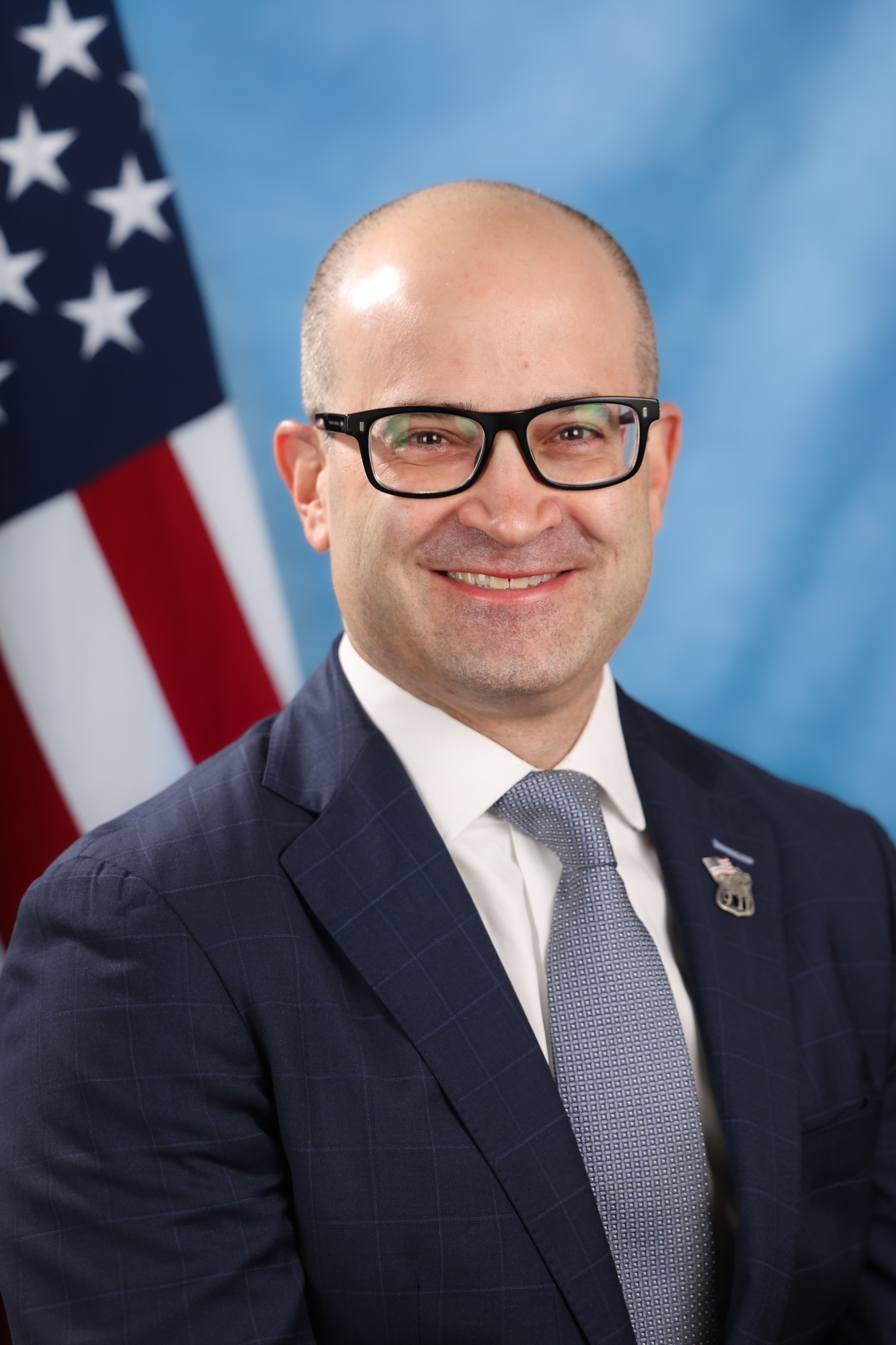
Bill Magnarelli
100% support rate
Top opponent
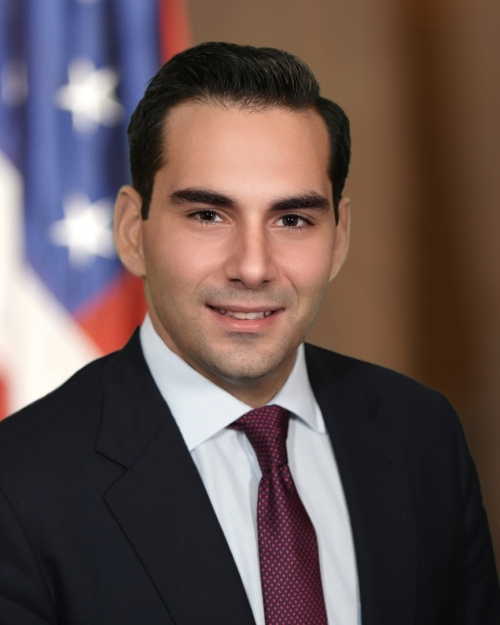
Chris Tague
4% support rate
Ranked legislators
10
5 support · 5 oppose
Key legislators

Who's moving criminal justice in New York

Legislators moving criminal justice in New York
Legislator Party Stance Support rate Decisive votes
Bill Magnarelli
Bill Magnarelli House · District 129
D
Strong +
100% 27
George Alvarez
George Alvarez House · District 78
D
Strong +
100% 27
Brian Cunningham
Brian Cunningham House · District 43
D
Strong +
100% 25
Amanda Septimo
Amanda Septimo House · District 84
D
Strong +
100% 24
Monique Chandler-Waterman
Monique Chandler-Waterman House · District 58
D
Strong +
100% 24
Chris Tague
Chris Tague House · District 102
R
Strong −
4% 28
Dave DiPietro
Dave DiPietro House · District 147
R
Strong −
4% 28
Chris Friend
Chris Friend House · District 124
R
Strong −
4% 26
Ed Ra
Ed Ra House · District 19
R
Strong −
7% 28
Jarett Gandolfo
Jarett Gandolfo House · District 7
R
Strong −
7% 28
Showing 1,451–1,460 of 2,153 bills

All criminal justice bills

failed · New York · Assembly Jan 7, 2026

A 5781: Requires notice to crime victims that they have the right to attend interviews between the board of parole and the incarcerated individual; requires the board of parole to review victim impact statements

Requires the notice to crime victims of case disposition to inform the victim of the right to attend interviews between the board of parole and the incarcerated individual in cases where the final disposition includes a felony defined in article one hundred twenty-five of the penal law that results in the commitment of the defendant to the custody of the department of corrections and community supervision for an indeterminate sentence; requires the board of parole to review victim impact statements, failure to review such statements shall make a hearing by the board of parole invalid.
in committee · New York · Assembly Jan 7, 2026

A 6258: Relates to contraband screening at correctional facilities

Directs the commissioner of corrections and community supervision to establish contraband screening at correctional facilities including canines at the entrances and a third-party secure vendor mail program.
in committee · New York · Senate Jan 7, 2026

S 4677: Relates to the award of crime victim assistance funds for victims of overdoses where a substance was administered through deception or surreptitously

Permits award of crime victim assistance funds to victims of overdoses, where such overdoses cause death and were the result of deception, surreptitious delivery, or third-party administration of a controlled substance.
in committee · New York · Assembly Jan 7, 2026

A 1650: Relates to removing the requirement that physical injury be caused under the crimes of aggravated sexual abuse in the third and fourth degrees

This bill amends New York's criminal code to remove the requirement that physical injury must occur for certain aggravated sexual abuse charges. It changes the definitions for third and fourth degree aggravated sexual abuse, so prosecutors no longer need to prove physical injury occurred when a victim is incapable of consenting due to factors like age (under 17) or mental disability/incapacity. The bill directly affects victims of sexual assault where the perpetrator inserts objects or body parts into the victim's body, shifting the legal focus from proving physical harm to proving the victim's inability to consent. The key change simplifies prosecution by eliminating the physical injury element for these specific offenses.
Sub-Topics Violent Crime
in committee · New York · Senate Jan 7, 2026

S 1595: Increases the in-person appearance requirements for level two sex offenders

This bill changes the requirements for level two sex offenders in New York. It increases their mandatory in-person appearance frequency with law enforcement from every three years to every year. Specifically, these offenders must appear annually to provide a current photograph, which law enforcement then forwards to the state division. The change directly affects individuals classified as level two sex offenders under New York's sex offender registration system.
Sub-Topics Law Enforcement
in committee · New York · Assembly Jan 7, 2026

A 5475: Includes aggravated harassment in the first degree under a specified offense

This bill adds "aggravated harassment in the first degree" (Section 240.31) to the list of "specified offenses" under New York's penal law. It directly affects individuals convicted of this specific harassment crime, as it now triggers legal consequences tied to "specified offenses" (like enhanced sentencing or mandatory provisions). The key change is formally including this harassment offense in the existing list of crimes that qualify as "specified offenses" for legal purposes.
Sub-Topics Sentencing
in committee · New York · Assembly May 28, 2026

A 206: Relates to failure to complete a program for time allowances due to circumstances beyond an individual's control

This bill (A 206) amends New York State correction law to clarify that incarcerated individuals serving determinate or indeterminate sentences cannot lose earned time allowances for failing to complete work or treatment programs due to circumstances beyond their control (e.g., medical issues or facility disruptions). It modifies sections 803, 804, and 805 of the Correction Law to explicitly state that time allowances - earned through good behavior, program participation, or educational/vocational achievements - must not be withheld, forfeited, or canceled in such cases. The policy directly affects incarcerated people in state facilities who qualify for time credits under existing programs, ensuring they retain earned credits even if program completion is interrupted by external factors. This change aligns with existing provisions but adds specificity to prevent automatic loss of credits for unavoidable disruptions.
in committee · New York · Assembly Jan 7, 2026

A 9185: Relates to falsely reporting an incident through the use of artificial intelligence

This New York bill (A 9185) amends criminal law to explicitly include AI-generated communications in the definition of "falsely reporting an incident in the third degree." It directly affects individuals who knowingly use artificial intelligence (including generative AI) to create false reports about crimes, emergencies, or child abuse incidents - such as fabricating emergency alerts or fake abuse reports via AI tools. The law expands existing penalties (class A misdemeanor) to cover these AI-facilitated false reports to authorities or the public, ensuring that AI-generated misinformation about emergencies or safety threats is treated the same as human-created false reports. The bill takes immediate effect upon enactment.
in committee · New York · Assembly Jan 7, 2026

A 2227: Relates to the duration of orders of protection in cases involving domestic violence

This bill establishes a minimum five-year duration for orders of protection in all domestic violence cases, replacing previous shorter timeframes. It requires courts to explicitly state findings of aggravating circumstances on the record when extending orders beyond the minimum period. The legislation applies to both civil family court orders (under the Family Court Act) and criminal sentencing orders (under the Criminal Procedure Law). Key provisions prevent courts from denying extensions solely because abuse hasn't occurred during the order's term and mandate that courts articulate their reasoning for duration decisions. The bill also clarifies that temporary orders don't affect the length of final orders.
in committee · New York · Assembly Jan 7, 2026

A 3118: Prohibits the handcuffing or forcible restraint of certain juveniles in certain circumstances; limits warrantless arrests of juveniles except where the arrest is necessary for public safety

Prohibits handcuffing or forcibly restraining children age twelve and under unless such child presents a danger to such child, the officer or others; limits warrantless arrests of persons under age eighteen except where the arrest is necessary for public safety; establishes a twenty-four hour hotline for police officers to consult with youth social services personnel and attorneys regarding interactions with children and adolescents.
Showing 1,451 to 1,460 of 2,153 bills