

Head Start Shutdown Protection Act of 2025 This bill requires the Department of Health and Human Services to reimburse a state, local government, or school district that uses its funds to maintain participation in the Head Start program or the Early Head Start program during a government shutdown in which there is a lapse in federal appropriations for the programs. The Head Start programs provide comprehensive early childhood education and development services to low-income children. The programs seek to promote school readiness through the provision of educational, health, nutritional, social, and other services.
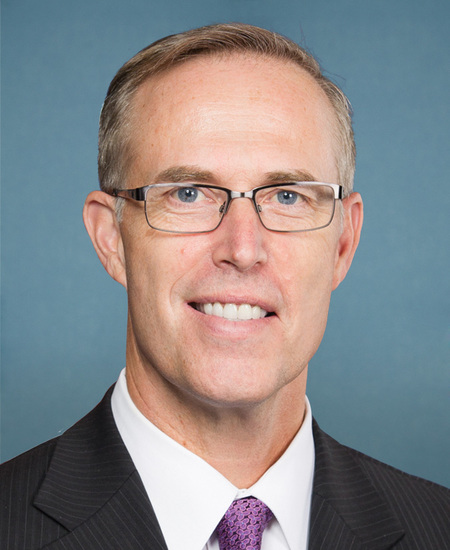
Rep. Jared Huffman
Sponsored bills
Maddy summaryThis resolution formally recognizes the vital role of Spanish-language media in serving over 41 million U.S. residents who speak Spanish at home. It affirms that access to Spanish-language news and entertainment is essential for community engagement, combating misinformation, and supporting democratic participation. The House resolution specifically commends Spanish-language media professionals and encourages policies that sustain this media sector, which provides culturally relevant information on elections, health, and civic life. As a symbolic gesture (not a law), it has no direct policy changes but highlights the sector's importance to Latino communities and national inclusivity.
Maddy summaryHRES 797 is a non-binding resolution expressing concern about the rising number of book bans in U.S. schools and libraries. It cites PEN America data showing 6,870 book bans affecting 3,751 titles between July 2024 and June 2025, with books about race, LGBTQ+ experiences, and marginalized communities disproportionately targeted (e.g., *The Handmaid’s Tale*, *Maus*, *This Book Is Gay*). The resolution calls on schools to follow best practices for book challenges, protect students’ access to diverse materials, and return books removed from military schools under recent executive orders. It directly addresses students, educators, librarians, and authors impacted by censorship, emphasizing that such bans threaten free expression and democratic values.
Maddy summaryHR 5707, the Voter Purge Protection Act, sets strict standards for states removing voters from registration lists. It requires states to use only objective, reliable evidence (like proof of death or moved residence) to remove voters - not factors like not voting or not responding to notices - and mandates 48-hour written notice to affected voters with reinstatement instructions. States must also issue public notices about removal programs to help voters verify their status. This bill directly affects state election officials and voters whose registration might be challenged, aiming to prevent improper removals under the National Voter Registration Act. It amends existing federal voting laws to enforce these new verification and notice requirements.
Maddy summaryHRES 786 is a symbolic resolution designating September 30, 2025, as "Impact Aid Recognition Day" to commemorate the 75th anniversary of the Impact Aid program. It does not create new policies or funding but formally recognizes the program's history and purpose. The resolution highlights that Impact Aid reimburses local schools for revenue losses due to tax-exempt federal properties (like military bases or tribal lands), serving over 8 million students across 1,100 school districts. It emphasizes bipartisan support for the program since its 1950 establishment and its role in ensuring equitable education access for federally connected children. The resolution has no binding effect beyond the symbolic recognition.
Maddy summaryHR 5673, titled "Stop the Trump Electricity Price Hikes Act," would reinstate financial assistance awards terminated by the Department of Energy under a May 15, 2025, secretarial memorandum. It directly affects recipients of these awards - likely energy or infrastructure projects - that had their funding cut, by restoring their financial support as if the terminations never occurred. The key mechanism requires the Department to treat all such terminated awards as valid and continuing, overriding prior termination actions. This bill does not address electricity pricing, consumer rates, or introduce new energy regulations.
Maddy summaryThis bill allows federal employees who are furloughed or working without pay during a government shutdown (defined as a funding lapse of at least two weeks) to withdraw up to $30,000 from their Thrift Savings Plan (TSP) retirement savings without the usual 10% early withdrawal penalty. The $30,000 limit adjusts annually for inflation and applies per shutdown period. It also ensures missed TSP loan payments during a shutdown are not treated as taxable distributions, and employees can later contribute back up to the withdrawn amount without penalty. The bill directly affects federal workers facing financial hardship due to funding lapses, providing immediate relief through modified TSP rules.
Maddy summaryThis bill adds Medicare coverage for multi-cancer early detection screening tests (blood or biological tests analyzing cell-free DNA) starting January 1, 2028. It directly affects Medicare beneficiaries aged 68 and older (starting in 2028, with the age limit increasing by 1 year annually), requiring tests to be FDA-cleared and deemed reasonable/necessary by the Secretary for early cancer detection across multiple organ sites. Payment will initially match current stool DNA test rates before 2031, then shift to a lower rate or new payment system after 2031, with limits preventing more than one test per year. The bill explicitly states it does not alter coverage for existing cancer screenings like breast, colorectal, or prostate cancer tests.
Maddy summaryHRES 773 is a symbolic resolution (not a law) honoring the principle of separation of church and state. It commemorates the 65th anniversary of President John F. Kennedy’s 1960 speech to the Houston Ministerial Association and the 150th anniversary of President Ulysses S. Grant’s 1875 speech, both emphasizing government neutrality in religious matters. The resolution affirms the constitutional separation of church and state as a core American value and opposes "extreme right-wing Christian nationalism," though it does not create new policies or affect any specific group. As a non-binding statement, it has no legal effect but expresses the House’s position on religious freedom.
Maddy summaryThis bill establishes a federal grant program to help low-income homeowners and affordable housing owners adapt properties to climate-driven hazards like flooding and wildfires. It authorizes $250 million annually (2026-2031) for states, tribes, and Native Hawaiian organizations to fund resilience projects for eligible property owners, defined as those at or below 300% of the federal poverty level in high-risk areas. Key provisions require grants to cover natural solutions (e.g., ecological landscaping), prohibit rent increases for two years on funded properties, and mandate resident relocation protections for multifamily buildings. The program mandates adherence to federally developed resilience standards and includes reporting requirements to ensure funds are used effectively. It directly affects vulnerable households in climate-threatened communities who cannot afford property adaptations on their own.