

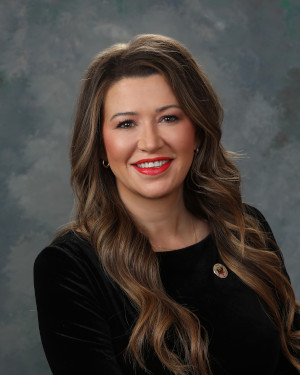
Maddy summarySB 104 establishes a formal process for removing appointed members of New Mexico's State Wildlife Commission. It allows removal only for incompetence, neglect of duty, or misconduct in office, requiring the governor to provide written notice, a hearing opportunity, and the right to appeal to the Supreme Court. This bill directly affects current and future commission members, who must now meet due process standards before removal. The Supreme Court would have exclusive authority to review removal decisions, making its ruling final. The changes take effect January 1, 2027.
Sponsored bills
Maddy summaryHouse Memorial 27 designates January 28, 2026, as the fiftieth annual "Grant County Day" in the New Mexico House of Representatives. The memorial also honors former Hurley mayor Joseph Edward "Ed" Stevens and current Lieutenant Governor Howie Morales for their service to New Mexico. This ceremonial resolution recognizes Grant County's cultural heritage, historical significance, and contributions to the state. As a non-binding memorial, it does not create new laws or affect any legal obligations.
Maddy summarySB 4 establishes a mandatory "best interests of the child" standard for New Mexico courts handling abuse and neglect cases. The bill requires judges to consider 14 specific factors, including the child's safety, family history of harm or substance abuse, the family's willingness to participate in services, and the child's own fears about returning home. This standard directly affects judges, child welfare agencies, and families involved in these legal proceedings. The key mechanism is a formalized checklist ensuring courts systematically evaluate child safety, family circumstances, and service compliance rather than relying on subjective judgment alone. The policy change aims to create more consistent, child-centered outcomes in these sensitive cases.
Maddy summarySB 8 changes venue rules for medical malpractice lawsuits, requiring them to be filed only in the county where the patient received the treatment at issue. It limits recovery from New Mexico's Patient's Compensation Fund, requires fund payments to be made as expenses occur (not all at once), and caps attorney fees in malpractice claims. The bill also creates a new Patient Safety Improvement Fund and removes a requirement for surcharges intended to fund the compensation fund's solvency. These changes directly affect patients filing medical malpractice claims, healthcare providers, and the administration of the Patient's Compensation Fund.
Maddy summarySB 6 redefines child abuse to include knowingly exposing a child to Schedule I or II illegal drugs (like opioids or meth) at birth, making this a criminal offense. Parents or caregivers who allow newborns to test positive for these drugs due to prenatal exposure face felony charges, with penalties increasing for repeat offenses or serious harm. The bill also allows hospitals or healthcare providers to temporarily place newborns showing drug withdrawal symptoms into protective custody without a court order, for up to 24 hours, to ensure immediate safety. This directly affects parents/caregivers with substance use issues and newborns exposed to drugs prenatally, prioritizing infant safety through clearer legal consequences and emergency custody protocols.
Maddy summarySB 7 amends New Mexico's Delinquency Act to change how youth aged 14 and older are handled in the juvenile justice system. It expands definitions of "serious youthful offender" and "youthful offender," removes the requirement for a detention risk assessment before placing a child in detention, and allows 14+ year olds to waive their right to an amenability hearing. The bill also changes court procedures by eliminating restrictions on sentencing options, requiring courts to weigh all amenability factors equally, and permitting the use of sealed juvenile records in pretrial detention or sentencing hearings. These changes directly affect youth facing delinquency charges and alter how courts process cases and manage juvenile confinement.
Maddy summarySB 351 allocates $13.5 million from the state general fund to the North Central New Mexico Economic Development District for a correctional reentry workforce program. The bill directly provides funding to create job training and employment support services for formerly incarcerated individuals in North Central New Mexico. Key provisions include requiring the program to operate during fiscal year 2026, with any unspent funds reverting to the state treasury by year-end. This legislation establishes a concrete funding mechanism to support reentry workforce development, focusing on practical job placement assistance for this specific population.
Maddy summarySB 84 (2025 New Mexico Senate Bill) clarifies how the Children, Youth and Families Department (CYFD) shares information about child abuse and neglect. It requires CYFD to share details about child fatalities or near-fatalities, protects clients' personal contact information (like addresses and phone numbers), and mandates that courts issue written orders (which can be appealed) to exclude media from abuse/neglect hearings. The bill also requires CYFD to publish specific reports on its website and establishes penalties for violations. It directly affects CYFD staff, courts handling child welfare cases, and media organizations seeking access to proceedings.
Maddy summarySB 272 exempts foster parents, guardians appointed under the Kinship Guardianship Act for their grandchild, and adoptive grandparents from New Mexico state income tax for caring for a child or grandchild under 18 during the entire taxable year. The bill applies to tax years starting January 1, 2025, and requires the exemption to be included in the state’s tax expenditure budget. It directly affects caregivers licensed or certified by child welfare agencies, or legally appointed as guardians for grandchildren, by reducing their taxable income. The policy change provides a direct tax benefit to these specific caregivers without altering other tax rules.
Maddy summarySB 369 allocates $3 million from New Mexico's general fund to recognize the 400th anniversary of winemaking in America through projects and events focused on New Mexico's wine industry. The funds, to be spent by the New Mexico Department of Agriculture from 2026-2028, require highlighting indigenous and immigrant contributions to the industry and emphasizing land/water conservation. Any unused funds by 2028 will revert to the general fund. This is a commemorative bill with no direct policy changes affecting voters or regulations.