

Maddy summaryHouse Memorial 48 designates February 4, 2026, as "Valencia County Day" in the New Mexico House of Representatives. This ceremonial resolution honors Valencia County's historical significance, cultural heritage, and economic contributions through its communities (including Belen, Los Lunas, Peralta, and Bosque Farms). It does not create new laws or policies but formally recognizes the county's role in New Mexico's history, agriculture, transportation, and modern economic growth. The resolution directs the House to transmit copies to county officials and local mayors. As a memorial, it has no binding effect but serves as a symbolic tribute.
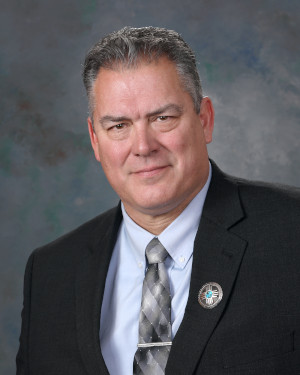
Rep. Brian Baca
Sponsored bills
Maddy summaryHouse Memorial 47 requests the Legislative Education Study Committee to examine public school employee compensation in New Mexico. The study will focus on how salary competitiveness, pay disparities (compaction), and sustainability impact recruitment and retention of teachers, administrators, and other school staff like bus drivers and custodians. It directs the committee to collaborate with school districts, unions, and state agencies and report findings by December 31, 2025. The bill addresses concerns about low student proficiency, high teacher turnover, and research showing many school employees earn below a living wage despite recent raises. This is a study request, not a policy change.
Maddy summaryHB 422 would increase stipends for teaching residents in New Mexico's teacher residency programs to at least $35,000 annually (80% of a level 1 teacher's minimum salary) and require health insurance coverage through the public school insurance authority. It also provides $2,000 annual stipends for mentor teachers, principals, and program coordinators, plus $4,000 per faculty member at participating colleges for co-teaching training. The bill mandates a three-year service commitment for teaching residents at their sponsoring school district and allocates funding for institutional costs. This proposed legislation aims to strengthen residency programs by improving financial support for participants and educators, though it was postponed indefinitely in June 2025.
Maddy summaryHB 454 provides a temporary, non-compounding 2% payment on existing retirement payments to retired educators under New Mexico's Educational Retirement Act for fiscal years 2026 and 2027. This additional payment is calculated as 2% of a retiree's current annual retirement amount (including prior cost-of-living adjustments). It directly affects retired public school employees and other eligible educators who receive benefits under this specific retirement system. The provision is temporary and does not alter the standard cost-of-living adjustment formula for future years.
Maddy summaryHB 455 would allocate $1 million from New Mexico's general fund to provide online math and reading support for students in pre-kindergarten through third grade. The funding would cover research-backed learning programs, educator training, and materials for caregivers to strengthen early literacy and numeracy skills. Introduced by Rep. Brian G. Baca, the bill was referred to committees but was postponed indefinitely in June 2025, meaning it has not advanced to a vote. If enacted, unspent funds would revert to the general fund by fiscal year 2026. This bill has not become law as of the latest update.
Maddy summaryHB 193 tasks New Mexico's Legislative Education Study Committee with conducting an ongoing analysis of the state's public education system, including laws, policies, and costs. The committee must produce annual reports to the legislature by the tenth day of each odd-year session, focusing on areas not already covered by existing studies (like those by the Board of Educational Finance). This bill does not change current education policies but establishes a formal process for the committee to evaluate the system and recommend future legislative action. The study aims to inform potential policy decisions based on the committee's findings.
Maddy summaryHB 254 modifies New Mexico's rules for retired educators returning to work with school districts. It allows retired educators who haven't worked for at least 90 days after retirement to keep their retirement benefits while returning to part-time or low-salary jobs (under $15,000 annually), without needing to suspend benefits. The bill also extends the maximum return-to-work period from 36 to 84 months and requires an application process for approval. These changes directly affect retired public school employees seeking to return to employment with local school districts. The bill aims to provide greater flexibility for retired educators to rejoin the workforce while maintaining their retirement benefits under specific conditions.
Maddy summaryHB 201 raises the minimum annual salary for school employees in New Mexico to $30,000, effective for the 2025-2026 school year. It increases the minimum salary for licensed educational assistants from $25,000 to $30,000 and establishes a new $30,000 annual minimum for all noncertified school personnel (replacing a prior hourly rate of $6.00). School districts must implement this pay rate for eligible employees, including both licensed educational assistants and noncertified staff working directly with students. The bill applies to all public school districts in the state.
Maddy summaryHM 54 (a House Memorial, not a bill) requests the Legislative Education Study Committee to study whether New Mexico should create a centralized school safety entity. It directs the committee to collaborate with Public Safety, Homeland Security, and Education departments to research school safety needs, potential benefits of a statewide entity, and best practices from other states. The study will examine current safety measures (like anonymous reporting apps and security funding) and assess if a coordinated approach would be more effective than current fragmented efforts. The results would be reported to the Governor and Legislative Council, but the memorial does not allocate funds or create new policies.
Maddy summaryThis bill changes the penalty for making a shooting threat from a misdemeanor to a fourth-degree felony. It defines a "shooting threat" as intentionally communicating intent to use a firearm to cause fear, disrupt public buildings, or trigger emergency responses. Courts must now order convicted individuals to pay victims for economic harm, including lost wages, business shutdown costs, or employee pay during disruptions. The bill directly affects people who make such threats and victims who suffer financial losses due to the threats.