

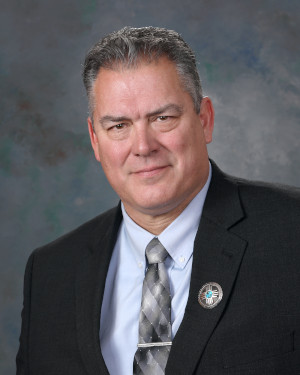
Photo of Brian Baca
R New Mexico House · District 8 On the 2026 ballot

Rep. Brian Baca

Compare
Total votes
482
all sessions
Attendance
94%
30 missed
Near the chamber average
With party
95%
of cast votes
Lower than 76% of chamber peers
Bipartisan score
3%
crosses aisle rarely
Near the chamber average
Sponsored
25
bills & resolutions
Lower than 76% of chamber peers
Committees
5
assignments
25 bills and resolutions

Sponsored bills

Total
25
Primary
25
Co-sponsor
0
This page
25
matching current filters
Primary HB 289
In committee · New Mexico House · Lead sponsor
SCHOOL TRANSPORTATION FUNDING

Maddy summaryHB 289 clarifies how New Mexico allocates transportation funding to school districts and state-chartered charter schools, requiring that funds cover the full route cost - including miles traveled to pick up the first student and return the bus after dropping off the last student. It establishes a new calculation method using a base amount for all districts plus a variable amount based on historical transportation costs, site characteristics, and operational days. If a district’s allocation exceeds required transportation costs, 50% of the excess must go to a transportation emergency fund, and at least 25% must be used for transportation services (excluding salaries). The bill takes effect July 1, 2026.

In committee Mar 24, 2026 0 co-sponsors
Primary HB 282
died · New Mexico House · Lead sponsor
SCHOOL & JUVENILE PROBATION COOPERATION

Maddy summaryHB 282 requires schools and juvenile probation services to collaborate on addressing student absenteeism under New Mexico's Attendance for Success Act. It mandates probation officers to review school attendance records for students with legal issues, initiate support for chronically absent students (missing 10%+ school days), and report persistent absences to children's courts. The bill also allows courts to suspend driving privileges for excessively absent students (20%+ absences) at probation's request and makes it a crime for parents to allow continued absences after probation is notified. These provisions directly affect students, parents, schools, and juvenile probation services by creating new pathways for intervention and enforcement.

died Mar 24, 2026 0 co-sponsors
Primary SB 306
Passed · New Mexico Senate · Lead sponsor
HIGHER ED REGIONAL DISTINCTION

Maddy summarySB 306 eliminates the distinction between regionally and nonregionally accredited private colleges and universities in New Mexico by requiring all private post-secondary institutions to obtain a "license" from the Higher Education Department instead of the previous "registration" process for regionally accredited schools. The bill updates all relevant laws to use "licensure" uniformly, mandating annual applications, submission of curriculum and financial information, and payment of a department-set fee. This affects every private college, university, and career school operating in New Mexico that is not publicly funded, creating a single oversight system for all institutions.

Passed Mar 24, 2026 0 co-sponsors
Primary HB 185
died · New Mexico House · Lead sponsor
PED SECRETARY & LOCAL SCHOOL BOARD MEMBERS

Maddy summaryHB 185 authorizes New Mexico's Public Education Secretary to require local school board members to correct failures in performing legally required duties, such as adhering to school laws or regulations. If a board member doesn't fix the issue within 30 days of written notice, the Secretary may suspend them, with the member able to request a hearing under administrative procedures. During suspension, the Secretary (or a designee) can temporarily vote to break budget deadlocks in the school district. The bill directly affects school board members who neglect statutory duties under the Public School Code.

died Mar 24, 2026 0 co-sponsors
Primary HB 263
In committee · New Mexico House · Lead sponsor
SCHOOL MATH & SCIENCE CHANGES

Maddy summaryHB 263 requires New Mexico public schools serving grades 6-8 to automatically enroll students who meet specific academic criteria - such as scoring highest on state math assessments, end-of-course exams, or earning an A in their current math class - into available advanced math courses. Schools must also allow enrollment upon student or parent request and honor parental objections to automatic placement. School districts and charter schools must annually report detailed data on enrollment, student demographics (race, sex, income), and course availability to the Mathematics and Science Bureau. The bureau will compile and publish these reports online, excluding personally identifiable information. This law aims to standardize access to advanced math courses while tracking equity through mandatory reporting.

In committee Mar 24, 2026 0 co-sponsors
Primary HB 262
In committee · New Mexico House · Lead sponsor
SCHOOL TRANSPORT EMERGENCY FUND USES

Maddy summaryHB 262 amends New Mexico's Transportation Emergency Fund to explicitly allow grants for small rural school districts to purchase buses specifically for student activities. This change directly affects small rural school districts by creating a new, targeted funding source for transportation needs beyond existing uses like fuel price spikes. The bill adds this provision to the fund's existing purpose, ensuring money remains available year-to-year without reverting to the general fund. The state education secretary must track and report all distributions to the governor and relevant legislative committees, as required by current fund rules.

In committee Mar 24, 2026 0 co-sponsors
Primary HB 261
In committee · New Mexico House · Lead sponsor
SCHOOL ACTIVITY BUSES

Maddy summaryHB 261 allocates $3 million from the general fund to New Mexico's Public Education Department to provide grants for small rural school districts to purchase buses specifically for student activities (such as sports and clubs). The funds must be expended by the end of fiscal year 2027, with any unused balance reverting to the general fund. This bill directly affects small rural school districts that lack resources for activity transportation. It is a funding measure, not a policy change, providing targeted financial support for existing extracurricular needs.

In committee Mar 24, 2026 0 co-sponsors
Primary HM 30
Signed into law · New Mexico House · Lead sponsor
PUBLIC EDUCATION GOVERNANCE STUDY

Maddy summaryHouse Memorial 30 requests the Legislative Education Study Committee to examine New Mexico's public education governance structure. It directs a working group to study how to improve coordination across state agencies, schools, and communities - addressing gaps highlighted by the Martinez-Yazzie court ruling on education sufficiency. The group will review models from other states, analyze existing education plans, and recommend a potential statewide commission to create a long-term vision and ensure equitable student outcomes. The committee must report its findings by November 30, 2026.

Signed into law Mar 9, 2026 0 co-sponsors
Primary HB 47
Signed into law · New Mexico House · Lead sponsor
SCHOOL EMPLOYEE INSURANCE PROGRAMS

Maddy summaryHB 47 amends New Mexico law to change how school districts and charter schools cover insurance costs for their employees. It requires these entities to pay at least 80% of insurance costs for employees earning under $50,000 annually, 70% for those earning $50,000-$60,000, and 60% for those earning over $60,000. The bill also mandates a study on the long-term sustainability of these insurance programs and includes provisions for cost-containment measures in health benefit plans. This directly affects public school employees and school districts across New Mexico, shifting their contribution responsibilities compared to current law.

Signed into law Mar 9, 2026 0 co-sponsors
Primary HB 30
Signed into law · New Mexico House · Lead sponsor
TEACHER RESIDENCY ACT CHANGES

Maddy summaryHB 30 modifies New Mexico's Teacher Residency Act by setting stipends for teaching residents as a percentage of the minimum salary for entry-level teachers (35% for undergraduates, 80% for those with bachelor's degrees). It allows teaching residents to work at any public school after completing their residency, not just the sponsoring district, and requires partner districts or charter schools to offer employment based on staffing needs and performance. This directly affects teaching residents, public school districts, and charter schools participating in the residency program. The bill updates payment structures and employment rules to increase flexibility for residents and districts.

Signed into law Mar 9, 2026 0 co-sponsors
Showing 1 to 10 of 25 bills