

Maddy summaryHB 77 creates a corporate income tax credit for businesses renovating vacant buildings or lots in New Mexico that have been unoccupied for at least two years. The credit covers 30% of renovation costs for properties vacant 2-5 years (capped at $2 million per business) or 40% for properties vacant 5+ years (capped at $4 million), provided at least 15% of new housing units are affordable for low/moderate income residents (defined as ≤85% of local median income). Businesses must get pre-certification before work begins and post-completion certification, with the credit being transferable or carry-forwardable for up to five years. The credit expires in 2038, has an annual spending limit of $100 million (with $50 million reserved for non-rural areas), and applies to projects starting in 2026.
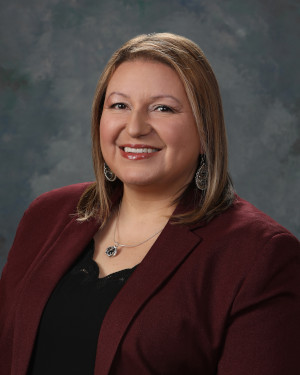
Rep. Anita Gonzales
Sponsored bills
Maddy summaryHB 204 requires New Mexico homeowners insurance companies to disclose how they use wildfire risk models in pricing and underwriting. Insurers must submit model details to the insurance superintendent, explain how property-specific (like defensible space) and community-level (like forest treatment) mitigation efforts affect premiums, and provide clear discounts for these actions. Policyholders will receive annual written notices explaining their risk score, available discounts, and how mitigation actions could lower their premiums, with a process to appeal inaccurate scores. The bill applies only to homeowners and residential condo/multifamily property insurance policies.
Maddy summaryHB 205 creates a Career Technical Externship Program within New Mexico's Workforce Solutions Department to provide professional development for public school career-technical teachers and public community college faculty. The program pairs educators with industry professionals in high-demand fields to enhance their technical skills and understanding of current workforce standards. It allocates $250,000 from the general fund for fiscal year 2027 to implement the program, with unspent funds reverting to the general fund. The bill requires collaboration between Workforce Solutions, the Public Education Department, and community colleges to design the program and application process. The bill is currently pending review by the House Education and Appropriations & Finance Committees.
Maddy summaryHB 169 appropriates $250,000 from the general fund to the University of New Mexico's Department of Chicana and Chicano Studies for two main purposes in fiscal year 2027. It provides year-round scholarships prioritizing New Mexico residents from rural, tribal, indigenous, or underserved communities - especially those planning to offer culturally rooted healing services in the state - and funds statewide outreach including workshops, courses, and collaboration with tribal governments and rural communities. The bill also requires the department to research and develop new curanderismo (traditional medicine) courses to address New Mexico's cultural and health needs. Unspent funds at year-end will revert to the general fund. This bill directly affects UNM students, community health educators, and New Mexico communities through educational and health programming.
Maddy summarySB 122 appropriates $6 million from New Mexico's general fund to the Department of Environment for fiscal years 2026-2027. The bill directly supports private drinking water well owners by expanding access to well water testing and treatment assistance. Key provisions include funding for these services, with any unspent balance reverting to the general fund by the end of 2027. This is a funding measure focused on concrete support for well owners, not a regulatory change.
Maddy summaryHB 11 creates the "Audiology and Speech-Language Pathology Interstate Compact" to allow licensed professionals in these fields to practice across participating states without obtaining new licenses. The bill directly affects audiologists and speech-language pathologists who wish to serve patients in other member states, as well as patients seeking these services. Key provisions include mutual recognition of licenses, requirements for criminal background checks during application, and provisions enabling telehealth services to improve access. The compact preserves each state’s regulatory authority while streamlining cross-state practice, particularly benefiting military families and remote patients. (Note: The bill passed the House but was replaced by a committee substitute; this summary reflects the original bill’s intended purpose.)
Maddy summaryHB 237 creates New Mexico's Small Business Disaster Relief Program, providing state grants to small businesses in areas declared disaster zones by the governor when federal aid or insurance reimbursement is unavailable. The program covers operating expenses (payroll, rent, utilities), property repairs, and other disaster-related costs, with applicants required to demonstrate lack of other funding sources. It establishes a $1 million nonreverting fund in the state treasury (appropriated from the general fund for fiscal year 2027 onward), administered by the Economic Development Department through a competitive review process. The department must report annually on grant recipients, amounts, and employment impacts to the legislative finance committee.
Maddy summaryHB 236 allocates $2 million from the state general fund to the University of New Mexico Health Sciences Center for its "Pathways Statewide Collaborative" program. The funding supports health professional pathway programs, including STEM education and health sciences training, as well as youth leadership development activities. Any unspent funds at the end of fiscal year 2027 must be returned to the state general fund. This bill directly affects UNM Health Sciences Center programs and the students participating in these pathway initiatives.
Maddy summaryHB 214, the Consumer Information and Data Protection Act, creates new rules for businesses handling personal data in New Mexico. It directly affects New Mexico residents ("consumers") by granting them rights to access, correct, or delete their personal data, and requiring businesses to obtain clear, affirmative consent for data processing - prohibiting "dark patterns" that trick users. Key provisions include special protections for children's data, sensitive health information (like reproductive or mental health data), and biometric data, while banning the use of precise location tracking without consent. Businesses must also implement security measures and cannot use de-identified data for re-identification. The bill does not apply to publicly available information or de-identified data.
Maddy summaryHB 10 establishes the Physician Assistant Licensure Interstate Compact, allowing physician assistants (PAs) licensed in one participating state to practice in other participating states without needing separate licenses. It requires states to mutually recognize PAs' licenses and mandates that PAs practice under the jurisdiction of the state where the patient is located at the time of care. The compact specifically benefits military families by enabling active-duty personnel and their spouses to use their home state license in other participating states, while states retain authority to take disciplinary action against PAs for safety concerns. This eliminates licensing barriers for PAs working across state lines while maintaining patient safety standards.