

Maddy summaryHB 405, the "Volunteer Firefighter Service and Training Job Retention Act," requires New Mexico employers to provide eligible volunteer firefighters with up to 112 hours annually for training (with 30 days' notice) and for emergency service calls (with notification and documentation). It directly affects employees who volunteer at state-certified fire departments, ensuring they can attend training or respond to emergencies without losing job protections. The law prohibits employers from terminating, demoting, or reducing leave/seniority accruals for using these leave days. Currently, the bill was passed by the House but was postponed indefinitely in the Senate on June 3, 2025, delaying its effective date of July 1, 2025.
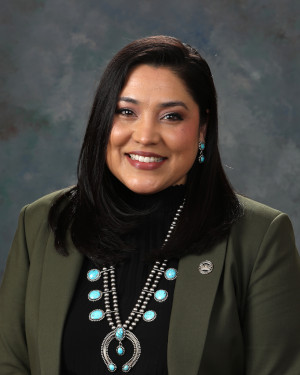
Rep. Paulene Abeyta
Sponsored bills
Maddy summaryHB 407 appropriates $300,000 from the general fund to the New Mexico Department of Health for shaken baby syndrome prevention. The funding will update educational materials with UNM Pediatrics, require all state hospitals to implement prevention training programs, and establish statewide reporting for cases of shaken baby syndrome and abusive head trauma. This bill directly affects hospitals statewide and prevention efforts targeting infant safety. It focuses on concrete policy changes through funding allocation, not legislative mandates. The bill was referred to committees but was postponed indefinitely in June 2025.
Maddy summaryHB 149 establishes a legal framework for supported decision-making agreements in New Mexico, allowing adults (18+) with disabilities to voluntarily partner with supporters to help them understand options and make their own life decisions. The bill requires agreements to be in writing, signed by both parties without coercion, and specifies that supporters may only assist - never make decisions for - the supported individual. Key provisions include a presumption of capacity for all adults (regardless of disability), prohibitions against supporters making decisions or self-dealing, and clear limits on information access. The law also creates a state program within the Office of Guardianship to oversee these agreements and protects third parties who rely on them in good faith.
Maddy summaryHB 333 appropriates $50 million from the general fund to the New Mexico Department of Environment for assessing and cleaning up abandoned or neglected contaminated sites, including uranium mining sites, that lack responsible parties to pay for cleanup. The funding covers fiscal years 2026 through 2028, with any unspent balance reverting to the general fund by the end of 2028. This bill directly affects communities and ecosystems near these abandoned sites by providing state-funded cleanup where private entities cannot or will not act. It establishes a specific funding mechanism for environmental remediation without creating new regulatory requirements.
Maddy summaryHB 151 requires all New Mexico state educational institutions (including colleges and universities) to provide free menstrual products (pads or tampons) in every women's bathroom, every gender-neutral bathroom, and at least one men's bathroom. The bill appropriates $1 million from the general fund for FY2026 to purchase dispensers and products, distributing funds based on each institution's proportion of female students. Unspent funds must revert to the general fund by the end of FY2026. This policy directly affects all students using these campus facilities, aiming to ensure access to essential hygiene products. The bill passed committee review but was postponed indefinitely on June 3, 2025.
Maddy summaryHB 540 establishes new rules for filling vacancies in New Mexico's state House and Senate. It requires county boards of commissioners to appoint eligible candidates (those registered to vote and living in the district since the last general election) within strict deadlines - 5 business days during a legislative session or 3 weeks otherwise. For multi-county districts, county boards submit names to the governor, who must appoint within 7 days. The bill also mandates that county boards adopt a ranking system (ranking top 5 candidates) by January 2026 to ensure transparency in future appointments. This directly affects county officials, governors, and candidates seeking legislative seats.
Maddy summaryHB 397 appropriates $2 million from the general fund to the New Mexico Higher Education Department for stipends to undergraduate and graduate behavioral health students. It directly affects students completing required training, supervision, or practical experience needed to obtain professional licensure in behavioral health fields. The stipends are funded for fiscal year 2026 only, with any unspent funds reverting to the general fund. The bill was referred to committees and later postponed indefinitely on June 3, 2025.
Maddy summaryHB 225 creates a $100 weekly tax credit for each child a foster parent cares for in New Mexico, directly benefiting licensed foster parents who are state residents and not dependents of another person. To claim the credit, foster parents must obtain certification from the Children, Youth and Families Department, which will issue a certificate specifying the credit amount and eligible taxable years. Any credit exceeding a taxpayer's income tax liability will be refunded, and the credit must be claimed within three years of certification. This policy applies to taxable years beginning January 1, 2025, and will be tracked in the state's tax expenditure budget.
Maddy summaryThis memorial (HM 56) designates May as "National Maternal Mental Health Awareness Month" in New Mexico. It requests the New Mexico Department of Health to collaborate with health organizations to improve awareness, education, and access to screening for prenatal and perinatal depression and related mood disorders. The resolution directs the health department to explore using screening tools and enhance access to treatment, support services, and community resources. It applies to all women and teenage girls in New Mexico affected by maternal mental health issues, which impact 10-20% of new and expectant mothers. This is a symbolic resolution, not a law, and focuses on raising awareness and improving health system coordination.
Maddy summaryHB 252 creates a three-year pilot program in New Mexico to support kinship caregivers - such as grandparents, relatives, or emotionally significant non-relatives raising children - across five specified counties (Rio Arriba, Santa Fe, Taos, McKinley, and Dona Ana). The program provides economic support through community partners, referrals to services like legal assistance for custody or guardianship, and access to public benefits, with eligibility based on household income and child needs. It allocates $4.5 million from the general fund for fiscal years 2026-2028 to cover staff, legal aid, and program administration. The department must report annually on the pilot’s impact and outcomes to the legislative finance committee.