

Maddy summaryThis bill (HB 620) has no substantive provisions described in the provided text beyond its title. It appears to be a procedural placeholder with no specific policy changes or mechanisms outlined. The bill was referred to the House Rules and Order of Business Committee but was postponed indefinitely on June 3, 2025, indicating it did not advance. No specific groups or individuals are identified as being affected by this bill, as it lacks concrete legislative content. Therefore, no policy changes or direct impacts can be summarized.
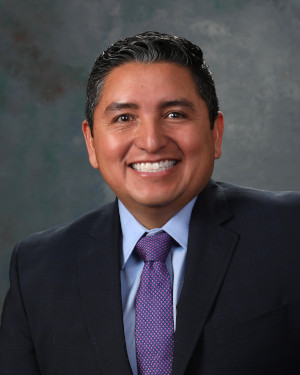
Rep. Derrick Lente
Sponsored bills
Maddy summaryHB 346 bans the sale, possession, advertising, or marketing of semi-synthetic and synthetic cannabinoids (like synthetic marijuana products) in New Mexico. It requires the Environmental Improvement Board to create rules regulating hemp-derived products sold to consumers, including setting THC limits (no more than 0.3% or federal limits, whichever is higher). The bill affects hemp retailers, manufacturers, and consumers by mandating compliance with these new regulations for products like edibles and vape cartridges containing hemp extracts. It also clarifies that hemp products meeting THC limits are exempt from certain food safety laws.
Maddy summaryHouse Memorial 45 requests the New Mexico Legislative Finance Committee to investigate how President Trump's "DOGE" department and related federal actions affect New Mexico residents. It specifically examines impacts like job losses among federal employees (including NM residents), cuts to federal programs, and potential security risks from DOGE accessing sensitive government systems. The committee must report findings and recommendations by July 31, 2025, to state legislative committees and agency secretaries. This memorial does not change laws but seeks to assess federal actions' concrete effects on New Mexico.
Maddy summaryHB 342 limits annual increases in property tax valuations for residential properties to 3% (capping at 103% of prior year's value or 106.1% of value from two years prior), excluding new homes, certain improvements (like solar systems), and properties with ownership changes or zoning shifts. It also imposes a temporary 12-year cap (2025-2037) on valuation increases for nonresidential property (businesses). The bill requires homeowners to file affidavits for specific property transfers (with exemptions for family transfers or disasters), updates veteran tax exemption rules to align with recent voter-approved changes, and removes the requirement to mail residential property declarations to owners. Administrative penalties are added for late affidavit filings, and county valuation protest board pay is adjusted for inflation.
Maddy summaryHB 333 appropriates $50 million from the general fund to the New Mexico Department of Environment for assessing and cleaning up abandoned or neglected contaminated sites, including uranium mining sites, that lack responsible parties to pay for cleanup. The funding covers fiscal years 2026 through 2028, with any unspent balance reverting to the general fund by the end of 2028. This bill directly affects communities and ecosystems near these abandoned sites by providing state-funded cleanup where private entities cannot or will not act. It establishes a specific funding mechanism for environmental remediation without creating new regulatory requirements.
Maddy summaryHB 198 amends New Mexico tax law to increase public access to large installment agreements (from $1,000 to $10,000 threshold), adjust interest rates on unpaid taxes and overpayments, and raise penalties for tax non-compliance. It requires the Taxation and Revenue Department to pay higher minimum interest on overpayments and increases fines for failing to file returns or interfere with tax administration. The bill directly affects taxpayers using installment plans and the Tax Department’s enforcement practices. Key changes include raising the public inspection threshold for agreements, modifying interest calculation rules, and increasing penalties for tax-related violations.
Maddy summaryHouse Memorial 51 requests the Consensus Revenue Estimating Group (CREG) to study how static scoring (which assumes no economic changes from tax policies) and dynamic scoring (which accounts for economic shifts like job growth) affect New Mexico's budget decisions. The study, due by September 1, 2025, will include specific examples like the revenue impacts of personal income tax cuts paired with adjusted state spending and infrastructure projects. This memorial does not change policy but aims to inform future fiscal analysis by comparing these two evaluation methods.
Maddy summaryHB 194 would have prohibited public, private, and charter schools in New Mexico from banning students from federally recognized tribes, pueblos, or nations from wearing culturally significant items like regalia, jewelry, moccasins, beaded caps, or feathers at graduation or promotion ceremonies. The bill directly affects Indigenous students by protecting their right to express cultural identity during school events. Key provisions define "objects of cultural significance" to include specific traditional items, ensuring schools cannot restrict their display. The bill was replaced by a committee substitute and later postponed indefinitely, so it did not become law.
Maddy summaryBased on the provided context, HB 621 has no substantive details available in the bill text or summary. The bill was introduced by Representative Derrick J. Lente in the 2025 New Mexico legislative session but was postponed indefinitely on June 3, 2025, by the House Rules and Order of Business Committee. Without the bill's actual provisions or policy language, no specific mechanisms, affected groups, or policy changes can be described. The title "PUBLIC PEACE, HEALTH, SAFETY & WELFARE" is generic and does not indicate the bill's content. For a factual summary, the full bill text or official legislative summary would be required.
Maddy summaryThis Senate Joint Memorial (SJM 3) requests the New Mexico Higher Education Department to develop a joint bachelor's degree in elementary bilingual multicultural education across four public universities (UNM, Western NM, NM Highlands, NM State). It also proposes scholarships for students and educators pursuing advanced degrees in bilingual education, increased faculty positions for bilingual programs, and college credit recognition for students with New Mexico’s "state seal of bilingualism-biliteracy." The memorial aims to address a shortage of bilingual teachers, aligning with state and federal mandates like the Martinez/Yazzie court ruling and the Bilingual Multicultural Education Act. It is a non-binding request to state agencies, not a law.