

Maddy summarySB 134 creates a zero-interest loan program for New Mexico local governments (cities, counties, etc.) that have received federal disaster funding approval from FEMA for a federally declared natural disaster. The state provides loans to cover immediate recovery costs before federal funds arrive, requiring repayment within 30 days using the federal funds themselves - late repayment triggers interest penalties. All repayments and penalties flow into a "Natural Disaster Revolving Fund," which receives an annual $100 million transfer from the state’s contingency fund until the fund reaches $100 million in balance. The bill mandates regular reporting to the legislature on loan usage, repayments, and enforcement actions to ensure transparency.
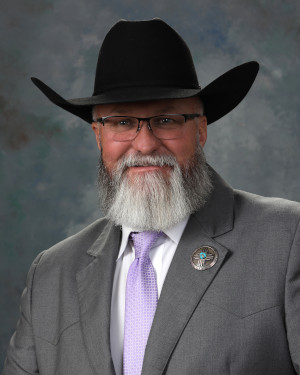
Rep. Harlan Vincent
Sponsored bills
Maddy summaryHB 280 would expand New Mexico's definition of "violent felony" to include specific crimes like aggravated battery against household members, certain child abuse cases resulting in great bodily harm, and criminal sexual penetration. It would require mandatory life imprisonment without parole (except for medical or geriatric reasons) for individuals convicted of three separate violent felony offenses. The bill also specifies that juvenile convictions before age 18 do not count toward the "three strikes" unless the person was sentenced as an adult, and out-of-state violent felony convictions would be treated as violent felonies under New Mexico law. This law would directly affect repeat violent offenders by eliminating parole eligibility after three qualifying convictions.
Maddy summaryHB 447 temporarily exempts gaming operators licensed in areas declared disaster zones due to wildfires (specifically those declared in June 2024) from paying gaming taxes until July 1, 2029. The bill applies directly to licensed gaming businesses operating in these affected wildfire zones. Key provisions include requiring the exemption to be tracked in the state's tax expenditure budget and setting a fixed repeal date of July 1, 2029. This policy change removes a specific tax obligation for affected businesses during the recovery period.
Maddy summaryThis House Memorial (HM 7) declares February 10, 2025, as "Law Enforcement Appreciation Day" within the New Mexico House of Representatives. It directly affects New Mexico's law enforcement agencies, including state police, county sheriffs, municipal police, tribal departments, and tribal law enforcement entities. The bill's key mechanism is a symbolic declaration to honor officers, accompanied by a directive to distribute copies to relevant agencies. It does not create new laws, allocate funding, or mandate actions - only recognizing law enforcement service. The bill was referred to committee but was postponed indefinitely on June 3, 2025.
Maddy summaryHB 413, the "Physician Assistant Licensure Interstate Compact," allows physician assistants licensed in one participating state to practice in other participating states without obtaining separate licenses. It directly affects licensed physician assistants, military families (by enabling active-duty personnel and spouses to practice across states based on a good-standing license), and patients receiving care in different states. The key mechanism establishes mutual recognition of licenses, requiring physician assistants to follow the licensing rules of the state where the patient is located at the time of care. This compact also mandates states to share disciplinary actions and criminal background checks through a centralized data system to maintain patient safety standards. The bill passed the New Mexico House but was postponed indefinitely in the Senate Judiciary Committee.
Maddy summaryHB 565 modifies New Mexico's firearm sale waiting period law by exempting certified and commissioned law enforcement officers (with arrest powers) from the standard 7-day waiting period when purchasing firearms. This means law enforcement officers can immediately take possession of firearms they buy, unlike most other buyers who must wait seven days. The bill amends existing law (Section 30-7-7.3 NMSA 1978) to add this exception, specifically targeting officers performing official duties. The bill was referred to committees but was postponed indefinitely on June 3, 2025.
Maddy summarySB 81 creates the New Mexico Property Insurance Program Association Board to administer the state's Fair Plan, which provides property insurance to residents and businesses unable to secure coverage in the regular market. The board, composed of nine members representing insurers, consumers, climate science, and risk management, will set actuarially sound premium rates (capped at $1 million for residential properties and $5 million for commercial properties) and establish operational rules. This directly affects property owners in high-risk areas and insurers required to participate in the Fair Plan. The bill also mandates that rates reflect expected losses, expenses, and reinsurance costs while ensuring equitable access to insurance.
Maddy summarySB 393 provides a temporary exemption from gaming taxes for casinos and gaming businesses operating in areas declared disaster zones due to wildfires (specifically those declared in June 2024 by the governor). This exemption applies to all gaming taxes until July 1, 2029, directly benefiting licensed gaming operators in affected wildfire zones. The bill requires the exemption to be tracked in the state's tax expenditure budget and includes a delayed repeal effective July 1, 2029. It does not create new taxes or alter existing tax rates but temporarily suspends an existing tax for qualifying businesses in declared disaster areas.
Maddy summarySB 31 creates a zero-interest loan program for New Mexico local governments and electric cooperatives that received federal disaster funding from FEMA after a declared natural disaster. Borrowers must repay loans within 30 days using their FEMA funds, with penalties for late repayment, and must use the loans for recovery within a set timeframe. The program is funded through a new "Natural Disaster Revolving Fund," replenished annually with $150 million transfers from the state’s contingency fund and loan repayments. The state requires regular reporting to the legislature on loan amounts, repayments, and enforcement actions to ensure accountability.
Maddy summaryHB 336 allows retired state employees who were peace officers to return to state work without the usual 12-month waiting period required for most retirees. Specifically, it amends retirement rules to exempt retired peace officers from the standard waiting period when rejoining the state as employees with peace officer powers. During reemployment, their pension is suspended but resumes upon leaving the position. This change directly affects retired peace officers employed by the state who wish to return to roles involving law enforcement authority. The bill updates existing retirement provisions without altering pension benefits or creating new financial obligations.