

Maddy summaryHB 292 creates the "All Cities and Counties Fund" to redistribute 8% of certain gross receipts tax revenue to New Mexico municipalities and counties. It establishes a formula calculating transfers based on population and tax revenue data, distributing funds to cities and counties according to their population and local tax contributions. The fund is designed to provide annual payments starting July 1, 2025, with the state treasurer making transfers by November 1 each year. The bill was approved by committees but was postponed indefinitely on June 3, 2025, and has not advanced further.
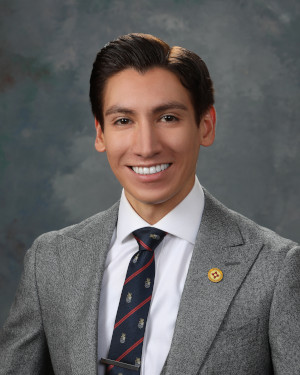
Rep. John Block
Sponsored bills
Maddy summaryHB 565 modifies New Mexico's firearm sale waiting period law by exempting certified and commissioned law enforcement officers (with arrest powers) from the standard 7-day waiting period when purchasing firearms. This means law enforcement officers can immediately take possession of firearms they buy, unlike most other buyers who must wait seven days. The bill amends existing law (Section 30-7-7.3 NMSA 1978) to add this exception, specifically targeting officers performing official duties. The bill was referred to committees but was postponed indefinitely on June 3, 2025.
Maddy summaryThis bill proposes a constitutional amendment to limit New Mexico governors' emergency declarations to 90 days unless extended by a 3/5 vote of both legislative chambers. It would require the legislature to formally vote to extend emergencies beyond 90 days, preventing indefinite governor-led emergency powers without legislative approval. The measure also allows the legislature to call itself into session to address emergencies if the governor does not convene a special session. If approved, this would establish automatic termination for emergency declarations and require explicit legislative action for extensions.
Maddy summaryHB 535 requires New Mexico governors to end most emergency declarations (both general emergencies under the All Hazard Emergency Management Act and public health emergencies) after 90 days unless the governor calls the legislature into a special session to address the emergency. The legislature can then terminate or modify the emergency declaration via joint resolution during that session; if it doesn’t act, the governor may extend the emergency for up to 60 days but must call another special session for further extensions. The bill also prevents governors from declaring multiple emergencies for the same event without prior legislative approval. This directly affects governors (who declare emergencies) and the legislature (which can override or extend declarations).
Maddy summaryHB 559 prohibits New Mexico courts from considering a parent's gender affirmation of their child's gender identity or a parent's decision regarding gender-affirming care when making child custody decisions. The bill specifically bans courts from treating a parent's refusal to provide gender-affirming health care (like hormone therapy or counseling) as harmful to the child, abusive, or evidence of inadequate parenting. It directly affects parents and judges in custody cases involving minors whose gender identity differs from their sex assigned at birth. The law amends existing custody standards to exclude these factors, defining key terms like "gender affirmation" and "gender-affirming health care" in the process. The bill was introduced in 2025 but was postponed indefinitely in June 2025.
Maddy summaryThis resolution (HR 3) is a procedural document formally charging Governor Michelle Lujan Grisham with impeachable offenses. It alleges she violated New Mexico's constitution and the U.S. Second Amendment by issuing Executive Order 2023-130 and directing a public health order that restricted firearm possession in certain areas, contrary to constitutional protections. The resolution outlines eight specific articles of impeachment, focusing on her alleged misuse of emergency powers and enforcement of the order. The House referred it to committees but postponed action indefinitely on June 3, 2025.
Maddy summaryHB 321 increases penalties for drivers whose careless driving causes death or serious injury. It amends New Mexico law to classify such incidents as a misdemeanor (previously unspecified), requiring punishment under existing misdemeanor sentencing rules. The bill specifically defines "great bodily harm" as injuries creating a high risk of death, causing severe disfigurement, or resulting in permanent loss of bodily function. This directly affects drivers convicted of causing fatal or severely injurious accidents through inattention or improper driving.
Maddy summaryHB 385 would require certain sex offenders released on parole to undergo chemical castration treatment using hormonal drugs (like medroxyprogesterone acetate) as a condition of parole. It applies specifically to individuals convicted of severe offenses including aggravated criminal sexual penetration, child exploitation, or sexual contact with minors, as defined in the bill. Parolees must begin treatment before release, pay for it (though parole cannot be denied for inability to pay), and share medical records with the parole board. The bill was referred to committees but was postponed indefinitely on June 3, 2025, and has not become law.
Maddy summaryHB 381 establishes a legal presumption that defendants charged with specific dangerous felonies must remain in pretrial detention unless they prove otherwise. It directly affects individuals facing 16 listed serious offenses (including murder, sexual assault, armed robbery, and firearm-related crimes) by shifting the burden of proof: prosecutors must first show by strong evidence the defendant poses a danger and no release conditions can protect the community, after which the defendant must rebut this presumption. The bill requires an adversarial hearing where the defendant must demonstrate they are not dangerous or that safe release conditions exist. This bill is currently pending (postponed indefinitely in June 2025) and would change pretrial detention procedures in New Mexico courts.
Maddy summaryHouse Memorial 29 requests the Health and Human Services Committee to review New Mexico's current rules requiring drivers with diabetes to submit annual physician reports about ketosis (a common metabolic state, not the serious condition ketoacidosis) for license renewal. The memorial argues these rules are unnecessarily burdensome, especially in rural areas, and asks the committee to assess whether current medical science supports less onerous requirements while maintaining driver safety. If the committee finds changes are warranted, it would develop new legislation based on its findings. This memorial does not change existing rules but directs a review to potentially simplify the process for drivers with diabetes.