

Maddy summaryHB 162 would repeal New Mexico's current seven-day waiting period for firearm purchases, directly affecting firearm sellers and buyers in the state. The bill removes Section 30-7-7.3 NMSA 1978, which required a mandatory seven-day delay between a buyer's application and firearm transfer. This change would allow immediate firearm sales without the waiting period, altering the standard purchasing process. The bill was introduced in the 2025 legislative session but was postponed indefinitely on June 3, 2025.
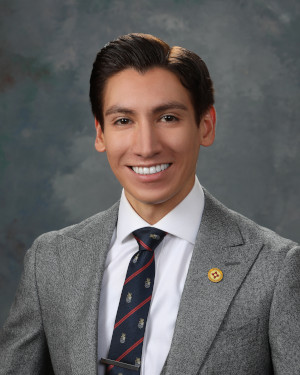
Rep. John Block
Sponsored bills
Maddy summaryHB 322 increases penalties for severe sexual crimes in New Mexico, specifically adding the death penalty for aggravated criminal sexual penetration of children under 13 and human trafficking of minors under 18. The bill amends statutes to create new first-degree felony charges for these offenses, with the death penalty as a potential sentence. It also imposes stricter penalties for school employees committing sexual crimes against students, making such acts a first-degree felony regardless of the child's age. The law directly affects perpetrators of these specific crimes, particularly those involving children under 18 in trafficking or sexual assault cases.
Maddy summaryHB 318 increases penalties for resisting, evading, or obstructing law enforcement officers in New Mexico, upgrading the offense from a misdemeanor to a fourth-degree felony. It directly affects individuals who knowingly interfere with officers during lawful duties, such as fleeing arrest, refusing to stop a vehicle when signaled, or physically obstructing officers. The bill amends New Mexico law to specify that these actions - covering obstruction, evasion, vehicle refusal, or resisting officers - now carry felony-level consequences. This change represents a concrete policy shift in criminal penalties for interference with law enforcement.
Maddy summaryHB 510 requires New Mexico counties to maintain accurate voter lists through updated duties for Boards of Registration. It mandates these boards meet quarterly, verify deceased voters using state-compiled death lists, confirm address changes via motor vehicle records, and certify registration cancellations. County clerks must also provide annual training to boards on voter list maintenance. The bill directly affects county election offices and Boards of Registration, focusing on procedural accuracy in voter registration records.
Maddy summaryHB 104 expands New Mexico's Victims of Crime Act to include specific crimes committed against peace officers as qualifying "criminal offenses." It adds provisions (items 22-25) to the definition list, covering aggravated assault, assault with intent, battery, and aggravated battery upon peace officers. This change directly affects peace officers who are victims of these specific assaults, ensuring they qualify for victim services and compensation under the Act. The bill does not change penalties for these crimes but updates eligibility for victim support programs. The bill passed the House but was postponed indefinitely in the Senate on June 3, 2025.
Maddy summaryHB 287 proposes to update New Mexico's harassment law by explicitly including text messages and social media communications alongside traditional phone calls. The bill would make it illegal to use these digital methods with intent to terrify, intimidate, threaten, harass, annoy, or offend another person - such as sending obscene content, threats of harm, or repeated anonymous messages disrupting someone's peace. It clarifies that offenses occur where the message originated or was received, and specifies penalties as a misdemeanor (or felony for repeat offenses). The bill directly affects individuals who use digital communication to harass others, aiming to address modern forms of online intimidation under existing legal frameworks.
Maddy summaryHB 447 temporarily exempts gaming operators licensed in areas declared disaster zones due to wildfires (specifically those declared in June 2024) from paying gaming taxes until July 1, 2029. The bill applies directly to licensed gaming businesses operating in these affected wildfire zones. Key provisions include requiring the exemption to be tracked in the state's tax expenditure budget and setting a fixed repeal date of July 1, 2029. This policy change removes a specific tax obligation for affected businesses during the recovery period.
Maddy summaryHB 583 amends New Mexico's foreclosure law to restrict the transfer of redemption rights after a property sale. It allows original homeowners, their close relatives, nonprofit housing groups, or junior lienholders to reclaim property within nine months by paying the sale price plus interest and costs. Crucially, the bill prohibits junior lienholders from selling or assigning their redemption rights to third parties. This change clarifies that redemption rights must be used to protect a secured financial interest, not transferred for profit.
Maddy summaryHB 383 amends New Mexico's child abuse law to automatically treat knowing exposure of a child to fentanyl (or methamphetamine) as evidence of abuse. This means that if a parent, guardian, or caregiver intentionally exposes a child to fentanyl use, it will be considered direct proof of child abuse in legal cases. The bill also appropriates $500,000 to the Department of Public Safety for fiscal year 2026 to expand investigations of child abuse cases involving fentanyl. The law, effective July 1, 2025, will apply to caregivers who expose children to these drugs, potentially leading to criminal charges under existing child abuse statutes.
Maddy summaryHB 572 makes it a felony to knowingly solicit a non-U.S. citizen to register to vote or vote in New Mexico. It broadly defines "solicitation" as any verbal, written, or electronic request to register or vote, including digital messages. Soliciting non-citizens violates the law even if the solicitor adds a disclaimer stating the person shouldn’t vote due to citizenship status. Violators face a fourth-degree felony charge, up to one year in prison, and a $5,000 fine per violation. The bill directly affects individuals or groups who actively encourage non-citizens to participate in elections.