

Maddy summaryHB 561 requires New Mexico agricultural employers providing housing to migrant and seasonal agricultural workers to comply with existing U.S. Department of Labor housing standards, rather than creating new state rules. It directly affects farms and agricultural businesses in New Mexico that house seasonal workers. The bill adopts federal standards for housing conditions, including requirements for sanitation, safety, and space. The bill was referred to committees in February 2025 but was postponed indefinitely on June 3, 2025, and is currently inactive.
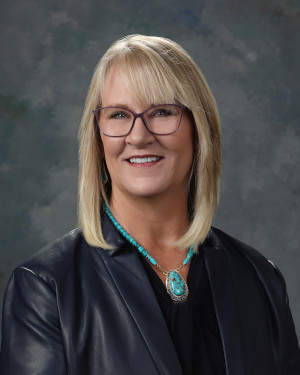
Rep. Gail Armstrong
Sponsored bills
Maddy summaryHB 411 proposes adding Smithsonite as New Mexico's official mineral by amending state law to include it in the list of designated state symbols. This symbolic bill directly affects New Mexico's official state identity by expanding its catalog of recognized symbols, which already includes items like the yucca flower and chile vegetables. The bill's mechanism is purely procedural - requiring a statutory update to the existing list without imposing new regulations or affecting any policies. As a purely symbolic measure with no fiscal or regulatory impact, it does not change how state government operates or affect any residents' rights or obligations.
Maddy summaryHB 303 defines exposure of a child to Schedule I or II controlled substances (like opioids or methamphetamine) as child abuse under New Mexico law. It directly affects parents or caregivers who knowingly allow children to be exposed to these drugs, including newborns testing positive due to prenatal drug exposure. The bill creates specific provisions allowing hospital staff to temporarily place affected newborns (under 72 hours old) into protective custody without a court order if they show withdrawal symptoms or are in drug-manufacturing environments. This amends existing child abuse statutes to clarify that drug exposure constitutes abuse, with penalties ranging from third-degree felony for first offenses to first-degree felony if harm occurs.
Maddy summaryHB 480 creates a special suicide prevention license plate available to New Mexico vehicle owners starting January 1, 2026. Owners pay a $35 initial fee (plus a $30 annual renewal) to obtain the plate, with $12 of the initial fee covering plate production costs and the rest funding suicide prevention programs through the state's behavioral health division. The plate issuance will automatically stop after 2031 if annual sales fall below 50% of the average sales from 2026-2031. This directly affects vehicle owners who choose to purchase the plate and funds state suicide prevention efforts.
Maddy summaryHB 379 limits punitive damages in medical malpractice cases by requiring patients to prove "deliberate disregard" for safety with "clear and convincing evidence" before punitive damages can be awarded. It caps punitive damages at 30 times New Mexico's median annual household income and specifies these damages must be paid personally by the health care provider - not from insurance or the state medical fund - starting January 1, 2027. The bill directly affects patients filing malpractice claims and health care providers (hospitals, clinics, doctors) by changing how punitive damages are awarded and paid. It does not prevent settlement agreements for medical care but explicitly states punitive damages cannot be imposed where not otherwise authorized by law.
Maddy summaryHB 446 creates New Mexico's first state-funded paid parental leave program, providing eligible workers with wage replacement to bond with a newborn, adopted child, or foster child. The bill establishes the "Supplemental Paid Parental Leave Fund" (funded through the Early Childhood Education and Care Fund) to pay applicants 60-70% of their wages for up to 12 weeks of leave. It directly affects most New Mexico employees and self-employed individuals (excluding railroad workers and certain others), administered by the Workforce Solutions Department. The program requires workers to apply through the department, with payments covering bonding time within 12 months of the child's arrival, and excludes employers already offering comparable benefits.
Maddy summaryHB 424, the "Pregnancy and Family Care Act," requires health care providers to screen pregnant patients for substance use disorder during initial visits (with consent) and develop voluntary "family care plans" addressing treatment, mental health, parenting, and child development needs. It mandates hospitals and birthing centers to provide postpartum patients with information about family care plans and establishes a new state system for reporting substance-exposed infant births (using anonymized data like zip code and substance type), separate from child abuse reporting. The bill prohibits health care providers from billing patients for substance use treatment covered by insurance and ensures pregnant/postpartum patients receive priority for treatment, including those in correctional facilities. It directly affects pregnant patients with substance use disorders, health care providers, hospitals, and the Department of Health, which must create training materials and advisory councils to implement the law.
Maddy summarySB 131 prohibits the state board from adopting rules requiring vehicle manufacturers to produce or deliver a certain percentage of zero-emission vehicles for sale. It directly affects automakers and the state environmental agency by blocking a specific regulatory mandate that was part of earlier clean transportation legislation. The bill amends Section 74-1-18 to explicitly state the board "shall not adopt or continue in effect a rule that requires a manufacturer to produce or deliver for sale a certain percentage of zero-emission vehicles." The bill was introduced in 2025 but was postponed indefinitely by the Senate committees on June 3, 2025.
Maddy summaryHB 79, the "Audiology and Speech-Language Pathology Interstate Compact," would allow licensed audiologists and speech-language pathologists to practice across state lines in participating states without obtaining separate licenses. It creates a "compact privilege" enabling practitioners to serve patients in other member states while maintaining their home state license, directly affecting healthcare providers and patients seeking these services. Key mechanisms include mutual recognition of licenses, enhanced oversight for disciplinary actions, support for military spouses relocating, and integration of telehealth for remote care. The bill preserves each state's authority to regulate practice and protect public safety through existing licensing systems. It does not change current state licensure requirements but streamlines access for providers and patients in participating states.
Maddy summaryHB 400 requires New Mexico's Health Care Authority to conduct cost studies every three years for each type of health care provider reimbursed by Medicaid (such as hospitals, clinics, and doctors). These studies must analyze actual costs, including competitive wages and inflation, to recommend fair reimbursement rates. The bill also mandates that the Authority include the latest study in its annual budget requests to the legislature. This applies to all Medicaid-reimbursed providers, ensuring rates better reflect current costs without requiring all studies to be done simultaneously each year. The bill does not change Medicaid eligibility or funding levels but aims to improve how reimbursement rates are set.