

Maddy summaryHB 345 requires New Mexico's child welfare department to conduct a behavioral health assessment for any child entering foster care within 45 days of placement. This assessment, specifically a "child and adolescent needs and strengths trauma assessment," must be followed by referrals to appropriate behavioral health services. The bill directly affects children entering foster care in New Mexico, ensuring they receive early mental health evaluations before permanent placement. It amends state law to mandate this process, replacing previous requirements with a standardized assessment framework. The law is set to take effect July 1, 2025, if passed.
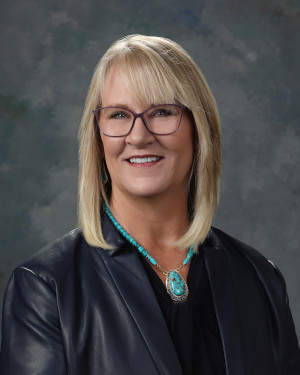
Rep. Gail Armstrong
Sponsored bills
Maddy summaryHB 270 prohibits state agencies, local boards, and municipalities from adopting or enforcing rules that restrict vehicle sales or usage based on energy source (like banning electric vehicles), prohibit internal combustion engine vehicles, or mandate specific percentages of zero-emission vehicles. It directly affects environmental regulators and local governments managing air quality enforcement under New Mexico’s Air Quality Control Act. The bill blocks requirements such as banning gas-powered cars, forcing dealers to sell a certain share of electric vehicles, or limiting vehicle choices by fuel type. The bill passed committee review but was postponed indefinitely on June 3, 2025, and remains inactive.
Maddy summaryBased solely on the provided context, this bill summary cannot be generated. The bill text includes only a generic title ("PUBLIC PEACE, HEALTH, SAFETY & WELFARE") and committee actions, with no substantive provisions, policy changes, or specific mechanisms described. The recent actions show it was withdrawn and postponed indefinitely, but no concrete policy content is available to summarize. Without details on what the bill actually proposes or affects, a factual summary cannot be provided.
Maddy summaryHB 463 proposes creating a two-year pilot program within New Mexico's Children, Youth and Families Department (CYFD) to investigate reports of babies born with drug exposure (substance-exposed newborns) and provide family support. The unit would be staffed by trauma-informed professionals using evidence-based care models, coordinating with health departments and early childhood programs. It requires $100,000 in state funding for fiscal years 2026-2027 to cover operations, with unused funds reverting to the general fund. This bill directly affects families of affected newborns, CYFD staff, and healthcare providers who report such cases under existing law.
Maddy summarySB 15 creates a $1,000 income tax credit for New Mexico residents who volunteer at least 52 times yearly with a certified emergency medical services (EMS) agency. To qualify, volunteers must provide proof of service and obtain certification from the Emergency Medical Systems Bureau. The credit is limited to $4 million total annually across all claimants, and applicants must not also claim the separate volunteer firefighter tax credit for the same year. This policy directly supports unpaid EMS volunteers by reducing their state tax liability.
Maddy summaryHB 90 creates New Mexico's Veterinary Medical Loan Repayment Program to help veterinarians working in underserved rural areas. It directly affects licensed New Mexico veterinarians who provide full-time food-animal care in designated underserved counties, requiring them to serve four years in these areas to qualify. The program repays up to $80,000 of veterinary school debt over four years ($15,000 annually for years one and two, $25,000 for years three and four), excluding scholarships, personal loans, or state loan-for-service debts. Participants must sign a contract with the Higher Education Department and face penalties (up to 3x the award plus interest) for failing to meet service requirements. The bill is currently pending after being postponed indefinitely in June 2025.
Maddy summaryHB 374 amends the definition of "occurrence" in New Mexico's Medical Malpractice Act. Currently, the law defines "occurrence" as all claims for damages from harm to a single patient, regardless of how many health care providers or errors contributed to the harm. This bill changes that definition, which would affect how malpractice claims are grouped and processed in court. The change directly impacts patients filing claims, health care providers (including hospitals and outpatient facilities), and insurers handling these cases.
Maddy summaryHB 205 creates a nine-member nominating committee to select the Secretary of Children, Youth and Families (CYFD) in New Mexico. The committee, appointed by legislative leaders, the governor, and the chief justice, must submit at least five diverse, qualified nominees to the governor for appointment. This replaces the current process by requiring geographical diversity across counties and ensuring nominees are independent of the department. The bill directly affects the governor’s appointment authority for the CYFD Secretary position and the department’s leadership structure.
Maddy summaryHB 81, the Occupational Therapy Licensure Interstate Compact, would allow occupational therapists and assistants licensed in one participating state to practice in other member states without obtaining additional licenses, as long as the patient is located in the state where care is provided. It directly affects licensed occupational therapy professionals seeking to practice across state lines, military spouses relocating with their partners, and patients accessing telehealth services. Key provisions include mutual recognition of licenses, shared disciplinary information between states, accountability for remote practice under local standards, and enhanced telehealth access. The bill preserves each state's regulatory authority over licensure while creating a streamlined framework for interstate practice, though it remains pending after being postponed indefinitely in June 2025.
Maddy summaryHB 82 would allow New Mexico to join the Physical Therapy Licensure Compact, enabling licensed physical therapists from participating states to practice in New Mexico without obtaining a separate license. The bill requires states to conduct federal criminal background checks and share disciplinary information to protect public safety, while maintaining each state's authority over licensure. It directly affects physical therapists seeking to practice across state lines and patients who would gain broader access to physical therapy services. The compact aims to simplify interstate practice without changing core state regulatory standards.