

Maddy summaryThis bill lacks substantive text or policy details in the provided context. The title ("PUBLIC PEACE, HEALTH, SAFETY & WELFARE") is broadly descriptive but does not indicate specific provisions or affected parties. Committee actions show it was withdrawn, referred to Judiciary, and then postponed indefinitely without further progress. Without bill language or a policy summary, a factual description of its mechanisms or effects cannot be provided.
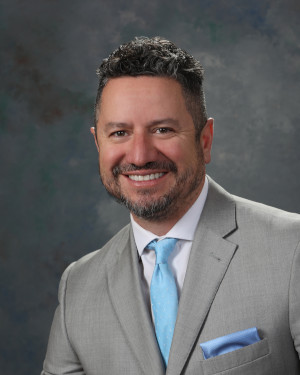
Rep. Joseph Sanchez
Sponsored bills
Maddy summaryHB 221, the "Voice and Visual Likeness Rights Act," establishes a new property right for individuals to control the commercial use of their voice and visual likeness in digital replicas. It requires written consent for any commercial use of an individual's likeness in highly realistic digital representations (like AI-generated videos or audio), with licenses limited to 10 years for adults and 5 years for minors (ending at age 18). The law allows individuals to transfer these rights after death but prohibits unauthorized use - such as creating AI clones without permission - except for bona fide news or public affairs content. It directly affects anyone whose likeness could be digitally replicated (e.g., celebrities, influencers, or everyday people) and imposes civil liability for violations.
Maddy summaryHB 580 creates a special elk-themed license plate for New Mexico vehicles, allowing owners to pay a $25 initial fee (plus $10 annually) to support wildlife conservation. The revenue splits: $10 covers plate production costs, while $15 (plus all renewal fees) funds the state's "Share with Wildlife" program in the Game Protection Fund. The bill requires the Department of Game and Fish to design the elk logo and mandates that plate issuance may stop after 2031 if annual sales fall below 50% of the 2026-2031 average. This affects vehicle owners who choose the plate, with no personalized designs permitted.
Maddy summaryHouse Joint Memorial 5 requests New Mexico's legislature to support federal protections for the Upper Pecos Watershed. It urges federal action to permanently withdraw lands from mining claims and advocates for congressional passage of the Pecos Watershed Protection Act to safeguard water resources, cultural heritage (including ties to Pecos Pueblo and Pueblo of Tesuque), and local economies dependent on agriculture, recreation, and clean water. The memorial emphasizes the watershed's ecological sensitivity and recovery from past mining impacts, without opposing mining generally.
Maddy summaryHB 568 creates a New Mexico income tax credit for homeowners who lost their primary residence to wildfires between 2021 and 2023 and rebuilt on the same property. Eligible taxpayers can claim a credit equal to their actual construction costs (minus any federal wildfire aid received), requiring proof of the fire damage, rebuilding completion, and a builder's statement. Applications for certification must be submitted within 12 months of construction completion, with unused credit amounts allowed to carry forward for up to three years. The credit expires on January 1, 2031, and applies to tax years starting in 2025.
Maddy summaryHB 338 appropriates $750,000 from the general fund to Northern New Mexico State School for developing a cost-effective, energy-efficient, and rapid housing construction system alongside a corresponding curriculum. The bill directly affects the school, which would use the funds in fiscal year 2026 to create both the housing system and related training materials. Key provisions include the specific funding amount, the requirement for energy efficiency and speed in housing development, and the rule that unspent funds revert to the state treasury. The bill focuses on curriculum development for housing construction methods, not on immediate housing deployment or policy changes for residents.
Maddy summaryHB 471 restricts livestock from roaming freely in designated "traditional historic communities" in New Mexico, defined as unincorporated areas with documented history over 100 years, distinctive character, and county commissioner designation. It makes it unlawful for livestock owners to let animals run loose in these areas, requiring county designation and imposing fines for violations. The bill specifies different impoundment procedures: non-equines are sold at auction after three days' notice, while equines must first be offered to rescue facilities before potential auction or humane euthanasia. This directly affects livestock owners in designated communities and requires county governments to formally identify these areas through ordinances.
Maddy summaryHB 367 increases the required live race days for racetracks to maintain their gaming licenses. Racetracks paying $8 million or less in gaming taxes last year must host at least 15 weeks of racing with three live race days per week (minimum 10 races daily). Racetracks paying over $8 million must host 15 weeks with four live race days per week (minimum nine races daily). This bill directly affects licensed racetracks in New Mexico by adjusting their operational requirements for license renewal. The change modifies Section 60-1A-2 of the Horse Racing Act to update these minimums.
Maddy summaryThis memorial declares March 5, 2025, as "Soil and Water Conservation District Day" in the New Mexico House of Representatives to recognize the work of New Mexico's 47 soil and water conservation districts. It highlights their role in voluntary programs supporting forest thinning, wildfire recovery, water management, and habitat restoration, primarily benefiting landowners and local communities. As a ceremonial resolution, it does not create new laws or funding but formally acknowledges these districts' contributions to natural resource conservation.
Maddy summaryHouse Memorial 46 designates May 2025 as "Motorcycle Safety Awareness Month" in New Mexico. The memorial recognizes motorcycles as a common transportation method and encourages all New Mexico residents to share the road safely with motorcyclists, aligning with the National Highway Traffic Safety Administration's national observance. It has no binding effect but serves as a symbolic call for increased awareness and consideration on roads. The bill was passed by the House and signed into law on April 22, 2025.