

Maddy summaryHB 387, the Education Opportunity Account Act, creates a state-funded program allowing New Mexico students (residents not yet holding a high school diploma) to use state deposits to cover private school tuition and qualifying education expenses. The state would deposit monthly funds into accounts based on average public school spending per grade (adjusted for special needs), covering costs like private school tuition, tutoring, textbooks, and standardized test fees. Parents must contract with the state annually for approved expenses, and unused funds revert to the general fund after two years unless waived for extenuating circumstances. The program does not require students to attend private schools but prohibits parents from adding personal funds to accounts or receiving refunds.
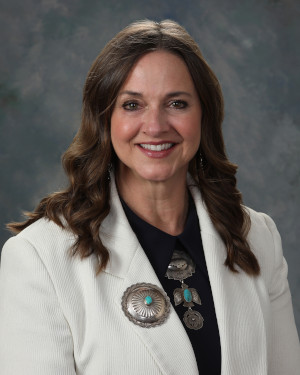
Rep. Rebecca Dow
Sponsored bills
Maddy summaryHB 345 requires New Mexico's child welfare department to conduct a behavioral health assessment for any child entering foster care within 45 days of placement. This assessment, specifically a "child and adolescent needs and strengths trauma assessment," must be followed by referrals to appropriate behavioral health services. The bill directly affects children entering foster care in New Mexico, ensuring they receive early mental health evaluations before permanent placement. It amends state law to mandate this process, replacing previous requirements with a standardized assessment framework. The law is set to take effect July 1, 2025, if passed.
Maddy summaryHB 270 prohibits state agencies, local boards, and municipalities from adopting or enforcing rules that restrict vehicle sales or usage based on energy source (like banning electric vehicles), prohibit internal combustion engine vehicles, or mandate specific percentages of zero-emission vehicles. It directly affects environmental regulators and local governments managing air quality enforcement under New Mexico’s Air Quality Control Act. The bill blocks requirements such as banning gas-powered cars, forcing dealers to sell a certain share of electric vehicles, or limiting vehicle choices by fuel type. The bill passed committee review but was postponed indefinitely on June 3, 2025, and remains inactive.
Maddy summaryHB 223 increases funding for bilingual education programs in New Mexico public schools by raising the cost differential factor used to calculate program units. Starting July 1, 2025, the factor will begin at 0.6 and increase by 0.1 annually until it reaches 1.0 by July 1, 2029. This directly affects schools offering bilingual multicultural education programs, as it will boost state funding for these programs over five years. The bill amends existing funding law without changing program eligibility or requirements.
Maddy summaryHB 229 allocates $430,000 from the state general fund to the New Mexico Department of Agriculture for the "NM-GROWN Approved Supplier Program" in fiscal year 2026. The program aims to support local agricultural suppliers by promoting New Mexico-grown products, directly benefiting state farmers and producers who qualify as approved suppliers. Funds must be spent by the end of fiscal year 2026, with any unspent balance reverting to the state general fund. The bill was referred to committees, passed committee approval, but was postponed indefinitely on June 3, 2025, preventing its enactment.
Maddy summaryHB 92 appropriates $10 million from the general fund to New Mexico's Department of Environment for fiscal year 2026. The funding supports planning, designing, and constructing projects to improve river, stream, and wetland habitats and surface water quality. Any unspent funds at the end of fiscal year 2026 would revert to the general fund. This bill directly affects the Department of Environment's water quality initiatives and communities relying on these water systems.
Maddy summaryThis bill updates New Mexico's child abuse law to define exposure of a child to Schedule I or II controlled substances (like opioids or methamphetamine) as abuse at birth, with an exception for the mother's legally prescribed medication. It also establishes new rules for temporarily holding newborns without a court order: health professionals (e.g., doctors or nurses) may detain newborns showing withdrawal symptoms or in drug manufacturing environments for up to 24 hours while seeking court approval. The bill clarifies that such temporary custody does not count as an arrest or create a police record. It declares an emergency to take effect immediately.
Maddy summaryHB 205 creates a nine-member nominating committee to select the Secretary of Children, Youth and Families (CYFD) in New Mexico. The committee, appointed by legislative leaders, the governor, and the chief justice, must submit at least five diverse, qualified nominees to the governor for appointment. This replaces the current process by requiring geographical diversity across counties and ensuring nominees are independent of the department. The bill directly affects the governor’s appointment authority for the CYFD Secretary position and the department’s leadership structure.
Maddy summaryHB 478 revises New Mexico's rules for transferring certain liquor licenses, specifically allowing dispenser's and retailer's licenses issued before July 1, 1981, to move between locations across the state (with exceptions for some class B counties and municipalities that have already banned transfers). The bill limits transfers to no more than ten licenses per local option district annually and requires that transferred licenses count toward future license caps in that district. It also establishes a community veto process: if 5% of registered voters petition for an election, a vote can block statewide transfers for two years if rejected. This directly affects businesses seeking to relocate licenses and local governments that can regulate license density through voter referendums.
Maddy summaryHB 466, the "Hormone Therapy and Puberty Blocker Child Protection Act," prohibits health care providers and public bodies from knowingly performing or administering hormone therapy or puberty blockers to minors for the purpose of helping them live as a gender different from their sex assigned at birth, except for treating congenital defects, precocious puberty, or existing medical conditions ending by December 2025. The bill requires health care providers to notify parents in writing before a minor receives gender-affirming care, defines "gender-affirming action" broadly to include name/pronoun changes or seeking related services, and overrides minors' ability to consent to such care. It also creates a private right of action for parents to sue providers or public bodies for violations. The bill was referred to committees in February 2025 but was postponed indefinitely on June 3, 2025.