

Maddy summaryHB 270 requires employers working on most New Mexico public works construction projects to contribute to apprenticeship or training programs, or to the Public Works Apprentice and Training Fund administered by the Workforce Solutions Department. The bill sets a zero contribution rate for trades without approved apprenticeship programs (such as certain street, highway, or utility projects), ensuring employers aren't required to pay if no local program exists. It amends existing law to clarify administration, compliance verification, and penalty enforcement for these contributions. The law takes effect July 1, 2026, directly affecting public works contractors and the state's workforce development system.
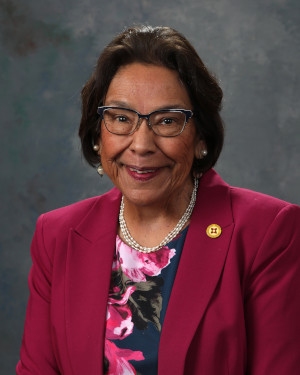
Rep. Pat Roybal Caballero
Sponsored bills
Maddy summaryHouse Memorial 3 is a non-binding resolution honoring New Mexico nurses and health care workers for their dedication during public health emergencies, workforce shortages, and rural health disparities. It commends their service to the public and directs copies to the New Mexico Nurses Association, health care organizations, and hospital leadership. This resolution does not create new laws, funding, or policy changes - it solely expresses formal appreciation.
Maddy summaryHB 50 creates the Social Work Licensure Interstate Compact, allowing licensed social workers to practice across participating states without obtaining separate licenses. It establishes a "multistate license" system where a social worker's home state license authorizes practice in all compact states, using a shared data system to track licenses and any restrictions. To join, states must require national exams, meet education standards, and have complaint systems in place. The bill directly affects licensed social workers seeking to work in multiple states and their home state licensing authorities, streamlining practice across state lines while maintaining oversight.
Maddy summaryHB 438 requires New Mexico state and local government employees to receive payment for unused compensatory leave (time off earned through overtime) at the end of each calendar year. It directly affects public sector workers covered by state or local government employment. The bill mandates annual payment of the full value of unused compensatory leave, rather than carrying it forward. This provision does not apply to employees covered by existing collective bargaining agreements under the Public Employee Bargaining Act.
Maddy summaryHB 264 would adjust minimum state employee salaries annually starting July 2026 using inflation data (consumer price index), ensuring raises keep pace with cost-of-living increases. It establishes new annual leave accrual rates based on years of service (e.g., 4.62 hours per pay period for under 3 years) and guarantees 12 weeks of fully paid parental leave for eligible employees following birth, adoption, or custody of a child. The bill also creates a remote work policy to support recruitment and retention, requiring remote positions to be based in New Mexico and maintaining standard work expectations. These provisions apply to most state employees, though collective bargaining agreements may override specific terms.
Maddy summarySB 322 restricts strip or cavity searches in New Mexico juvenile detention facilities to cases with probable cause for dangerous contraband and superintendent authorization. It requires detailed incident reports documenting the search rationale, methods, and results, and mandates that searches use the least invasive approach possible. The bill also prohibits cameras or filming in shower and toilet areas of detention facilities to protect youth privacy. These provisions directly affect juvenile detention facilities and the children held within them.
Maddy summaryHB 418 would require mobile home rental agreements in New Mexico to have a minimum 24-month initial term, extend the notice period for nonpayment of rent from 30 to 60 days, and prohibit landlords from increasing rent during land use change notice periods. It clarifies termination procedures, mandates landlords to disclose mailing addresses in disputes, and bans unreasonable restrictions on tenants selling their mobile homes. The bill directly affects mobile home tenants and landlords in New Mexico by increasing lease stability and transparency. Key provisions aim to prevent abrupt evictions and provide clearer tenant protections under the Mobile Home Park Act.
Maddy summaryHB 488 requires New Mexico's public schools to use students' home or heritage language as the primary medium of instruction in bilingual education programs for grades K-12, with priority for kindergarten through third grade. The bill mandates that programs must develop both English and home language proficiency, use home language for curriculum portions where needed, and include parent committees representing students' cultures. It directly affects linguistically diverse students, including Native American children, by changing eligibility requirements for state funding. The policy shifts program design to center home languages while building English skills, as specified in amended Section 22-23-6 of the state education code.
Maddy summarySJR 4 proposes adding a new constitutional right to clean air, water, soil, healthy ecosystems, a safe climate, and preserved natural/cultural environments for all New Mexicans. It would require state, county, and municipal governments to act as trustees of natural resources for current and future generations. The amendment is self-executing (taking effect without further laws) but prohibits monetary damages for violations. This resolution, currently stalled after being postponed indefinitely in June 2025, must be approved by voters at the next general election to become part of New Mexico's constitution.
Maddy summaryHB 260 prohibits seclusion, chemical restraint, mechanical restraint, and prone restraint (face-down positioning) in New Mexico public schools. It allows physical restraint only when a student poses imminent danger of serious harm and less restrictive interventions (like de-escalation or positive behavior supports) have failed. The bill requires schools to implement training for staff on de-escalation techniques, document all restraint use, and develop safety plans approved by the state education department. These plans must include input from behavior specialists and address reintegration after restraint. The bill is currently pending in the Senate after passing the House in March 2025.