

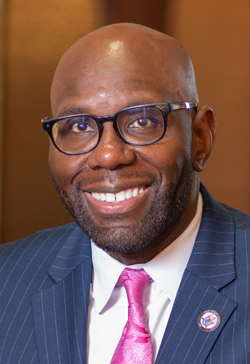
Photo of Troy Singleton
D New Jersey Senate · District 7

Sen. Troy Singleton

Compare
Total votes
2,793
all sessions
Attendance
96%
50 missed
Near the chamber average
With party
99%
of cast votes
Higher than 83% of chamber peers
Bipartisan score
0%
crosses aisle rarely
Lower than 86% of chamber peers
Sponsored
1,857
bills & resolutions
Higher than 86% of chamber peers
Committees
2
assignments
1,857 bills and resolutions

Sponsored bills

Total
1,857
Primary
1,194
Co-sponsor
663
This page
1,857
matching current filters
Primary S 1749
died · New Jersey Senate · Lead sponsor
Requires State Real Estate Appraiser Board to adopt alternative program to acquire experiential requirements for prospective real estate appraisers attempting to qualify for licensure or certification.

Maddy summaryThis bill requires New Jersey's State Real Estate Appraiser Board to adopt the Appraisal Foundation's Practical Applications of Real Estate Appraisal (PAREA) program as an alternative option for meeting hands-on experience requirements. Currently, aspiring appraisers must find a licensed supervisor to oversee their training, which can be difficult with no formal matching process. The PAREA program allows prospective appraisers to fulfill all experience requirements through virtual simulations combining appraisal theory with mentorship, eliminating the need to secure a supervisor. This change directly affects individuals seeking real estate appraiser licensure or certification in New Jersey.

died Jan 13, 2026 0 co-sponsors
Primary SCR 46
In committee · New Jersey Senate · Lead sponsor
Condemns all forms of anti-Semitism and rejects attempts to justify anti-Jewish hatred.

Maddy summaryThis concurrent resolution (SCR 46) is a symbolic legislative statement condemning all forms of anti-Semitism and rejecting justifications for anti-Jewish hatred. It specifically references rising anti-Semitic incidents in New Jersey - including 370 reported cases in 2021, including 44 at Jewish institutions and 82 in schools - to underscore the urgency of protecting Jewish communities. The resolution does not create new laws or funding but formally expresses the New Jersey Legislature’s opposition to anti-Semitism, citing historical context and recent violence (like the Pittsburgh synagogue attack). It applies broadly to all residents and institutions in New Jersey, emphasizing that anti-Semitism violates constitutional principles of tolerance and religious freedom.

In committee Jan 13, 2026 0 co-sponsors
Co-sponsor S 1269
died · New Jersey Senate · Co-sponsor
Requires producer of certain firefighting equipment containing perfluoroalkyl and polyfluoroalkyl substances to provide written notice to purchaser; prohibits sale, manufacture, and distribution of certain firefighting equipment containing intentionally added perfluoroalkyl and polyfluoroalkyl substances.

Maddy summaryS 1269 requires producers of firefighting personal protective equipment (PPE) containing intentionally added PFAS (chemicals used to provide specific features like water resistance) to provide written notice to purchasers at the time of sale. This notice must detail the specific PFAS chemicals used, their purpose, and the equipment’s PFAS content, with both producer and purchaser retaining copies for three years. The bill prohibits selling, manufacturing, or distributing such PFAS-containing firefighting PPE (like jackets, helmets, and gloves) starting two years after its effective date, though non-clothing items (e.g., breathing apparatus) are exempt until January 1, 2030. The bill was withdrawn on January 13, 2026, after being approved as P.L.2025, c.373.

died Jan 13, 2026 1 co-sponsor
Primary S 802
In committee · New Jersey Senate · Lead sponsor
Expands Community College Opportunity Grant Program to include career and technical education programs at county colleges and county vocational schools.

Maddy summaryThis bill (S 802) expands New Jersey's existing Community College Opportunity Grant Program to cover tuition and fees for career and technical education programs at county vocational schools and county colleges. It directly affects adult students enrolled in these programs who meet income limits ($0-$65,000 annual adjusted gross income) and other eligibility criteria. The key mechanism adds "career and technical education" to the program’s scope, allowing students to receive grants covering costs not covered by other aid, while maintaining existing requirements like residency and academic standing. The program remains administered by the Higher Education Student Assistance Authority for student grants and the Office of the Secretary of Higher Education for college support funding.

In committee Jan 13, 2026 0 co-sponsors
Co-sponsor S 2583
In committee · New Jersey Senate · Co-sponsor
Requires minimum annual State appropriation of $10 million for Public Health Priority Funding.

Maddy summaryThis bill requires New Jersey to appropriate at least $10 million annually from the state General Fund to the Department of Health for Public Health Priority Funding, starting July 1 after the bill takes effect. It directly affects local health departments by restoring a dedicated, unrestricted state funding source they previously relied on (before it was eliminated in 2011), which previously covered about 15% of their total funding. The bill reinstates the "Public Health Priority Funding Act of 1977," allowing local health departments to use these funds flexibly to address community health needs, emerging threats, and other priorities - unlike current funding, which is often restricted to specific purposes like vaccines. This policy change would shift funding away from reliance on property taxes and narrowly designated federal/state grants.

In committee Jan 13, 2026 1 co-sponsor
Co-sponsor S 1428
In committee · New Jersey Senate · Co-sponsor
Requires civil service examination for police and correctional police officers to include questions to identify implicit racial bias.

Maddy summaryThis bill requires New Jersey's Civil Service Commission to add exam questions about implicit bias - including racial bias - to the entry-level civil service test for all law enforcement applicants. It directly affects candidates seeking jobs as municipal police officers, county police officers, correctional officers (adult and juvenile), and sheriff's deputies. The key provision mandates that the exam include questions designed to identify unconscious biases that may influence decision-making. The bill takes effect four months after enactment, with the Commission allowed to prepare in advance. It does not change hiring standards but adds a new evaluation component for all entry-level law enforcement positions.

In committee Jan 13, 2026 1 co-sponsor
Primary S 1777
In committee · New Jersey Senate · Lead sponsor
Concerns regulatory guidance for local approving authorities on approval of warehouse development.

Maddy summaryThis bill requires New Jersey's State Planning Commission to create plain-language guidance for local planning boards reviewing warehouse development applications (including distribution centers and fulfillment centers). The guidance must include examples of questions about community benefits (like job creation and environmental cleanup) and concerns (like traffic safety), and will be posted online for public access. It also mandates that the state's Community Affairs Commissioner add this guidance to required training courses for local officials enforcing land use laws. The policy directly affects municipal planning boards, zoning boards, and officials who review warehouse projects. This is a procedural change to standardize review criteria, not a new funding or tax measure.

In committee Jan 13, 2026 0 co-sponsors
Primary S 1778
In committee · New Jersey Senate · Lead sponsor
Establishes additional municipal review processes and procedures related to development of certain large warehouses; requires certain real property revaluations and reassessments.

Maddy summaryS 1778 requires New Jersey municipalities to complete a special review of local plans and regulations before approving applications for large warehouses (defined as facilities storing goods for sale or redistribution). It mandates planning boards to prepare a report incorporating state guidelines (pending adoption) within 90 days of an application, delaying the standard 45-day review period until 91 days after the report is delivered. If a municipality hasn't conducted a full property reassessment in 60 months prior to approval, it must complete one within 24 months after the warehouse receives a certificate of occupancy. This bill directly affects municipalities, developers, and residents by adding review steps and reassessment requirements for large warehouse projects.

In committee Jan 13, 2026 0 co-sponsors
Primary S 1758
In committee · New Jersey Senate · Lead sponsor
Authorizes home cultivation of medical cannabis.

Maddy summaryThis bill allows registered medical cannabis patients in New Jersey to grow their own cannabis at home for personal medical use. It specifically authorizes cultivation within a patient's residence by the patient or their designated caregiver, as defined in the law. The provision applies only to individuals already registered under New Jersey's medical cannabis program and does not permit commercial cultivation or distribution. The bill amends existing statutes to clarify that home cultivation is permitted under the medical program, distinct from licensed dispensary operations. It does not create new registration requirements but expands access for existing registered patients and caregivers.

In committee Jan 13, 2026 0 co-sponsors
Primary S 1840
In committee · New Jersey Senate · Lead sponsor
Creates "New Jersey Responsible AI Advancement and Workforce Protection Act."

Maddy summaryThis bill establishes the "New Jersey Responsible AI Advancement and Workforce Protection Act" to create a framework for AI deployment that prioritizes worker protections and community impact. It requires AI infrastructure companies (like large computing facilities) to pay a 5% fee on their revenue into the AI Horizon Fund, which will support worker retraining, clean energy upgrades for AI facilities, and community resilience programs. Employers with 100+ employees must disclose AI-related layoffs (including dates and numbers) and make supplemental contributions to the fund based on affected workers. The bill also mandates environmental assessments for large AI projects and algorithmic impact reviews for high-risk AI systems used in housing, employment, and healthcare.

In committee Jan 13, 2026 0 co-sponsors
Showing 191 to 200 of 1,857 bills
Previous 1 19 20 21 186 Next