

Maddy summaryThis bill requires electric utilities in New Jersey to obtain a certificate of public convenience and necessity from the Board of Public Utilities (BPU) before starting new transmission lines or modifying existing ones. It directly affects electric public utilities that transmit electricity within the state, excluding projects already approved by PJM Interconnection. Utilities must submit applications with required information and pay a fee, and the BPU must review them within 150 days (extendable by 75 days) to ensure projects are necessary, cost-effective, and financially feasible for customers. The BPU will then issue an order authorizing construction and setting completion timelines.
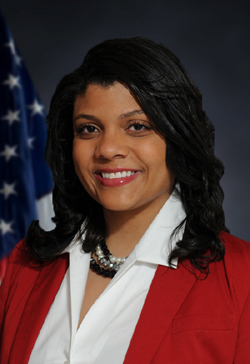
Sen. Britnee Timberlake
Sponsored bills
Maddy summaryThis bill (S 455) is mislabeled in its title; the actual text amends **special probation rules for substance use disorder cases**, not expungement statutes. It creates a new "special probation" option for individuals with substance use disorders convicted of certain offenses (excluding serious violent crimes), requiring a court to assess their condition, confirm the offense was drug/alcohol-related, and ensure no prior violent convictions. If approved, offenders must enter licensed residential or nonresidential treatment (including medication-assisted therapy) with regular drug testing, replacing incarceration. The bill directly affects people with substance use disorders who meet strict eligibility criteria, aiming to reduce prison time by prioritizing treatment over punishment. *(Note: The bill's title incorrectly references "expungement" despite the text focusing solely on probation and treatment programs.)*
Maddy summaryS 2706 requires New Jersey's Board of Public Utilities to hire a third party to study whether de-privatizing public utilities (like electricity or water providers) would be feasible and cost-effective. The study must examine two main options: public entities (e.g., government agencies) acquiring or jointly operating utilities, or public entities partnering with existing utilities. It will analyze short- and long-term costs, benefits, environmental impacts, service effects, and ratepayer costs, and must be completed within one year. The bill appropriates $100,000 from the state General Fund to cover the study and mandates a final report with recommendations for the Governor and Legislature.
Maddy summaryS 457 expands New Jersey's "Nosey's Law" (P.L.2018, c.141) by banning rabbits, hares, and rodents from traveling animal acts like circuses and carnivals. It removes previous exemptions for domestic animals such as cows, horses, and dogs, adding these species to the prohibited list. The bill limits existing exceptions to apply only to educational institutions - outreach programs at schools can still use animals for bona fide education, but not for general entertainment. This change takes effect immediately upon passage.
Maddy summaryS 2729, the Midwifery Licensing Act, creates a new State Board of Midwives to regulate midwifery practice in New Jersey, replacing the current system where midwifery was overseen by the State Board of Medical Examiners. The bill establishes an 11-member board with specific representation requirements, including seven midwives (with defined categories), two physicians (OB/GYN and pediatrics), a public member, and an executive branch representative. This legislation directly affects licensed midwives - certified midwives (CM), certified nurse midwives (CNM), and certified professional midwives (CPM) - by shifting their regulatory oversight to a dedicated board. The key policy change is the creation of a specialized licensing framework to modernize midwifery regulation, as the current statutes governing midwifery are described as outdated.
Maddy summaryThis bill (S 2672) requires all health insurance plans in New Jersey - including hospital service corporations, medical service corporations, individual policies, group plans, and health maintenance organizations - to cover planned home childbirth costs. It mandates coverage for services provided by healthcare providers (like midwives, nurses, and doctors), doulas, and necessary medical equipment, at the same level as other covered medical services. The law applies to all insurance contracts issued or renewed in New Jersey after its effective date, regardless of whether premiums can be adjusted. This directly affects insurance companies and Medicaid by expanding coverage options for individuals choosing home births.
Maddy summaryS 2681 requires employers in New Jersey with 10 or more employees to include specific compensation and benefit details in all job postings. Employers must disclose the minimum and maximum salary range, supplemental compensation, benefits (like paid leave and health care), and retirement plans offered. This applies to all job postings on any platform, whether posted by the employer directly or through a third-party site. Employers who fail to comply face civil penalties up to $10,000 per violation, enforceable by the Commissioner of Labor.
Maddy summaryThis New Jersey bill (S 1667) provides tax credits to businesses that hire and retain neurodiverse employees in qualifying STEM/AI roles. Businesses receive credits of $7,000-$9,000 per full-time employee (increasing with consecutive years of employment) or $4,500 for part-time employees, subject to a $10 million annual cap. To qualify, employees must work in approved STEM/AI fields at minimum wage and be certified as neurodiverse under state guidelines. The credits reduce corporate business tax liability, with unused credits potentially carried forward for up to seven years.
Maddy summaryS 2797 would have required New Jersey public school districts to teach cursive handwriting to students in kindergarten through fifth grade, with a goal of achieving legible cursive writing proficiency by the end of third grade. The bill mandated incorporating specific activities and materials into the curriculum to develop students' ability to read and write cursive, citing research linking cursive instruction to improved cognitive, motor, and literacy skills - particularly for students with learning disabilities like dyslexia. This bill was withdrawn on January 13, 2026, as it was already enacted through P.L.2025, c.284.
Maddy summaryS 2711 requires New Jersey's Board of Public Utilities (BPU) to prohibit electric and gas utilities from charging residential customers lump-sum payments when actual usage exceeds estimated usage under equal payment plans. It also bans utilities from "underbilling" residential customers - charging them for the difference between estimated and actual usage after the fact - and prevents adding those unpaid balances to future bills. The bill mandates that any annual adjustments to equal payment plans must be based solely on a customer’s actual usage data, not estimates. This directly affects residential electricity and gas customers in New Jersey by preventing unexpected large charges tied to billing practices.