

Maddy summaryThis bill (S 122) requires all motor vehicles in New Jersey to have mufflers and exhaust systems that do not amplify noise beyond the original factory level. It directly affects vehicle owners, auto repair shops, and mechanics who install or modify exhaust systems. The bill bans modifications that increase noise and adds noise inspections to standard vehicle safety checks during annual inspections. Violations carry fines up to $500, and the law applies to most registered vehicles except motorcycles, historic vehicles, and those over 8,500 pounds.
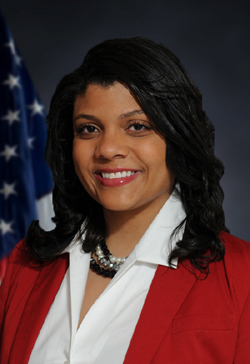
Sen. Britnee Timberlake
Sponsored bills
Maddy summaryThis bill (S 1899) allows disabled veterans and Purple Heart recipients with specific license plates to park in spaces reserved for people with disabilities. It directly affects New Jersey residents who hold disabled veteran license plates or Purple Heart plates certified by a doctor as limiting mobility. The key provision lets these individuals use their existing plates to park in disability zones without needing additional permits, though Purple Heart holders must carry medical certification proving mobility limitations and show it to police if asked. The law takes effect immediately upon passage.
Maddy summaryThis bill requires all public swimming pools in New Jersey to offer deep water swimming tests to children 12 years old or younger upon request by the child or their guardian. The test, which assesses a child's ability to swim 50 meters (two laps) and tread water for 30 seconds, must be conducted by a lifeguard. Until a child passes this test, they must be accompanied by an adult within arm's length while swimming, with swim team members exempt. The requirement must be confirmed during health inspections and included in the Department of Health's standard checklist for pools.
Maddy summaryThis bill requires New Jersey's electric and gas public utilities to offer warranty programs covering the full cost to repair or replace specific home appliances, including water heaters, HVAC systems, refrigerators, and stoves. It directly affects utilities (not end-users), mandating they implement or maintain these programs with full coverage for covered appliances. Utilities must notify customers via bill inserts every billing cycle for one year after the bill takes effect, explaining program details and how to switch from existing contracts. The bill also prohibits utilities from passing implementation costs to customers through rate increases. The program applies to all contracts entered into after the effective date.
Maddy summaryThis bill imposes a 10% surtax on electric public utilities in New Jersey with annual profits exceeding $10 million. It directly affects large electricity providers that transmit and distribute power to end users within the state. All revenue from this surtax (excluding constitutionally dedicated funds) must fund state utility assistance programs, such as those helping low-income households with energy costs. The bill also prohibits these utilities from raising customer rates to cover the surtax cost.
Maddy summarySJR 59 designates October of each year as "Fire Prevention Awareness Month" in New Jersey to raise public awareness about fire dangers and prevention. The bill requests the Governor issue an annual proclamation encouraging public officials and residents to observe the month with safety activities. It highlights statistics showing fires cause significant harm (e.g., 77 civilian deaths in NJ in 2015) and emphasizes that many fires result from preventable actions like unattended stoves. This resolution does not create new laws but focuses on public education during October, a peak month for fires, including college dormitory incidents.
Maddy summaryThis bill (S 2717) changes how New Jersey school boards handle nonrenewal of nontenured staff contracts (like teachers or administrators without tenure). It replaces informal "Donaldson hearings" with a formal hearing process, requiring school boards to hold written hearings where staff can present their case. Key provisions include: requiring boards to provide written decisions detailing facts and reasoning, mandating staff submit supporting materials 3 days before hearings, requiring the board attorney’s presence, and setting rules for remote hearings (like keeping video on during proceedings). The bill directly affects nontenured school staff facing nonrenewal and the school boards making those decisions.
Maddy summaryS 2718 requires New Jersey state agencies (including the Department of Community Affairs, Department of Human Services, and Board of Public Utilities) to review and potentially raise income thresholds for utility bill assistance and energy efficiency programs within one year of a related BPU decision. The bill directs agencies to consider factors like program alignment, cost impacts, and public input when determining if higher income limits would better serve low- and moderate-income households. If thresholds increase for low-income energy efficiency programs, the BPU must adjust utility programs to ensure households qualify for only one program and expand access to moderate-income options. This directly affects residential customers seeking help with energy costs by potentially making more households eligible for assistance.
Maddy summaryThis bill requires New Jersey's Department of Children and Families to create an educational fact sheet on water safety for parents and guardians. The fact sheet must cover reducing drowning risks, the value of swimming lessons, flotation device use, and monitoring water conditions. Public school districts must annually distribute the fact sheet to parents, while nonpublic schools are encouraged to do so. Additionally, school districts must publish an annual list of local swim lesson locations (including free/reduced-cost options) on their websites, compiled from voluntarily submitted locations.
Maddy summaryS 2712 requires New Jersey's Division of Rate Counsel to hire an independent third party to study the feasibility and cost savings of de-privatizing electric and gas public utilities (companies serving residents) by exploring two options: public ownership or joint public-private operation. The study must analyze short- and long-term impacts - including environmental effects, service quality, ratepayer costs, and financial implications - and include input from utilities and public entities. It mandates all electric/gas utilities and public entities to cooperate with the study and requires a final report to the Governor and Legislature within one year. The bill appropriates $100,000 from the state budget to fund this study, which will inform future decisions but does not implement de-privatization itself.