

Maddy summaryThis bill establishes a legal presumption that joint legal and physical custody is in a child's best interest for all New Jersey child custody cases. It requires courts to assume equal or approximately equal time with both parents and shared decision-making on health, education, and welfare, unless a parent provides clear evidence that joint custody would harm the child. To rebut this presumption, a parent must prove harm with "clear and convincing evidence," and courts must document their reasoning. The law applies directly to parents and judges handling custody disputes in New Jersey courts. If passed, it would shift the default custody arrangement from flexible court discretion to equal shared parenting, with limited exceptions.
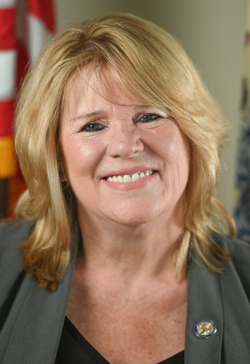
Asm. Carol Murphy
Sponsored bills
Maddy summaryThis bill removes restrictions on the number of plenary retail distribution licenses (for selling alcohol) that businesses can hold, specifically for two types of stores. It allows up to four licenses for stores where groceries are the primary business (accounting for at least 65% of annual sales) or where alcohol sales are primary (at least 90% of annual sales), increasing to six licenses after 73 months. Licensees must prove these sales percentages during renewal applications. The change applies only to existing stores meeting these criteria, does not create new licenses in municipalities with existing limits, and excludes stores in urban food deserts from these rules.
Maddy summaryThis New Jersey bill creates a refundable tax credit for renters whose rent exceeds 35% of their gross income. It directly affects low-to-moderate income residents (earning $60,000 or less annually) who live in their primary home and pay rent above that threshold. The credit amount varies: 100% of excess rent (up to $1,000) for those earning under $50,000 in high-cost areas or under $25,000 elsewhere; 75% for those earning $25,000-$60,000; and 50% for higher earners outside high-cost areas. The credit applies retroactively to the previous tax year, requiring eligible taxpayers to file amended returns within 90 days of the bill's enactment to claim it.
Maddy summaryThis bill strengthens oversight of developmental disability service providers in New Jersey by creating new penalties for violations. It directly affects authorized providers (agencies contracted by the state) and licensed providers (those operating residential programs), imposing fines up to $25,000 for serious issues like administrative neglect, major injuries, or exploitation. Key mechanisms include mandatory background checks, drug testing, and internal investigations for incidents, with penalties escalating for repeat offenses. The bill also establishes a "Residential Facility Quality of Care Improvement Fund" funded by these fines to support quality improvement initiatives and regulatory actions by the Department of Human Services.
Maddy summaryThis bill requires all public schools, private schools, and institutions of higher education in New Jersey to test their buildings for radon gas at least once every five years. Buildings tested within the five years before the bill's effective date must be retested within five years of that prior test; untested buildings must be tested within 60 days of the bill's effective date. School administrators (like principals or college leaders) must work with environmental officials to determine testing locations, methods, and how results are shared. The bill repeals an expired law that previously required similar testing only in public schools, now extending the requirement equally to all school types.
Maddy summaryThis bill authorizes New Jersey's electric utilities to proactively manage "dangerous vegetation" (trees or plants near power lines) to prevent outages, following ANSI tree care standards. It requires utilities to notify property owners and local governments before trimming or removing vegetation, with specific timing (7-45 days for property owners, 2 months for municipalities). The law overrides existing forestry protections like the Shade Tree Act to prioritize grid reliability after storms caused widespread power disruptions. It directly affects investor-owned electric utilities, property owners near utility rights-of-way, and local government entities through new management and notice requirements.
Maddy summaryThis bill requires New Jersey's Department of Health (DOH) to create standardized protocols for hospitals and licensed birthing centers to collect and report detailed, de-identified data on maternity care. The data must cover specific metrics like maternal health conditions (e.g., hypertension, hemorrhage), delivery methods (e.g., induction timing, cesarean rates), and infant outcomes (e.g., birth weight, complications). The DOH will annually evaluate this data to set statewide benchmarks, identify quality improvement opportunities, and compare hospital performance. Results and recommendations must be reported to the Governor and Legislature yearly, aiming to enhance maternal and infant health outcomes through data-driven care.
Maddy summaryThis bill (A 1911) requires New Jersey counties to separately list spending on veterans' services - such as transportation and employment counseling - in their annual budgets submitted to the Division of Local Government Services. It directly affects county governments, mandating they specify these expenditures instead of grouping them with other services. The key provision is a new budget reporting requirement, ensuring transparency about how funds are allocated to veterans' programs. The bill applies to all county budgets submitted after its effective date, which follows enactment. It does not create new programs or funding but improves accountability in existing budget submissions.
Maddy summaryNew Jersey's A-991 requires the Division of Aging Services to create a senior citizens telephone chat-line connecting older adults (60+) experiencing isolation with matched volunteers. Seniors or their families can register with personal details like interests and preferred call times, while volunteers (18+) register with their hobbies and location to enable matching. The bill mandates strict confidentiality for all registered participants and call content. It establishes a structured system for weekly emotional support calls without medical or financial provisions. The bill is currently pending before the Assembly Aging and Human Services Committee.
Maddy summaryThis bill (A 987) requires background checks for all handgun and firearm purchasers through licensed dealers in New Jersey, as amended to N.J.S.2C:58-3. It mandates that dealers conduct National Instant Criminal Background Checks (NICB) before any sale or transfer, with specific exemptions for immediate family members, law enforcement, and collectors (as defined in federal law). The bill does not require background checks for household members of purchasers; it applies solely to the individual purchasing the firearm. Dealers must submit check results to state police, maintain non-public records, and may charge a fee (up to $70 for rifles/shotguns). The bill is currently in committee (introduced January 13, 2026).