

Maddy summaryThis bill requires employers to provide written information about an applicant's eligibility for specific family and medical leave benefits at the time of a job offer. It directly affects job applicants and employers in New Jersey, covering state and federal leave programs like the Family Leave Act and disability benefits. Employers must disclose whether an applicant will qualify for each benefit, explain any ineligibility reasons, and provide access to a state-maintained benefits webpage. Failure to comply results in a $500 civil penalty per violation. The law aims to increase transparency about leave rights before employment begins.
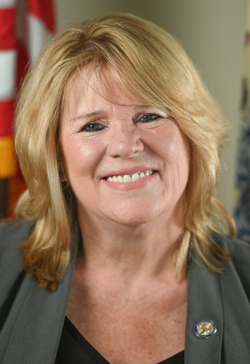
Asm. Carol Murphy
Sponsored bills
Maddy summaryThis bill establishes the New Jersey Suicide Prevention Advisory Council within the Department of Health and requires public school teaching staff (including teachers, school nurses, and athletic trainers) to complete two hours of annual suicide prevention training from licensed mental health professionals. It mandates confidential reporting of suspected youth suicide attempts or deaths by school staff, mental health professionals, and certain other designated personnel to the Department of Health, with protections for reporters' immunity from liability. The law defines key terms like "suicide attempt" and "youth" (under 24), and creates a system for aggregating non-identifying data to inform annual reports. The bill directly affects school staff, healthcare providers, and school administrators in New Jersey.
Maddy summaryThis bill creates tax incentives for New Jersey residents with disabilities to save for disability-related expenses through ABLE accounts. It provides a one-time $750 dollar-for-dollar matching grant for initial deposits into a New Jersey ABLE account (for taxpayers earning $150,000 or less annually) and allows a state tax deduction for all contributions to these accounts. The matching funds are subject to annual state budget approval, with the Department of Human Services determining allocation if funding is insufficient. The program expands New Jersey’s existing ABLE program, which allows tax-advantaged savings for expenses like housing, education, and assistive technology, without affecting Medicaid eligibility.
Maddy summaryThis bill creates a new criminal offense called "fiscal victimization" for financially exploiting seniors (60+) or individuals with qualifying disabilities. It applies when someone commits, attempts, conspires to commit, or threatens theft or identity theft (N.J.S. 2C:21-17) against a person they know or should know is a senior or disabled individual. The crime carries enhanced penalties - one degree higher than the underlying offense - and requires separate sentencing for both the financial exploitation and the underlying crime. It defines "disabled" as someone with a pre-existing medical condition substantially limiting their ability to resist, including those receiving Social Security disability benefits.
Maddy summaryThis bill requires New Jersey's Secretary of Higher Education to impose a $10,000 fine on any public or private college or university that fails to properly investigate a student's allegation of sexual assault committed by another student. If an allegation is proven true, the institution must also take appropriate disciplinary action against the perpetrator. The fine is enforced through existing summary proceedings under New Jersey's Penalty Enforcement Law. The bill directly affects all higher education institutions in New Jersey that receive state funding or oversight.
Maddy summaryThis bill creates a New Jersey gross income tax credit for active members of volunteer fire departments, first aid squads, and rescue organizations who use personal vehicles for emergency duties. Eligible members receive a credit based on miles driven for emergency response, calculated using the IRS standard mileage rate (capped at $500 per individual or $1,000 for married couples filing jointly). To qualify, members must maintain active status, complete required service hours (400+ hours or attendance thresholds), and provide documentation through their organization. The credit directly reimburses volunteers for vehicle-related costs incurred while serving their communities.
Maddy summaryThis bill expands New Jersey's wiretap authorization law to allow law enforcement to seek court orders for wiretaps when investigating four specific crimes: luring or enticing a child, identity theft, stalking, and cyber-harassment (specifically the third/fourth degree offenses under N.J.S.2C:33-4.1). It directly affects law enforcement agencies (like the Attorney General's office and county prosecutors) who can now request these wiretap orders for these offenses, as they were previously excluded from the list of authorized crimes. The key mechanism is amending existing wiretap statute language to add these four offenses to the list of crimes where wiretap evidence may be sought. This change would not alter current wiretap procedures but broadens the scope of crimes eligible for such surveillance.
Maddy summaryThis bill appropriates $400,000 from New Jersey's General Fund to fund the "Patient Pet Food Security Wellness Program" through the nonprofit Living for a Cause. It directly assists patients in Burlington County and surrounding areas who are undergoing medical care and facing economic hardship, by providing pet food to reduce the financial burden of pet ownership. The funds will prevent pet surrender to shelters by ensuring these patients can afford pet food during medical treatment. The grant is distributed as part of the Department of Health's budget under the specified program.
Maddy summaryThis New Jersey bill (A 966) requires the Commissioner of Health to create a public awareness campaign focused on improving maternal and child health outcomes, with a specific emphasis on equitable care across all racial and ethnic groups. The campaign will provide accessible information through a dedicated Department of Health website, including hospital data on cesarean births and breastfeeding rates to help women choose care providers, promote birth plan documentation in medical records, and share guidance on avoiding unnecessary interventions like early inductions. It also educates the public on maternal health services, breastfeeding rights, pregnancy discrimination protections, and Medicaid eligibility for pregnant women. The campaign directly affects pregnant individuals, new mothers, and healthcare providers in New Jersey by making key maternity care information more transparent and actionable.
Maddy summaryThis bill requires all public high schools (grades 9-12) to display a specific human trafficking awareness sign in a clearly visible location for students, staff, and parents. The sign, developed under existing law, must be at least 8.5x11 inches, printed in 16-point font in both English and Spanish, and include the national human trafficking hotline number. The requirement applies immediately to schools enrolling students in those grades.