

Maddy summaryThis bill requires individuals convicted of or initially charged with DWI (Driving While Intoxicated) in New Jersey to complete a program at Intoxicated Driver Resource Centers, involving 12 to 48 hours of participation over two consecutive days. It mandates that offenders install an ignition interlock device in their vehicle to regain driving privileges, with the requirement to be met within a specified period after conviction. The bill sets penalties for first offenses based on blood alcohol concentration, including fines ranging from $250 to $500 and program participation, depending on the level of intoxication.
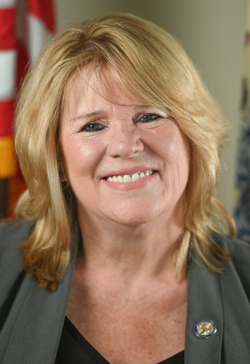
Asm. Carol Murphy
Sponsored bills
Maddy summaryThis bill eliminates a requirement for New Jersey veterans to have served in active duty or federal active duty to qualify for a $6,000 gross income tax exemption. It directly affects honorably discharged veterans of the U.S. Armed Forces, reserve components, and New Jersey National Guard members who previously needed active duty service to claim this exemption. The key change removes the phrase "in active duty status or federal active duty status" from the tax code, allowing all eligible honorably discharged veterans to claim the exemption regardless of their service status. The policy change applies to taxable years beginning after the bill's enactment.
Maddy summaryThe provided bill text does not match the stated title "Designates drug court program as the 'special probation recovery court program'." Instead, the text describes amendments to New Jersey's landlord-tenant eviction procedures (specifically Section 2 of P.L.1974, c.49), covering grounds for eviction like unpaid rent, property damage, or lease violations. The actual title and content referenced in the bill text relate to housing law, not drug courts. Without the correct text for a drug court designation bill, a summary cannot be generated based on the provided context.
Maddy summaryThis bill allows active prosecutors enrolled in the Prosecutors Part of New Jersey's Public Employees' Retirement System (PERS) before its effective date to retire with 20 or more years of service credit regardless of age. They must retire within five years of the bill's effective date to qualify for a retirement allowance equal to 50% of their final compensation. Currently, prosecutors must be age 55 or older to receive this 50% benefit. The bill specifically applies to prosecutors already enrolled in PERS before the law takes effect.
Maddy summaryThis bill requires New Jersey's professional licensing boards (e.g., for nursing, engineering, and other regulated occupations) to collect national average application approval times from other states and calculate a standard for their own processing timelines. Boards must use this national average as their target for approving initial credentials, after approval by the Division of Consumer Affairs. If boards miss the target, they must use licensing fees to hire third-party experts to identify improvements, with follow-up reviews after six months. The law mandates initial data collection within six months of enactment, followed by annual accuracy reviews to ensure boards meet the standardized timelines.
Maddy summaryThis bill exempts specific baby products and sunscreen from New Jersey's sales tax starting October 1, 2025. It directly affects parents and caregivers purchasing baby necessities like baby wash, car seats (child restraint systems), cribs, nursing bottles, and strollers, as well as sunscreen regulated by the FDA for sun protection (excluding cosmetic products). The bill amends existing tax law to add these items to the list of exempt sales, clarifying definitions for terms like "child restraint system" and "sunscreen." It does not change tax rates but removes tax from these specific retail purchases. The exemption applies to all qualifying products sold after the effective date.
Maddy summaryThis bill requires New Jersey's State Health Benefits Program (SHBP) to provide public employers (like municipalities and school districts) with detailed health claims data upon request, limiting access to once per calendar year instead of once every 24 months. It mandates specific data including medical claims summaries, top prescription drugs by cost/quantity, utilization trends, and prescription details (e.g., drug types, costs, pharmacy types), while ensuring privacy compliance under HIPAA. The data must be shared with the public employer’s majority employee representatives if the employer requests it. This directly affects public employers participating in SHBP and their employees, enabling transparency about health benefit costs and usage patterns.
Maddy summaryThis bill (A2535) requires New Jersey's next Educational Adequacy Report (due September 1, 2025) to include two new consultation steps. It mandates the Governor and Commissioner of Education to: (1) engage diverse stakeholders (school staff, students, parents, community members) to identify unfunded school resources, and (2) commission school finance experts to recommend updates to funding methodology. These changes will directly affect how state school funding is calculated for all districts, including base per-pupil amounts, special education costs, preschool funding, and transportation aid. The bill does not change current funding formulas but requires the next report to incorporate stakeholder input and expert analysis before updates are finalized. The bill is pending before the Assembly Education Committee.
Maddy summaryThis bill creates a statewide real-time database tracking available beds in homeless shelters across New Jersey. Homeless shelters (excluding domestic violence shelters) must update bed availability within one hour of changes, allowing shelter operators and referral services to quickly locate open beds for people needing emergency housing. Participation in the database becomes a condition for shelters to receive state funding from the Departments of Community Affairs and Human Services. The database aims to improve coordination between shelters to reduce wait times for individuals seeking immediate housing assistance.
Maddy summaryThis bill creates the New Jersey Board of Paramedicine to regulate paramedic and EMT licensing and practice. It establishes a 11-member board with specific qualifications, including four active mobile intensive care paramedics, two EMTs, medical specialists, and public members. The board will set standards for advanced life support (paramedics) and basic life support (EMTs), oversee licensing, and define paramedicine as a regulated healthcare practice encompassing pre-hospital care and community health services. The bill does not change current service standards but creates the governing body to administer these regulations.