

Maddy summaryACR 42 is a symbolic resolution acknowledging the 70th anniversary of the United Nations' Universal Declaration of Human Rights (UDHR) and expressing support for the UN's #StandUp4HumanRights campaign. It does not create new laws or affect any group directly; instead, it formally recognizes the UDHR's principles and the UN's campaign. The resolution's key action is transmitting copies to the UN Secretary General. It has no legal effect, as the UDHR itself is non-binding, but aims to reaffirm human rights values. This is a procedural resolution with no policy changes or financial impacts.
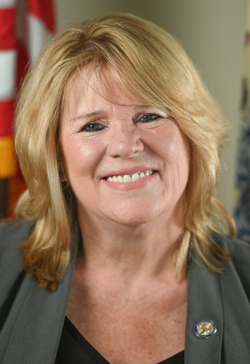
Asm. Carol Murphy
Sponsored bills
Maddy summaryThis bill creates the Blue Acres Buyout Fund within New Jersey's Department of Environmental Protection (DEP), appropriating $25 million from the General Fund. The fund will provide relocation assistance to homeowners and tenants displaced by Blue Acres property acquisitions, cover the state's costs for purchasing flood-prone lands under the Blue Acres program, and pay for program administration (limited to 5% of annual funds). It directly affects residents in flood-prone areas who may be relocated due to these acquisitions. The fund operates as a nonlapsing, revolving account managed by the DEP.
Maddy summaryThis bill establishes an independent Office of the Child Advocate within New Jersey's government to protect children at risk of abuse or neglect. The Child Advocate, appointed by the Governor, will investigate state agency responses to child abuse cases, inspect facilities like juvenile detention centers and group homes, and ensure children in state care receive appropriate services. Key mechanisms include accessing relevant records (with privacy safeguards), issuing subpoenas for investigations, and operating a 24-hour hotline for public concerns. The office directly affects children in state custody, their families, and state agencies such as the Department of Children and Families.
Maddy summaryThis bill (A 3106) requires New Jersey's Director of Purchase and Property to review state purchasing practices for menstrual products and establish a centralized contract to reduce costs for state agencies. It mandates that the director, at a state department's request, advertise for and award a statewide contract for menstrual products (including pads, tampons, and cups), making it available to all state agencies and cooperative purchasing participants like schools and local governments. Non-profits may also purchase under this contract at the director’s discretion, subject to reporting requirements. The bill focuses solely on streamlining state procurement, not on providing free products to individuals.
Maddy summaryThis bill requires New Jersey's State Planning Commission to create a model ordinance for siting warehouses (like distribution centers) and update local zoning rules to align with it. Municipalities must adopt these model rules when updating their master plans and zoning, with the state providing $5 million in funding through the Department of Community Affairs to support this transition. The law directly affects local governments, which will need to revise their land-use regulations to incorporate the new warehouse siting standards. It aims to standardize warehouse development planning while giving communities flexibility to adapt the model to local needs.
Maddy summaryThis bill requires campus police officers at New Jersey schools to wear body cameras that record audio and video during official duties, with specific exceptions (like undercover work or medical emergencies). It directly affects campus police officers employed under New Jersey law (P.L.1970, c.211) who serve at public or private K-12 schools, youth facilities, or college campuses. Cameras must be activated during public encounters or calls for service but can be deactivated under limited circumstances, such as when minors are present, for medical requests, or per superior officer direction. Funding may come from forfeiture funds, federal grants, or other sources, as specified in the bill.
Maddy summaryThis bill (A1381) proposes to expand New Jersey's cyber-harassment law to make it a more serious offense when an adult (18 or older) harasses a minor online, removing the previous requirement that the offender must impersonate a minor. The key change clarifies that targeting minors online with threats, lewd content, or criminal threats becomes a third-degree crime (with potential 3-5 year prison time), while other cyber-harassment remains a less severe fourth-degree offense. It also requires courts to order minors convicted of cyber-harassment to complete educational programs about online safety, and imposes fines on parents who fail to ensure their minor complies with these court orders. The bill aims to strengthen protections for minors by broadening criminal penalties and adding accountability for both offenders and parents.
Maddy summaryNew Jersey's Bill A1696 updates optometrists' scope of practice by expanding their ability to provide eye care services. The bill allows optometrists to prescribe pharmaceutical agents (including controlled substances under specific conditions), administer immunizations for coronaviruses, flu, and shingles (for patients 18+), and perform minor procedures like removing superficial foreign bodies or treating chalazions. It also permits certain non-invasive laser/ultrasound treatments (e.g., trabeculoplasty) using only topical anesthesia, while explicitly prohibiting invasive eye surgery, orbital procedures, or general anesthesia. These changes apply to all optometrists practicing in New Jersey and require adherence to CDC guidelines for immunizations and reporting to the state immunization registry.
Maddy summaryThis bill requires all New Jersey public school districts, charter schools, and renaissance school projects to install at least one exterior key box at every school building by June 2027. The key box must meet safety standards (like UL 1037), contain all necessary keys for emergency access, and be placed at a location determined collaboratively with emergency responders. Schools may seek exemption if they implement equivalent alternative access plans approved by the Commissioner of Education, and the state will cover all installation costs through a $2.5 million appropriation, with reimbursement available for eligible expenses incurred after enactment.
Maddy summaryThis bill establishes new standards for non-emergency medical transportation under New Jersey's Medicaid program. It requires providers to maintain insurance, register vehicles properly, conduct regular inspections, and ensure transport is available within 15 minutes of scheduled times. Vehicles exceeding 150,000 miles must pass enhanced safety checks covering brakes, tires, electrical systems, and structural integrity. These rules directly affect Medicaid beneficiaries needing transport, the brokers managing the program, and transportation providers operating in the state.