

Maddy summaryThis bill (A4158) bans the use of "license plate flipping devices" (tools that allow drivers to quickly switch between two license plates) and increases penalties for drivers who display fake or fictitious registration numbers. It directly affects drivers who attempt to evade traffic violations by using these devices or falsifying plate numbers. The key provision amends New Jersey law to specifically prohibit the flipping devices and raise fines for fake plate displays in certain situations. The bill focuses on enhancing traffic safety enforcement by closing a loophole used to avoid citations.
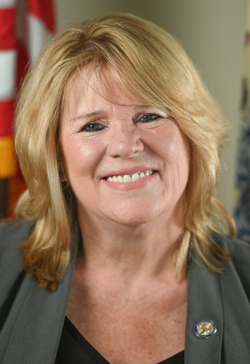
Asm. Carol Murphy
Sponsored bills
Maddy summaryThis bill (A4216) allows new notaries public in New Jersey to take their required oath of office before a state legislator instead of a county clerk during a declared state of emergency. It directly affects new notaries who must complete this oath within three months of receiving their commission but face disruptions to county office services during emergencies. The key provision lets notaries swear before any legislator whose district covers the emergency area (local, county, or statewide), with legislators required to send the oath to the county clerk within 30 days after the emergency ends. The bill also maintains existing requirements for disclaimers about notaries not being licensed attorneys. This is a procedural change to ensure notary services remain functional during crises.
Maddy summaryThis bill (A4155) allows New Jersey municipalities to establish restricted parking spaces for volunteer firefighters without needing approval from the state transportation commissioner. It amends traffic laws (R.S. 39:4-8) to permit local governments to directly create these spaces, provided they follow standard traffic control guidelines and safety requirements. The policy directly affects volunteer firefighters (who need quick access to stations during emergencies) and municipal governments managing local streets. Municipal engineers must certify that these parking designs meet safety standards before implementation.
Maddy summaryThis bill directs New Jersey's Department of Labor and Workforce Development (DOLWD) to create a multimedia advertising campaign promoting healthcare careers as engaging and rewarding, while highlighting available scholarships and financial support. The campaign must target underrepresented racial groups and high-demand healthcare fields, using digital, TV, radio, and print media. It appropriates $1 million from federal American Rescue Plan Act funds to cover the campaign's costs, with the DOLWD working alongside the Departments of Health and Human Services. The goal is to address healthcare workforce shortages, particularly those exacerbated during the pandemic.
Maddy summaryThis bill prohibits New Jersey's Department of Environmental Protection (DEP) from approving dredge spoil dumping on Delaware River islands owned or controlled by the state or local governments, including Burlington Island. It requires the DEP to first petition all municipalities owning land on the island for authorization, and those municipalities must adopt a specific ordinance approving the dumping before any activity can proceed. The bill specifically applies to all dredge spoil dumping, including existing spoil banks, and aims to uphold longstanding protections for Burlington Island as a public recreational and educational space. Municipalities with land on the island would directly control whether such dumping occurs.
Maddy summaryThis bill limits initial opioid prescriptions for acute pain to a five-day supply and requires doctors to consult the state's prescription monitoring program before prescribing. It mandates that doctors discuss addiction risks, overdose dangers, and non-opioid treatment options with patients (or parents/guardians for minors) before starting opioid therapy. For chronic pain treatment lasting over three months, the bill requires regular treatment reviews every three months, dependence assessments, and a formal pain management agreement between the doctor and patient. These changes directly affect healthcare providers who prescribe opioids and patients receiving such prescriptions in New Jersey.
Maddy summaryThis bill requests New Jersey's state government to ask the Joint Committee on the Library of Congress to approve replacing the state's existing statue of Civil War general Philip Kearny in the U.S. Capitol's National Statuary Hall with a statue of Alice Paul. Alice Paul, a Moorestown, New Jersey native and key suffrage leader who helped secure the 19th Amendment, is highlighted as the proposed replacement. The bill creates a temporary selection committee to choose a sculptor, approve the statue design, and secure funding for the new statue and its installation, while also outlining how the replaced Kearny statue would be displayed within New Jersey. It is a procedural request, not a direct mandate, requiring approval from the federal committee before any physical replacement occurs.
Maddy summaryThis bill establishes the New Jersey Forensic Science Laboratory at Rutgers University-Camden to provide shared forensic services for southern New Jersey law enforcement. It authorizes real-time testing in fingerprinting, firearms identification, DNA analysis, toxicology, and other crime scene evidence types to support regional investigations. The bill appropriates up to $500,000 from the General Fund to reimburse the laboratory for eligible costs incurred in providing these services. The lab must submit a two-year report to the Governor and Legislature detailing its activities, research, and future resource needs.
Maddy summaryThis bill creates a tuition reimbursement program for New Jersey residents who are certified advanced practice nurses (APNs) providing home health care services at patients' homes. To qualify, nurses must have specialized home health training, apply within one year of certification, and agree to work full-time in New Jersey for one to four years. The program reimburses 25% of the lowest tuition year for each completed year of service (capped at 100% total reimbursement over four years), with participants required to maintain certification, avoid charging excessive fees to Medicare patients, and not discriminate based on payment ability. The reimbursement is tied directly to service, meaning funds are provided in exchange for fulfilling the agreed-upon home health care work period.
Maddy summaryThis bill requires agencies that provide temporary housing for children or pregnant women in crisis to conduct background checks on staff and comply with specific safety requirements. It amends existing state laws to clarify how confidential child abuse records can be shared with authorized entities like law enforcement, healthcare providers, and courts when there is a legitimate need to protect a child's safety. The legislation establishes clear guidelines for when and how sensitive information may be disclosed, ensuring that privacy protections remain in place while allowing necessary access for child protection purposes. Agencies offering temporary housing must now verify the backgrounds of individuals working with vulnerable populations to help prevent potential harm.