

Maddy summaryThis New Jersey bill requires insurance companies offering dental benefit plans to provide a minimum level of coverage equivalent to a standard actuarial value determined by the state's Banking and Insurance Commissioner. It mandates that insurers reimburse dental providers for covered services at no less than 75% of the usual and customary charge, with regional rates established for at least three areas (northern, central, and southern New Jersey). Coverage must be calculated based on a standard population, not the specific group insured, and includes small variations to account for actuarial differences. These requirements apply to all dental plans delivered, issued, or renewed after the effective date.
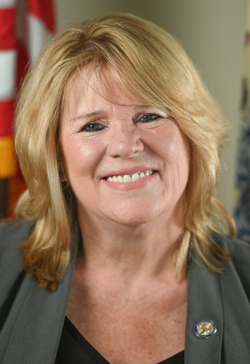
Asm. Carol Murphy
Sponsored bills
Maddy summaryThis bill (A4191) raises the criminal penalty for trespassing into a domestic violence victim's home when a restraining order is in place. It makes such trespass a third-degree crime (carrying 3-5 years in prison or a $15,000 fine) if the person enters intending to cause injury or commit a crime. The law creates a rebuttable presumption of intent to harm if the perpetrator has a restraining order against them or has been charged in a domestic violence case. This directly affects domestic violence victims protected by court orders and perpetrators violating those orders. The key change is elevating the offense level and removing the presumption against incarceration for these specific violations.
Maddy summaryThis bill exempts specialty heart hospitals from paying a 0.53% assessment on their total operating revenue, provided they certify to the Department of Health and Banking and Insurance that they waive direct billing for patient services. The exemption applies specifically to hospitals certified as specialty heart facilities under New Jersey law. Funds collected from the assessment otherwise support the Health Care Subsidy Fund, which finances federally qualified health centers, charity care programs, and other state health initiatives. The policy change directly affects specialty heart hospitals seeking relief from this mandatory payment.
Maddy summaryThis bill (A4196) bans the sale of specific crib bumpers in New Jersey by defining them as "unsafe children's products" under the state's Consumer Fraud Act. It prohibits commercial sellers from selling, leasing, or placing in commerce padded crib bumpers, vinyl bumper guards, and vertical slat covers - though non-padded mesh liners are excluded. The law applies to retailers and manufacturers, with penalties including fines up to $20,000 per violation. Childcare centers are also barred from using these products, aligning with existing rules for unsafe children's products.
Maddy summaryACR 113 proposes a constitutional amendment to prohibit New Jersey health insurance carriers from denying coverage or excluding benefits based on a person's preexisting health condition. This would apply to private insurers, health maintenance organizations (HMOs), health service corporations, and state-run programs like the State Health Benefits Program. The amendment explicitly excludes self-funded employer health plans, which are governed by federal law. If approved by voters, it would become part of the state constitution, requiring insurers regulated by New Jersey to cover preexisting conditions without restrictions.
Maddy summaryThis bill requires New Jersey restaurants to automatically include a healthy beverage with any meal marketed to children. The default beverage must be water, low-fat milk, or 100% fruit juice (under specific calorie and serving size limits), rather than sugary drinks. Restaurants can still offer other beverages upon request, but the included option cannot be a sugary drink like soda. The law directly affects restaurants selling children's meals and aims to improve nutrition for young diners.
Maddy summaryThis bill (A4199) expands rights for crime victims in New Jersey's criminal justice system. It adds specific protections, including the right to submit written impact statements before charges are filed or plea negotiations begin, and to make in-person statements about the crime's impact during sentencing. Victims gain enhanced notification rights regarding court proceedings, defendant releases, and case updates. The law directly affects individuals who have experienced crime and are participating in criminal cases across New Jersey. These changes amend existing law (P.L.1985, c.249) to strengthen victim participation and support.
Maddy summaryThis bill, the "Dog Trainer Licensing Act," requires anyone who trains dogs for compensation (such as a fee or salary) to obtain a license. It establishes a Dog Trainer Board within the Division of Consumer Affairs to set licensing standards, including a 300-hour supervised training requirement, high school graduation or equivalent, and good moral character. The board will issue licenses, maintain records, and handle disciplinary actions for unlicensed practice or violations. Unlicensed individuals would be prohibited from offering dog training services for compensation.
Maddy summaryThis bill (A4172) creates a tax credit for New Jersey residents who are totally and permanently disabled veterans and pay rent for their primary residence. The credit equals rent payments that qualify as property taxes under existing law, reducing their gross income tax liability. To qualify, veterans must have a service-connected disability (e.g., paraplegia, blindness, or amputation) as certified by the U.S. Veterans Administration. Surviving spouses of eligible veterans may also claim the credit during their widowhood/widowerhood. The credit applies to rental housing occupied as a principal residence and is processed through the state tax authority.
Maddy summaryThis bill establishes a 16-member New Jersey Task Force on Child Support Reform to study the state's current child support laws, policies, and procedures. The task force includes state agency heads (Human Services, Corrections, Labor), the Attorney General, Chief Justice, Public Defender, two legislative members per chamber (with party balance), and six Governor-appointed public members with child support expertise. It must consult with organizations like Advocates for Children and Rutgers social work programs, and submit recommendations for a more effective program to the Governor and Legislature within 18 months. The task force will dissolve three months after submitting its final report.