

Maddy summaryNew Jersey Assembly Bill A3468 requires the Department of Military and Veterans Affairs (DMVA) to conduct a two-year study evaluating the effectiveness of its veteran-to-veteran peer support helpline (commonly called the "vet to vet hotline"). The study must analyze national suicide data and helpline records to assess how well the service prevents suicide, connects veterans to mental health care, and supports those at risk - specifically examining factors like helpline visibility, crisis use patterns, and long-term outcomes. The DMVA must submit a written report to the legislature within six months of the study's completion, with findings potentially informing future legislative improvements to the program. This bill does not change current services but mandates a data-driven review to measure the helpline's real-world impact on veteran mental health.
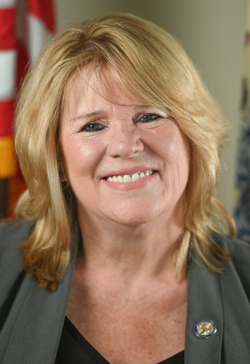
Asm. Carol Murphy
Sponsored bills
Maddy summaryThis bill updates the New Jersey Historic Trust's board structure and financial rules. It requires citizen trustees to have at least five years of experience in historic preservation, fundraising, or related fields (like architecture or cultural nonprofit management), adds the Commissioner of Community Affairs as an ex-officio board member, and adjusts trustee term limits. The Trust can now collect fees for digital publications promoting historic preservation (previously limited to printed materials) and keep any excess fees from events or publications for future use - instead of depositing them into the state General Fund. Additionally, it removes a $100 cap on loan application fees and allows the Trust to require applicants to cover third-party evaluation costs and closing fees.
Maddy summaryThis bill creates state tax credits for New Jersey businesses that hire individuals with certain developmental disabilities. It allows businesses to claim a credit equal to 40% of the first $6,000 in wages paid to each qualifying employee, up to $2,400 per employee annually. A "qualified person" is defined as someone with a severe, chronic disability (meeting specific criteria like onset before age 22) or a disability including intellectual disability, autism, cerebral palsy, epilepsy, spina bifida, or other neurological conditions. The credit applies to both corporation business tax and gross income tax liabilities, aiming to encourage employment of this group while preventing duplicate credits or displacement of other workers.
Maddy summaryThis bill requires electric, gas, sewer, telephone, and water utilities in New Jersey to include written notices in customers' utility bills about non-emergency, scheduled work that could impact traffic within a three-mile radius of a customer's residence. The notice must be provided for planned utility work (excluding emergencies like natural disasters or immediate safety threats). The bill defines "emergency" as conditions posing clear and present danger to life, health, or property. It directly affects all residential utility customers served by these specific public utilities across the state. The requirement takes effect immediately upon passage.
Maddy summaryThis bill establishes tax incentives for "lifelong learning accounts" to support education and training expenses. Individuals can exclude up to $2,500 in employer contributions from taxable income and receive a tax credit (50% on first $500/$1,000 of personal contributions, then 25% on additional amounts). Employers can claim a 25% credit for contributions to employees' accounts (up to $2,500 per employee), with small businesses eligible for additional credit for administrative costs. These accounts must be used exclusively for qualified education expenses like courses, training, apprenticeships, books, equipment, and tuition, but not for recreational programs. The accounts are available to individuals aged 18-70 with specific rules governing contributions, distributions, and account management.
Maddy summaryThis bill ensures funding continuity for New Jersey's Alliance to Prevent Alcoholism and Drug Abuse during fiscal years 2024-2025. If state revenues from drug enforcement surcharges and alcohol taxes fall short of supporting the Alliance's programs, the Governor must use federal pandemic relief funds (like CARES Act or American Rescue Plan funds) to cover the gap. The Alliance uses these funds to support community coalitions that run school-based prevention programs, parent education, student intervention protocols, and public awareness campaigns. The bill applies only to offset unanticipated revenue shortfalls and expires June 30, 2025.
Maddy summaryNew Jersey's Assembly Resolution 99 is a symbolic resolution urging the U.S. Treasury Department to place Harriet Tubman on the $20 bill immediately, rather than proceeding with current plans to delay the change until 2026. The resolution highlights Tubman's historical contributions as an Underground Railroad conductor, Civil War spy and scout, and advocate for freedom and equality. It has no legal effect but formally requests the Treasury accelerate the redesign process. The resolution was introduced by Assemblywoman Carol Murphy and will be sent to Treasury officials and congressional leaders for consideration.
Maddy summaryThis bill requires businesses and public accommodations (like stores, restaurants, and government buildings) to display clear signs reserving specific accessible restrooms for people with disabilities. For multiple-user restrooms, at least one accessible compartment must have a sign (with at least one other non-reserved compartment available), and for single-user accessible restrooms, a sign must be displayed (with at least two other restrooms available for general use). New construction and renovations must include these signs to receive building permits, and existing facilities may be inspected for compliance. Violations result in a 30-day correction period, followed by a $150 fine for the first offense and $300 for repeat violations on the same property.
Maddy summaryThis bill (A3484) prohibits New Jersey's Department of Environmental Protection (DEP) from approving the dumping of dredge spoils (sediment from river dredging) on or near Delaware River islands owned or controlled by the state or local governments, unless approved by all municipalities with land on the island. It requires the DEP to first seek authorization from each affected municipality, which must then adopt a local ordinance permitting the dumping. The bill specifically references Burlington Island as a case where the Legislature aims to prevent state agencies from using the island as a disposal site, maintaining its protected status for public recreation and education. The law applies immediately to all dredge spoil dumping, including existing disposal sites.
Maddy summaryThis bill creates a tax incentive program for small New Jersey manufacturers with 50 or fewer employees. It allows eligible businesses to deduct up to $100,000 annually from their taxable income for deposits into a special "manufacturing reinvestment account" held at a New Jersey financial institution. Account earnings are deferred from taxation until withdrawn, and if funds are used for qualifying equipment purchases or New Jersey workforce training within five years, the business receives a 50% reduction on tax applied to those earnings. The program aims to directly encourage capital investment and job training at small manufacturing facilities across the state.